A portable pizza oven is a heat machine, and the spec that sells it is usually the one that matters least. The number that decides whether you get leoparding on the rim or a pale, leathery crust is stone temperature at the moment you launch, and that depends on fuel, stone mass, and how long the oven has been running before the first pie goes in. Buy the wrong configuration and you will spend a season fighting it instead of cooking in it.
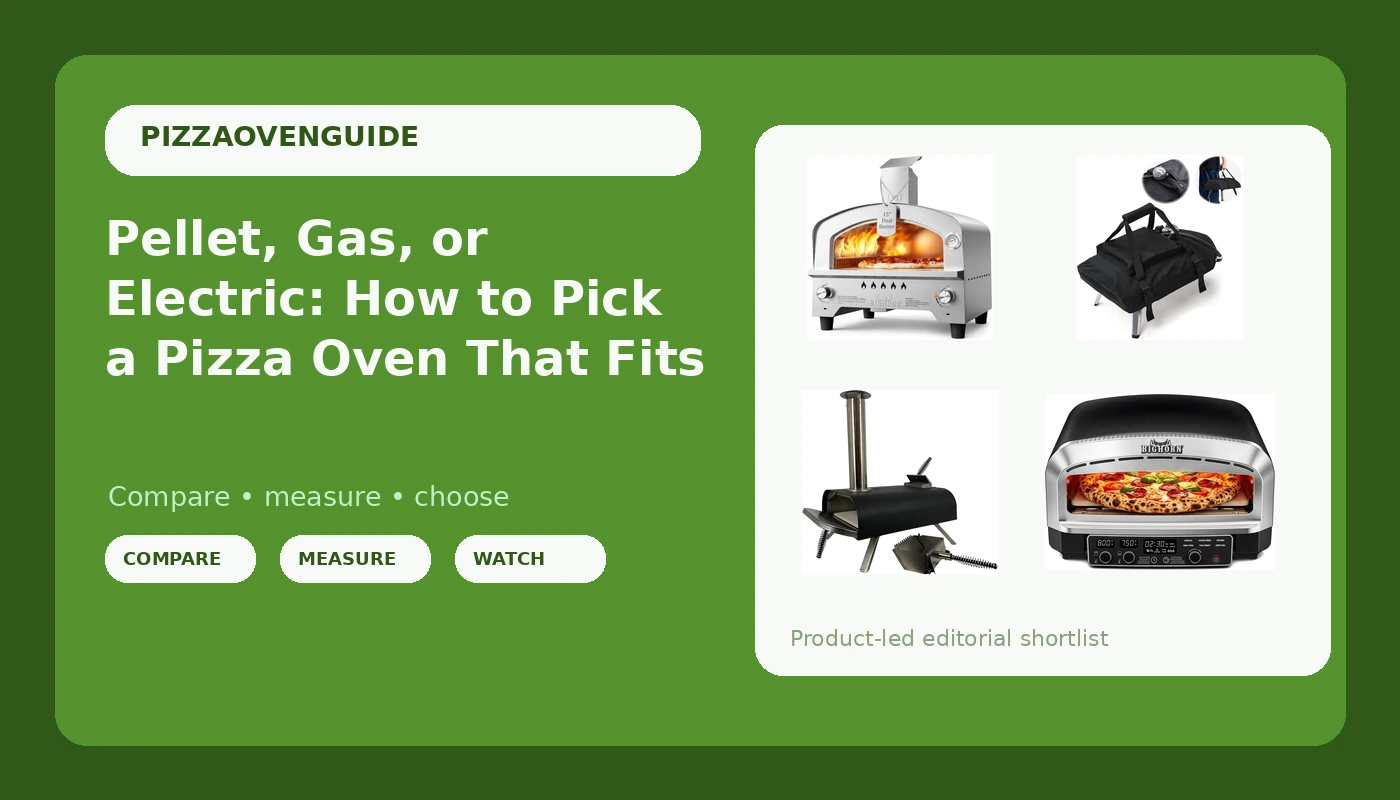
Four products cover most of the ground here: a pellet oven that burns wood fuel outdoors, a propane model with a wider stone, an electric countertop oven built for indoor cooking, and a fitted cover for a 12-inch gas oven. They are not competing for the same buyer. This explainer walks through what each one actually solves, and which questions to answer before you add one to a cart.
Related: How to Read a Pizza Oven Temperature Spec →
Quick answer
If you cook outdoors and want a live fire, a pellet oven gives you wood fuel and a 13-inch stone. If you want outdoor heat without tending a flame, a propane oven with a 15-inch stone is the simpler path. If your cooking happens on a kitchen counter, an electric oven listed at 850°F is the one that fits your week. If you already own a 12-inch gas oven and store it outside, a fitted cover protects the parts that fail first. None of these replaces a dough recipe you have made ten times.
Four useful options
| Model | Best fit | What stands out |
|---|---|---|
| Portable Pellet Pizza Oven for Outdoor Cooking, Wood-Fired Grill with 13-Inch Stone, Reaches High Heat for Crispy Pizza in Minutes | Cooks who want fire and do not mind managing it | Pellet fuel and a 13-inch stone in a portable outdoor body |
| BIG HORN Gas Pizza Oven, Portable Propane Pizza Oven with 15 inch Pizza Stone, Stainless Steel Pizza Maker for Outdoor Cooking | Weeknight outdoor cooking with a fast start | Propane burner with a 15-inch stone and stainless steel construction |
| BIG HORN 14-Inch Indoor Pizza Oven, 850°F Electric Countertop Pizza Oven | Kitchens with no patio and no fuel storage | Electric countertop design listed with a 14-inch surface and an 850°F figure |
| Pizza Oven Cover for Ooni Koda 12 with Handles & Top Pocket, Cover Only | Protecting an existing 12-inch gas oven outdoors | Cut for the Koda 12, with handles and a top pocket |
Pellet: Portable Pellet Pizza Oven for Outdoor Cooking, Wood-Fired Grill with 13-Inch Stone, Reaches High Heat for Crispy Pizza in Minutes
Pellet ovens trade convenience for involvement. You load fuel, light it, wait for the flame to stabilize, and the oven holds heat as long as pellets keep arriving. The upside is that pellets are cheap, store easily, and give you a real fire without splitting logs or babysitting splits. The downside is that you cannot simply turn a dial down when the stone runs hot. You manage the fire instead. If the ritual is the point of your Saturday cook, that is a feature. If you want a pizza at 7pm on a Tuesday, it is friction.
Propane: BIG HORN Gas Pizza Oven, Portable Propane Pizza Oven with 15 inch Pizza Stone, Stainless Steel Pizza Maker for Outdoor Cooking
Propane removes fire management from the equation. You connect a tank, open the valve, turn the knob, and the oven climbs while you stretch dough. The 15-inch stone here is the largest of the group, which matters if you like a bigger pie or simply want more margin when you slide a peel under a wet dough. Gas also cools down predictably, so you can cook two or three pies, shut it off, and go inside. The trade is that you buy fuel by the tank rather than by the bag, and you need somewhere to store that tank.
Indoor electric: BIG HORN 14-Inch Indoor Pizza Oven, 850°F Electric Countertop Pizza Oven
Indoor electric ovens exist because most people do not want to light a fire after work. A countertop unit plugs into a standard outlet and heats a stone with no patio, no tank, and no weather check. The listed 850°F figure puts this one in the range where a fast bake is plausible rather than theoretical, and 14 inches is enough for a personal pie or a modest round. Before buying, measure your counter depth, read the clearance and ventilation guidance in the manual, and think about where heat and steam will go in a small kitchen.
Cover: Pizza Oven Cover for Ooni Koda 12 with Handles & Top Pocket, Cover Only
A cover is not glamorous, and it is the cheapest way to protect an outdoor oven from the two things that actually end its life early: water and sun. This one is cut for a 12-inch Koda, adds handles so you are not wrestling fabric over a hot shell, and includes a top pocket. Note the words cover only: no oven is included. If your oven lives on a patio year round, a fitted cover with handles beats a loose tarp, and it costs far less than replacing a burner, a regulator, or a cracked stone.
Prices and availability may change. Product images, names, and retailer links are matched to verified listings. No current price, rating, stock status, or measured result is stated here without current evidence.
Stone temperature is the number that matters
Air temperature is what the marketing copy prints. Stone temperature is what bakes the bottom of your pizza. A stone reading around 700°F when you launch gives you a crust with color and structure underneath. The same oven with a stone at 500°F gives you a pale base and a rim that dries out before it browns, no matter how good the dough was.
This is why an infrared thermometer is the single most useful accessory you can own. Point it at the middle of the stone, not at the flame and not at the air, and wait until the reading stops climbing before you launch. The number on the box is a ceiling, not a promise, and it says nothing about how long the oven takes to get there or how far the stone drops when a cold, wet dough lands on it.
Thermal mass explains the rest. A thick stone absorbs heat during the bake and gives it back to the dough. A thin one drops hard the moment a pie hits it. That drop is why the second pizza in a session often behaves differently from the first, and why preheat time matters more than peak temperature on a spec sheet. Any oven in this group can make good pizza if you give the stone time to soak and you know what it reads before you launch.
Matching the fuel to the night you are cooking
Wood for Saturday, gas for Tuesday, electric for the weeknights in between. Anyone who tells you one fuel is objectively better has not cooked on all three. Pellets and wood give you a live fire, more smoke in the air, and a reason to stand outside for an hour. Propane gives you repeatability and a fast start. Electricity gives you an indoor option with no fuel to buy and no weather to check.
Pick the fuel that matches the night you actually cook, not the night you imagine cooking. A pellet oven you only fire up twice a season is a worse purchase than an electric countertop unit you use every Thursday.
- Measure the space first, whether that is counter depth, patio footprint, or clearance under a shelf.
- Decide how often you will really cook outside, and in what weather.
- Choose the fuel: pellets for fire, propane for speed, electricity for indoor use.
- Match the stone size to the pizza you actually make, not the largest one you might make.
- Budget for the accessories that do work: a peel, an infrared thermometer, and a cover if the oven stays outdoors.
What to buy alongside the oven
- A peel with a lip, so the pizza does not slide off mid-launch.
- An infrared thermometer, because stone temperature is invisible.
- A fitted cover or a covered storage spot if the oven lives outside.
- A dough recipe you have made at least ten times before you judge the oven.
- Fuel matched to your choice: pellets, a filled propane tank, or nothing at all for an electric model.
Which option should you choose?
Choose the Portable Pellet Pizza Oven for Outdoor Cooking, Wood-Fired Grill with 13-Inch Stone, Reaches High Heat for Crispy Pizza in Minutes when you want a live fire and you enjoy tending it. Choose the BIG HORN Gas Pizza Oven, Portable Propane Pizza Oven with 15 inch Pizza Stone, Stainless Steel Pizza Maker for Outdoor Cooking when you want outdoor heat with a fast start and the widest stone in this group. Choose the BIG HORN 14-Inch Indoor Pizza Oven, 850°F Electric Countertop Pizza Oven when your cooking happens on a kitchen counter and outdoor setup is not realistic. Choose the Pizza Oven Cover for Ooni Koda 12 with Handles & Top Pocket, Cover Only when you already own a 12-inch gas oven that sits outside.
One caveat worth stating plainly: listings change, and the only way to know how a specific unit behaves on your counter or patio is to cook in it. The first pizza in any new oven is a calibration pie. Expect to adjust your preheat time and your launch timing, and expect the second pie to tell you more about what you bought than the first one did.
The bottom line
No single product wins here, because these four solve different problems. Buy the pellet oven if you want fire, the gas oven if you want speed and a wider stone, the electric countertop model if your kitchen is where the cooking happens, and the cover if you already own a 12-inch gas oven that lives outside. Temperature range is the spec that matters most, the dough does most of the work, and the accessories that earn their place are a peel and an infrared thermometer. Check current Amazon price on the one that matches your week before you commit.