I have cooked pizza in a Neapolitan pizzeria, in a sixty dollar countertop box, and in a wood-fired dome that cost more than my first car. Five years on a professional oven taught me the one thing that transfers to a backyard: the oven is a heat machine, and the dough, the sauce, and the cheese are just there to not get in its way. So this pizza oven comparison is not a brand parade. It is four things you can buy right now, what each one is actually for, and which nights of the week each one will earn its space.
Related: Pellet Vs Gas Vs Wood Pizza Ovens: Fuel Compared
The short answer: if you cook on weeknights, an indoor electric countertop oven is the one that gets used. If you cook on Saturdays and want live fire, a wood pellet oven is the easiest way into it. A budget wood-fired box is a starting point with real limits. And the cheapest useful thing on this list is not an oven at all, it is a heat deflector for the pellet grill you already own.
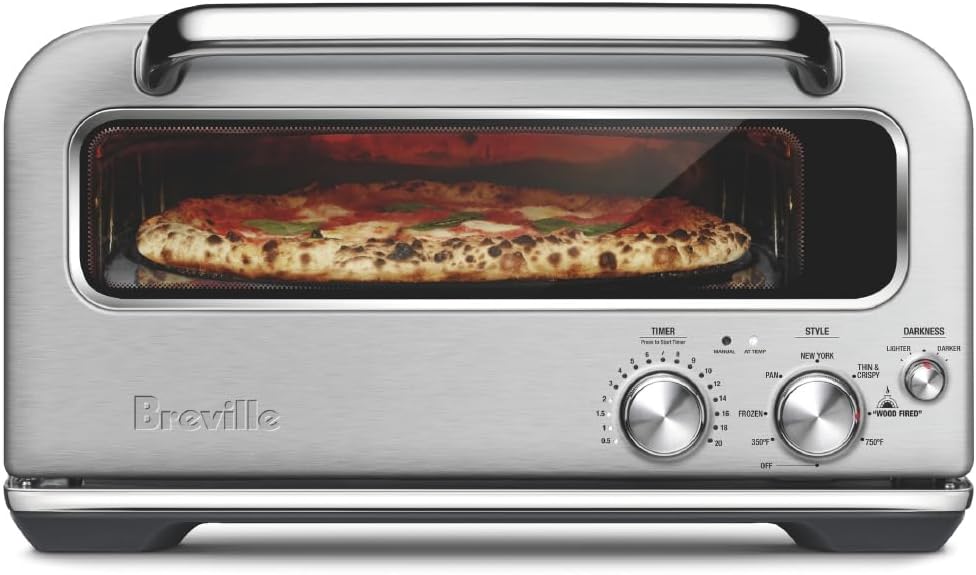
Breville BPZ820BSS Smart Oven Pizzaiolo, Brushed Stainless Steel
Plugs into a wall, works indoors, separate top and bottom heat control, no fuel and no weather
Counter space, 12-inch class capacity, highest buy-in of the four
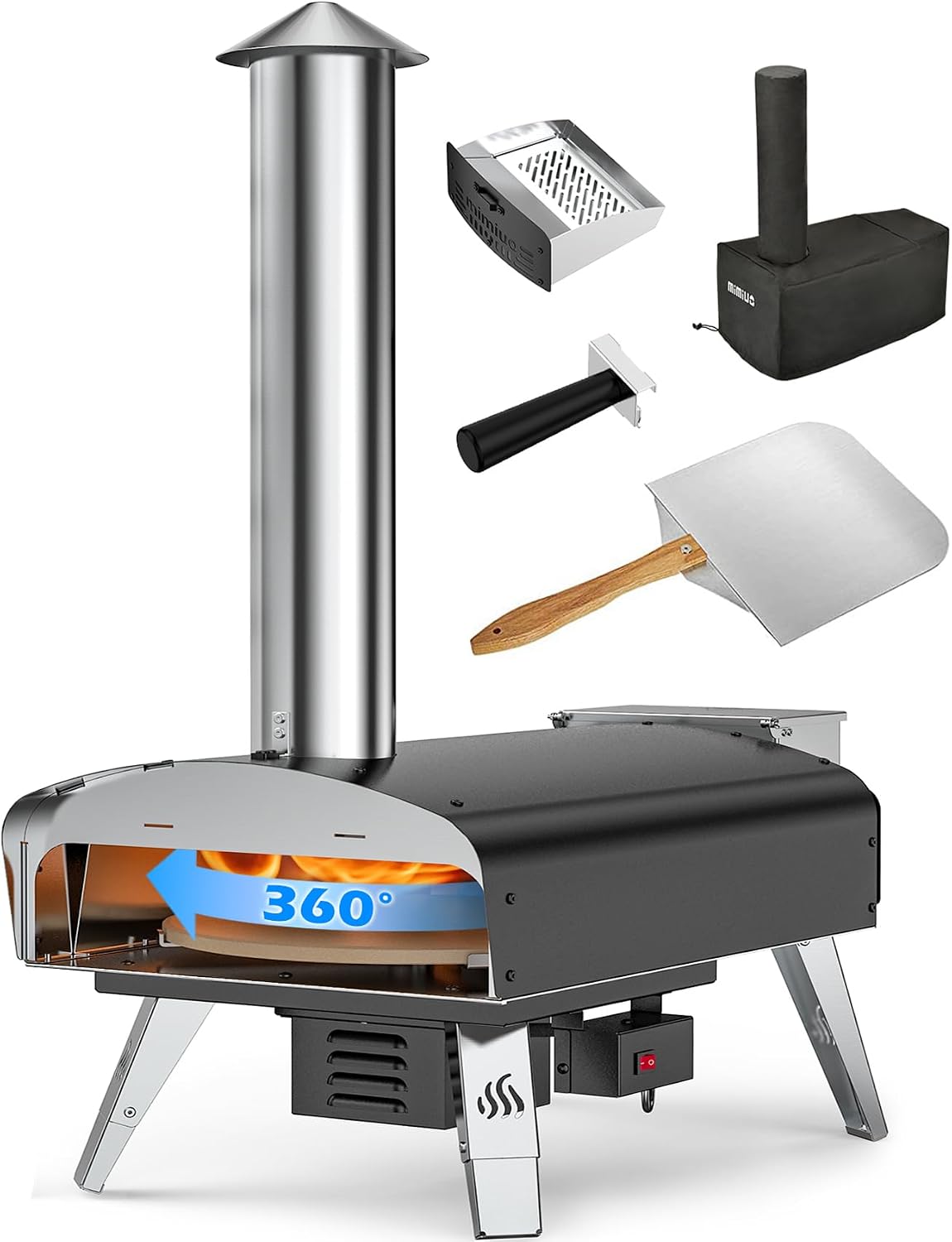
Mimiuo Auto-Rotating Wood Pellet Pizza Oven Outdoor 40Lbs, 60S Bake w/Stone
Auto-rotating stone turns the pie for you, pellets are cheap and steady, hopper feeds the fire
Needs power, pellets, and a dry home outdoors, plus cleanup between sessions
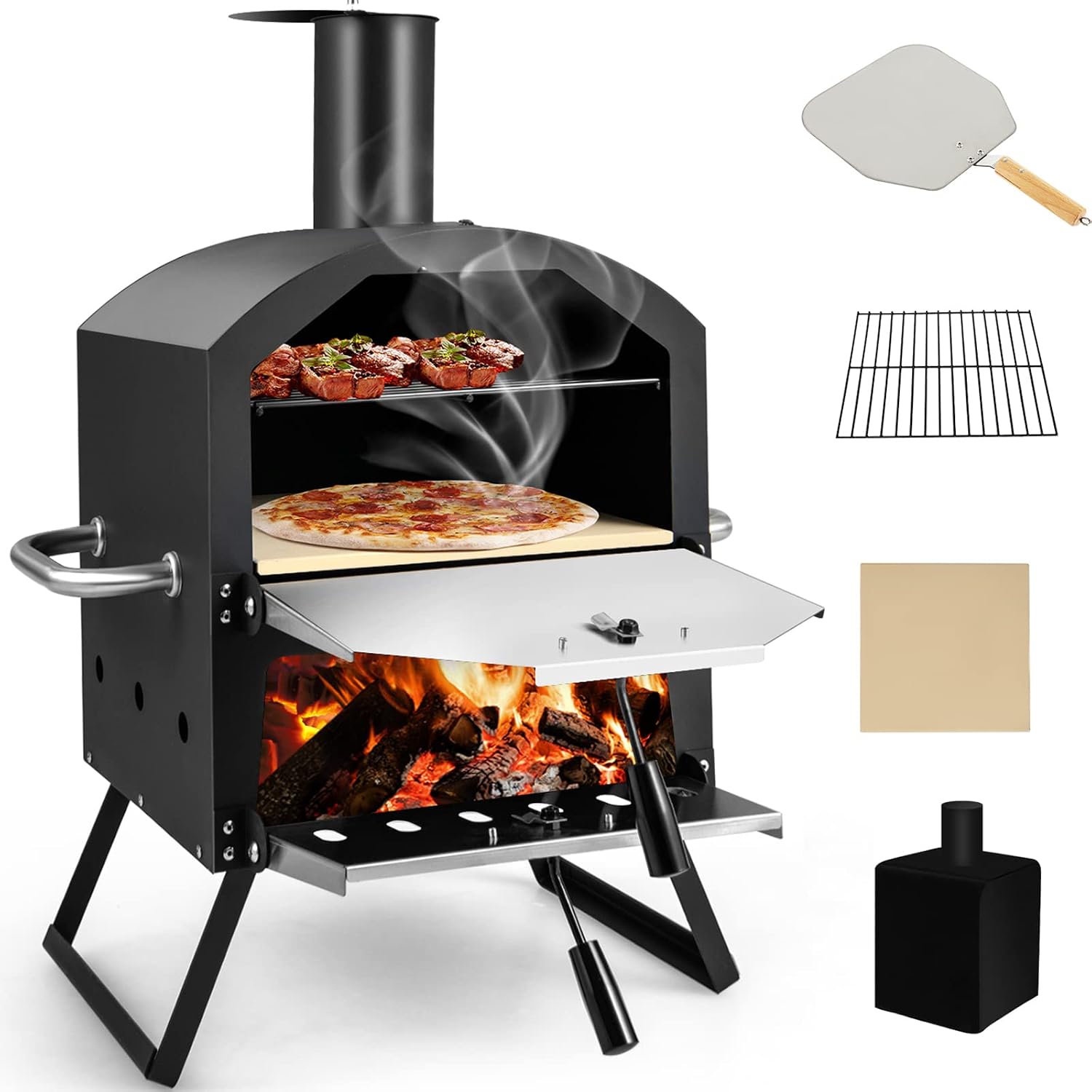
Giantex Outdoor Pizza Oven Wood Fired, 2-Layer Outside Pizza Maker
Lowest entry into live fire, two-layer body, no electricity needed
You manage the fire the whole time, needs charcoal plus wood, slowest path to a repeatable pie
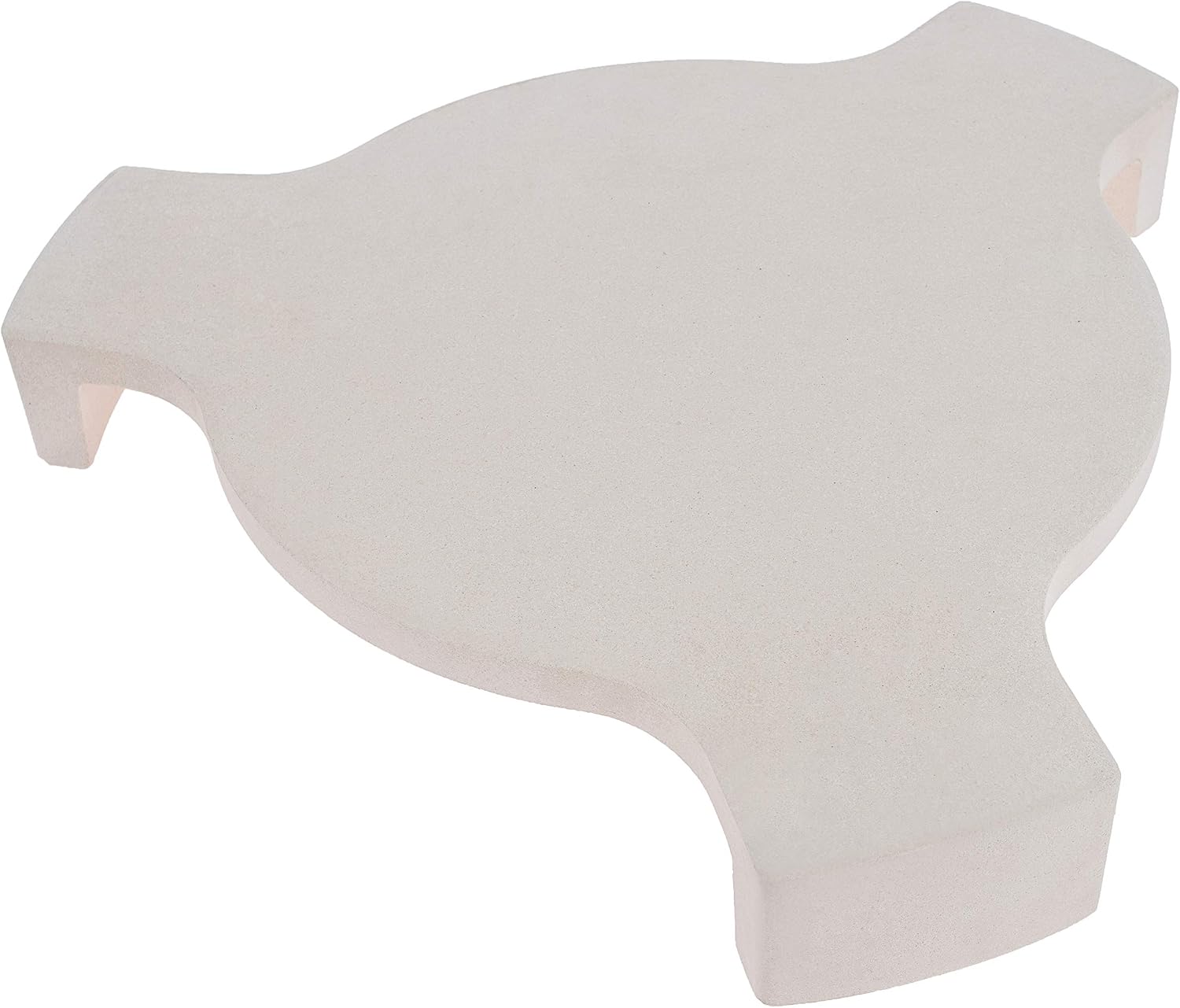
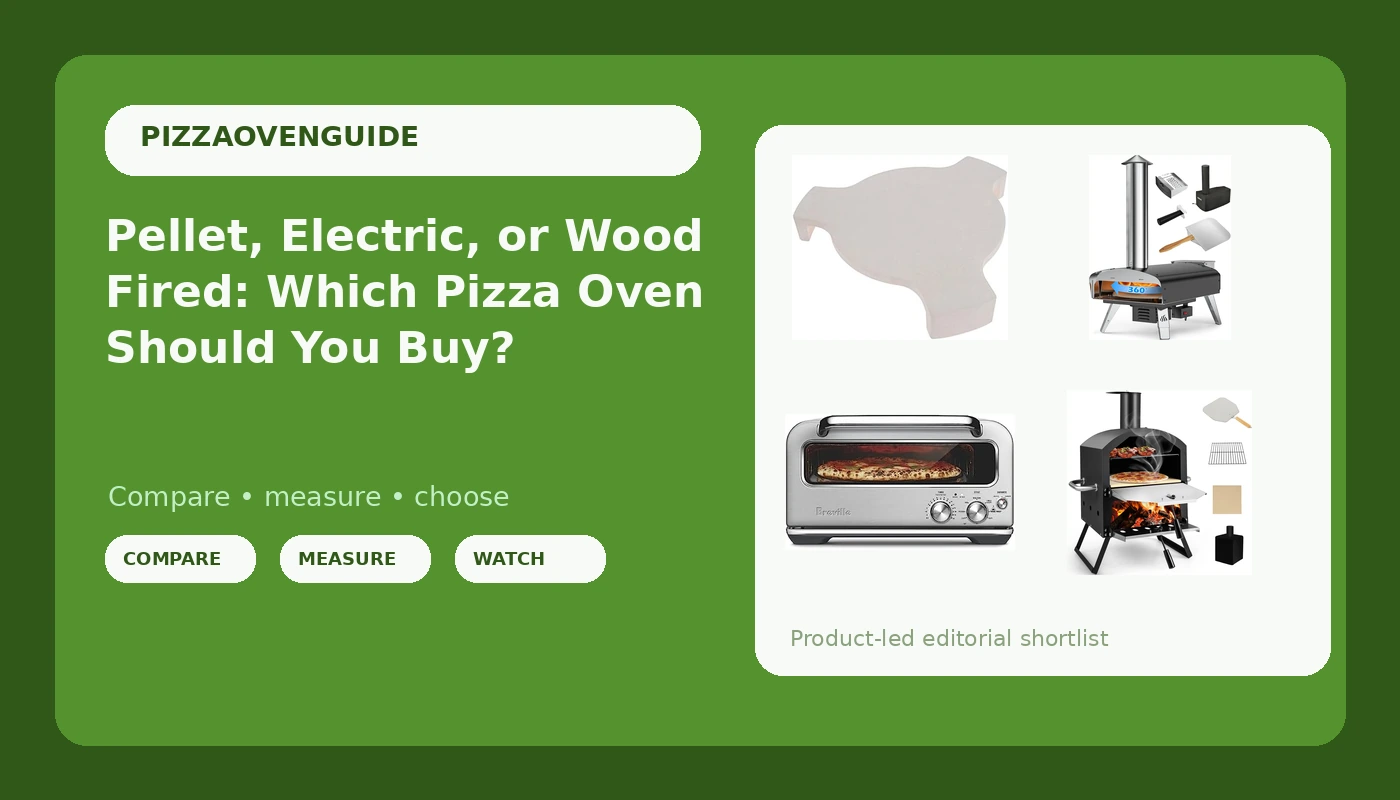
Heat Deflector 76251 for Pit Boss/Louisiana Grill K24, Heat Deflector 60131
Spreads heat across the cooking surface instead of one hot spot, cheap fix for an existing grill
Only useful if you already own the matching Pit Boss or Louisiana Grill
Prices and availability were captured from Amazon Creators API and may change.
What actually decides whether an oven works
Three things, in order. Stone temperature, recovery time, and whether you will actually light it.
Stone temperature is the spec that matters most, and it is the one boxes lie about. The reason a pizzeria pie looks the way it does is that the stone is hot enough to puff the rim and spot the underside in about ninety seconds. Leoparding, those dark blistered spots on the cornicione, is a heat event. If your stone sits at the temperature of a home oven, you are baking bread with cheese on it, and no amount of fancy flour changes that. The honest way to check any oven you own is an infrared thermometer pointed at the stone, not the dial. Dials lie. Stones do not.
Recovery time is the spec nobody prints. The first pie is never the problem. The fourth pie is. Every time you open the door or the dome, heat leaves, and a cheap oven takes ten minutes to come back while a good one comes back in two. That gap is why a small oven that runs hot beats a big oven that runs warm. I would rather have twelve inches of real heat than sixteen inches of maybe.
The third thing is behavioral. The best oven is the one you will fire up on a Tuesday after work. Nobody wants to build a fire at seven in the evening, and that single fact decides more purchases than any spec sheet.
The wood pellet route: Mimiuo Auto-Rotating Wood Pellet Pizza Oven
Pellet fuel is the compromise that makes sense to a lot of people. You get wood combustion without splitting logs, and the auger feeds the fire at a steady rate, which means the heat is more consistent than anything you will manage with a poker in one hand and a beer in the other.
The Mimiuo is built around the single hardest skill in this hobby: turning the pie at the right moment. An auto-rotating stone does that for you, so the bake is even on all sides instead of charred at the back and pale at the door. The 40 pounds in the name refers to hopper capacity, not cooking capacity, so read it as fuel storage rather than a number that tells you how many pizzas you get. The 60-second bake in the listing is a ceiling, not a promise. Treat any short bake claim as the best case on the best night with the oven fully soaked.
What you give up: it needs a power source for the auger and the rotation, it needs a dry place to live, and pellets absorb moisture if you leave them in the hopper through a wet week. Cleanup is real, ash is real, and you will want a shop vac or a good brush.
The indoor electric route: Breville BPZ820BSS Smart Oven Pizzaiolo
Electric countertop ovens are the reason weeknight pizza became a thing for people without yards. The Breville Pizzaiolo is the premium end of that class: a countertop appliance with a stone and independent control of the heat above and the heat below, which is the whole trick. Most home ovens give you one temperature for the whole cavity, so the top and bottom of the pie cook at the same rate. Being able to push the deck and hold back the broiler, or the reverse, is what gets you a blistered base without a burnt cheese cap.
The advantages are boring and enormous. It plugs into a normal outlet. It works in February. It works in an apartment. It works when it is raining sideways, which in this part of New Jersey is most of March. There is no fuel to buy, no ash to dump, and no wind to fight.
The trade-offs are equally clear. It occupies counter space permanently, because you will not haul it out of a closet for a weeknight pie. It is a 12-inch class oven, so large pies are out. And it is the most expensive thing on this list, which is the price of convenience and consistency in one box.
The budget wood-fired route: Giantex Outdoor Pizza Oven Wood Fired
The Giantex two-layer wood-fired oven is the entry point for anyone who wants actual fire and does not want to spend four figures. The two-layer body is about insulation and about keeping the outer shell from cooking your shins, and it is a legitimate design choice at this price. It runs on charcoal and wood, so it needs no outlet at all, which matters if your yard has no convenient power.
Here is the honest part. A budget wood-fired oven is a fire management job, not an appliance. You will feed it, you will watch it, and you will learn what your fuel does. The first pizza you make in any new oven is bad. Plan for it. The second one tells you what you bought. With this oven specifically, the second pie is where you find out whether you enjoy tending a fire or whether you just wanted dinner.
If you are the kind of person who finds the fire part meditative, this is a lot of oven for the money. If you are not, it will sit under a cover by August.
The part nobody talks about: the heat deflector
The Heat Deflector 76251 for Pit Boss and Louisiana Grill K24 is not an oven, and it does not pretend to be. It is a shaped steel plate that sits over the burn pot and spreads heat across the cooking surface instead of letting it concentrate in one spot.
That sounds minor. It is not, if you already own one of those grills. A pellet grill with an exposed hot spot will scorch the middle of a pizza while the edges stay pale, and no amount of turning fixes a heat source that is shaped wrong. The deflector, also referenced under 60131, changes the shape of the heat. If you have been trying to bake on a pellet grill and getting a burnt center every time, this is the cheapest change on this entire list, and it is the one most likely to alter your results, because it works with equipment you already paid for.
The limit is obvious: it only matters if you own the matching grill. If you do not, skip it.
Trade-offs worth naming out loud
Fuel and fuss. Pellets are clean and steady, wood and charcoal are dirty and alive, electricity is invisible. The cleaner the fuel, the less the oven feels like an event, and the more often you will use it.
Weather. The electric oven ignores it. The pellet oven and the wood-fired oven do not. A covered patio changes this calculation more than any spec.
Capacity. The electric tops out around a 12-inch pie. The pellet and wood-fired units can go bigger, which matters if you are feeding four people rather than two.
Learning curve. The electric is the shortest. The pellet oven is medium, mostly because of fuel and startup. The wood-fired box is the longest, because fire is a skill and not a setting.
Footprint. The electric lives on a counter. The other two live outside and need a permanent home, which is a real constraint in a small yard.
Who should buy what
Buy the Breville BPZ820BSS if you cook on weeknights, you have counter space, and you want repeatable results without buying fuel or checking the weather. It is the oven that will actually get used in a busy house.
Buy the Mimiuo pellet oven if you want live fire without becoming a fire tender. The auto-rotating stone removes the hardest part of the bake, and pellets keep the heat steady enough that you can host while it runs.
Buy the Giantex wood-fired oven if you want the ritual, you have an outdoor spot with no power nearby, and you are willing to spend a few sessions learning your fuel. Go in knowing the first pies are tuition.
Buy the Heat Deflector 76251 if you already own a Pit Boss or Louisiana Grill K24 and you have been fighting a hot spot in the middle of your baking surface. It is the least glamorous purchase here and possibly the most useful.
The bottom line
Nobody needs a nine hundred dollar oven to make a good pizza. You need a hot stone and a dough recipe you have made ten times. What the money buys is consistency, recovery time, and convenience, in that order. Pick the oven that matches the night you actually cook on, not the night you imagine you will cook on, and spend the difference on a better peel and an infrared thermometer. Those two things will improve your pizza faster than any upgrade on this list.