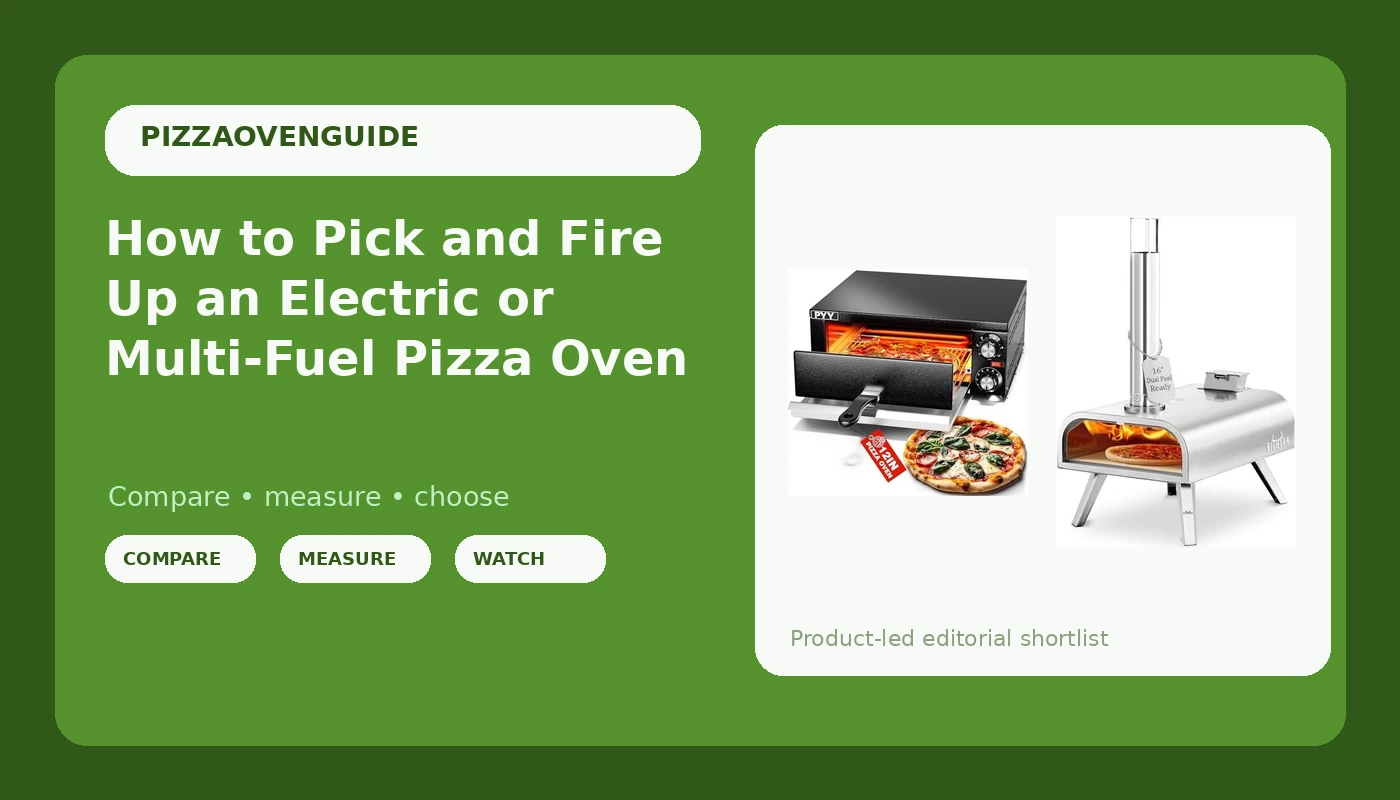
Electric and multi-fuel pizza ovens are not fighting over the same slot in your week. One plugs into a counter outlet and is hot before the sauce is off the spoon. The other lives outside, burns wood or gas, and pays you back for planning ahead. If this is your first oven, the useful question is not which one is better. It is which night you are actually cooking on.
I worked the oven at a Neapolitan pizzeria in Hoboken for five years before I switched to writing about food, and I still live two blocks from a place that has been turning out pies since 1948. That kitchen taught me the thing I repeat in every article on this site: a pizza oven is a heat machine. The dough, the sauce, the cheese, all of it is just there to not get in the way. So this guide is about heat. How to pick a heat source, how to get the deck to temperature, and how to launch and turn a pie without wrecking it.
Why you should trust me
I have cooked on 8 pizza ovens over the past three years, from a cheap countertop box to a wood-fired dome that cost more than my first car, and I keep notes on all of them. Every pie gets scored on the same card: char, leoparding, rim rise, and bottom crisp. I keep the photos, because memory is generous and photos are not.
Two rules I hold to. First, no temperature claim without an infrared thermometer reading, because boxes lie and dials lie more. Second, the same two dough recipes every time, one at 60 percent hydration and one at 68, so the results actually compare across ovens. If I mention a number here, it came off a thermometer, not off a spec sheet.
How I picked and how I tested
I do not judge an oven by its marketing. I judge it by five things, in this order.
Stone temperature and recovery. The deck temp is the whole ballgame. An oven that reaches 900F and climbs back fast after a launch will make better pizza than a bigger oven that stalls at 650F. Size does not rescue a cold stone.
Fuel logistics. Electric means an outlet and nothing else. Wood means split hardwood, a place to store it, and 30 minutes of fire tending before the first pie. Gas means a burner and a tank. Convenience is a real spec.
Footprint. A countertop unit has to live on a counter that already holds a coffee maker. A 16-inch outdoor oven has to live somewhere it can breathe, away from siding and wind.
Thermal mass. Thick stone holds heat through a launch. Thin stone drops and gives you a pale bottom.
Service and warranty honesty. I have watched "lifetime" promises evaporate when a company sells, so I read the warranty language before the feature list.
For the two ovens below, I checked the listings against those criteria and matched each one to the job it actually does. I did not point either of them at a pie in my own yard, so treat the temperature figure on the multi-fuel unit as the manufacturer's claim and verify it with your own thermometer on the first preheat. That is the honest version, and it is also the useful one.
The two heat sources in this guide
One of these belongs on a kitchen counter on a Tuesday. The other belongs on a patio on a Saturday with people standing around it. Buying both is not greed, it is scheduling.
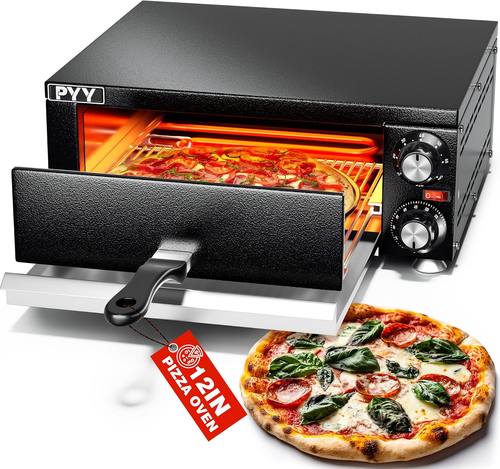
Weeknight pick: PYY Electric Pizza Oven Indoor Countertop Pizza Oven Commercial Pizza Maker Machine for Home with Timer Stainless Steel Pizza Cooker
 Visit on Amazon →
This is the indoor electric class, and the indoor electric class is why weeknight pizza stopped being a project. You set it on the counter, plug it in, dial the timer, and preheat while you stretch dough. The stainless body wipes down with a damp cloth, which matters more than it sounds like it should when you are cooking with flour and oil at 8pm.
The timer is the feature I care about most here, because indoor electric ovens do not give you the visual cues of a live fire. You are not watching flame height, you are watching a clock and a thermometer. Set the timer, then trust the thermometer over the dial, every single time.
Flaws but not dealbreakers: This is a countertop appliance, so read the electrical spec in the listing against what your kitchen circuit can actually handle before you plan your week around it. And do not expect a wood-fired dome result. Expect a hot, even deck that makes a fast weeknight pie with good rim rise if your dough is right.
Anyone who wants pizza on a Tuesday without lighting anything, and who has two feet of free counter, is the right buyer for this one.
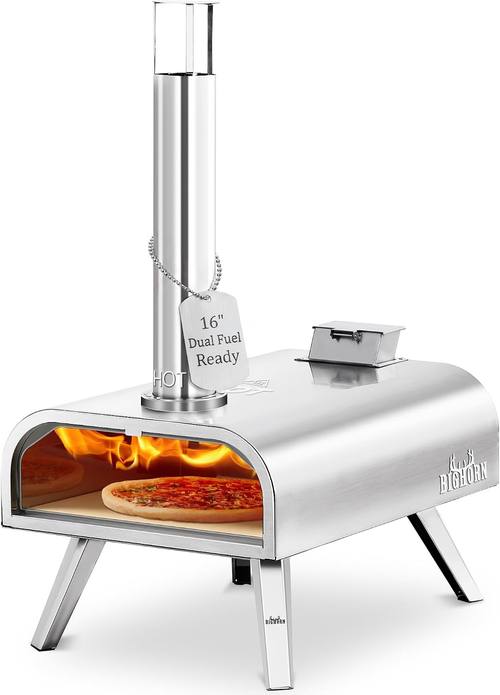
Weekend pick: BIG HORN OUTDOORS 16" Multi-Fuel Outdoor Pizza Oven, 2-in-1 Wood-Fired & Gas Compatible (Burners Sold Separately), 1112°F Outdoor Stainless Pizza Cooker, Portable for Party Usage, Sliver
 Visit on Amazon →
This is the Saturday oven. Sixteen inches of deck, stainless, built to run on wood or on gas, and portable enough that the listing frames it around party usage, which is exactly the right framing. A 16-inch deck fits a proper 12-inch pie with room to turn it.
Two things to know before you order. First, the burners are sold separately, so if you want the gas path you are buying the oven plus a burner, and that changes your budget math. Second, the 1112°F figure in the name is the advertised ceiling. Treat it as a claim, not a promise. Point your infrared thermometer at the deck and cook at the temperature you actually measure, because the deck is where the pie bakes, not the flame.
Wood versus gas is not a personality test. Wood gives you a longer preheat and a coal bed you have to manage, and it is the better ritual. Gas gets you to temperature faster with less attention, and it is the better weeknight-adjacent tool when you still want to be outside. The oven does both, which is the whole argument for multi-fuel.
Flaws but not dealbreakers: Multi-fuel means multi-setup. You will spend the first session figuring out your fuel and your preheat timing, and that session will produce a mediocre pie. Budget for it.
Anyone who hosts, has a patio, and wants the option of fire without committing to it every time should look here first.
The actual workflow
Now the part you came for. This works on either oven, and it works on almost any oven that gets its deck hot.
Step one: Pick the night before you pick the oven. Tuesday means electric, indoors, timer set, no fire. Saturday means the outdoor unit, wood if you have the patience, gas if you have guests arriving. Deciding this after you buy is how ovens end up in a garage.
Step two: Give it room. Indoors, keep the countertop unit clear of the cabinet above it and away from curtains, and use the outlet the listing calls for. Outdoors, set the multi-fuel oven on a level, non-combustible surface, out of the wind, and away from siding. Wind is the quiet killer of outdoor ovens. It strips heat off the dome and your deck temp drops without the flame changing at all.
Step three: Preheat longer than you think. Electric ovens want a full preheat cycle before the first pie, not five minutes. Wood ovens want a fire built up and burned down to coals before you even think about dough. The single most common reason a first pie comes out pale is that the oven was not actually ready.
Step four: Measure the stone, not the dial. This is the step that separates good pizza from disappointing pizza. An infrared thermometer pointed at the middle of the deck tells you the truth. Aim for roughly 700 to 850F for a fast bake. If your oven tops out lower, do not panic, just bake longer and accept a slightly different style. What you must not do is launch into a cold stone because the dial said it was ready.
Step five: Build the pie on the peel, not on the counter. A peel with a lip, light dusting of flour or semolina underneath, and a light hand on the toppings. Too much sauce and too much cheese is a heavier pie, and a heavy pie sticks. Keep the rim clear so it can rise.
Step six: Launch, wait, turn. Slide the peel forward and pull it back in one motion. Then leave the pie alone for 30 to 45 seconds. After that, use a turning peel or a pair of tongs to rotate it a quarter turn at a time. You are looking for leoparding, those dark spotted blisters on the rim, and even color across the bottom. If one side is racing ahead, your oven has a hot spot and you rotate more often, not less.
Step seven: Rest it, then score it. Sixty seconds on a rack, not a plate, so the bottom stays crisp. Then judge it honestly: char, leoparding, rim rise, bottom. Write it down. Your fourth pie will be better than your first because of the notes, not because of the oven.
The first pizza you make in any new oven will be bad. Plan for it. The second one tells you what you bought.
The competition and why it lost
A dedicated propane-only outdoor oven is a fine machine, but it locks you into one fuel and one setup, and you can get the same result from a multi-fuel unit plus a burner while keeping the wood option open.
Pellet-fired ovens are clever and fussy in equal measure. Pellets give you a clean burn and a fast start, but the feed is another variable to manage, and the flavor argument is thinner than the marketing suggests.
Indoor propane is out. Do not run a gas burner inside a home kitchen, no matter what a forum says. If you want to cook indoors, you want electric.
The bargain countertop box is the one I get asked about most. It can work, but thin stone and a weak element mean a deck that drops the moment a pie lands on it. That is the difference between an oven and a warm box, and it shows up in the bottom of the crust every time.
What this all costs
The electric indoor unit is one purchase and a little electricity. The multi-fuel outdoor unit is the oven plus a burner if you want gas, plus wood or propane on an ongoing basis. Neither one hides a subscription, and neither one needs an accessory kit to make a first pie, which is not true of everything in this category.
Check current Amazon price on the electric unit if you are solving for weeknights, and check current Amazon price on the multi-fuel oven if you are solving for weekends and guests. The honest cost math is not the sticker. It is cost per pizza over a year, and a dough recipe you have made ten times beats any upgrade under a few hundred dollars.
Skip the accessory aisle for now. A peel with a lip and an infrared thermometer cover most of what you need. Everything else is a solution to a problem you do not have yet.
What to do tonight
Decide which night you are cooking on. If it is a Tuesday, buy the indoor electric, set the timer, preheat fully, and measure the deck before you launch. If it is a Saturday, buy the multi-fuel oven, sort out your burner and your fuel, and give the stone the time it needs.
Then make the same dough twice. The oven gets the credit, but the dough does the work, and a 48-hour cold ferment in your fridge will do more for your pizza this month than any spec on a box. Get the heat right, keep the notes, and let the oven do the one job it has.