Related: Best Pizza Oven for a Small Backyard
Fuel decides everything else. That is the short version of how to choose a backyard pizza oven, and it is why the gas vs wood pizza oven argument usually ends in a draw. Both sides are right, just on different nights. Propane puts a pie on the table on a Tuesday. Wood gets you the Saturday pie with the spotted rim. Electricity gets you a pie in February without a coat on.
I cooked on a wood-fired floor in a Neapolitan pizzeria for five years before I moved to writing about ovens, and the lesson that stuck is the boring one: an oven is a heat machine. The dough, the sauce, and the cheese are only there to not get in its way. The machine's job is to hold a stone at a temperature and keep holding it while you do something else.
Four products are on this page. A propane oven with a rotating stone, a wood-fired oven on wheels, an indoor electric countertop oven, and one stainless accessory that only matters if you burn wood. This is not a brand ranking. It is a sort by the night you actually cook on.
The propane pick: VEVOR 16 in Outdoor Pizza Oven
Propane removes the tending. This VEVOR runs off a standard propane tank, and the feature that decides whether you like it is the auto-rotating stone. The stone turns under the flame, so the pie travels through the hot spot instead of you chasing it with a turning peel every twenty seconds. In a 16-inch chamber the back is always hotter than the front, and rotation fixes that better than any flame adjustment you can make by hand.
Sixteen inches is a full-size pie, not a personal one. If you have been baking on a 12-inch stone in a home oven, this is the jump that matters for rim rise, because you finally have room to stretch a proper skin and still leave a cornicione. The carry bag is the other detail worth noticing. This is an oven that packs down and travels, which is the difference between a pizza night and a pizza night somewhere else.
What it is not is a wood oven. There is no fire to feed, no ash to deal with, and also no smoke. You are trading a little character for a lot of repeatability, and on a weeknight that is the right trade.
The wood-fired pick: Happygrill Outdoor Pizza Oven
Wood is the fuel for the night you are not in a hurry. The Happygrill is a wood-fired oven with wheels and a built-in thermometer, and both of those features earn their place. Wheels matter more than they sound. A wood oven has thermal mass, which is a polite way of saying it is heavy, and being able to roll it under cover between cooks is the difference between an oven that lasts and an oven that rusts.
The built-in thermometer is useful and also a trap. A dome dial reads the air at the top of the chamber, which runs hotter than the floor you are actually launching onto. Treat it as a rough guide and check the stone itself with an infrared thermometer before the first pie goes in. That stone temp is the reading that tells you whether you are ready.
Budget a long preheat, because the fire has to soak the stone before the stone can bake. This is the oven for someone who enjoys the tending, not someone who wants to press a button. If that is you, the extra time is part of the meal rather than a cost of it.
The indoor electric pick: VEVOR Electric Pizza Oven
This is the one that answers the Tuesday problem. The VEVOR electric countertop oven is a 16-inch indoor unit with a 77 to 572°F range, 1750 watts, dual heat tubes, and separate timing and temperature controls. You set the dial, you set the timer, and you walk away, which is the entire argument for electric.
Be honest with yourself about the ceiling. 572°F is a hot home oven, not a Neapolitan one. You will get an even bake, good browning, and a bottom that sets properly. You will not get the 60-second bake or the heavy leoparding that comes off a stone running closer to 900°F. If your goal is a great weeknight pie built on a 48-hour cold ferment dough, this clears the bar. If your goal is a true Neapolitan rim, it does not, and no countertop electric unit at this level will.
Two practical notes. First, it is built for indoors, so it wants a counter, ventilation, and a normal kitchen outlet. Second, the included grill rack widens it past pizza, so it can pull duty on vegetables and flatbreads between pizza nights.
The one accessory worth adding: Stainless Steel Pizza Oven Baffle Door
A baffle door does two jobs on a wood-fired oven. It holds heat in the chamber between pies, and it gives you a way to choke the airflow when the fire is running hotter than you want. It is also the kind of part that gets dropped, dented, or left out in the rain, and replacing it costs far less than replacing the oven.
This one is stainless steel, 16 inches by 4 inches. Measure the mouth of your oven before you order, because the size has to match the opening and not every oven uses the same dimensions. If you cook on gas or electric, you do not need this at all.
The reference table
Four products, sorted by fuel. Specs come from the listings. Nothing here is a ranking.
| Oven | Fuel | What the listing states | Best for | Price |
|---|---|---|---|---|
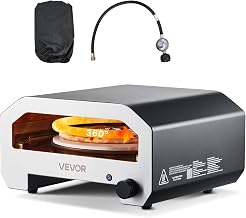 Visit on Amazon → VEVOR 16 in Outdoor Pizza Oven |
Propane | 16 in chamber, auto-rotating stone, carry bag | Repeatable pies with no fire to tend | $259.90 |
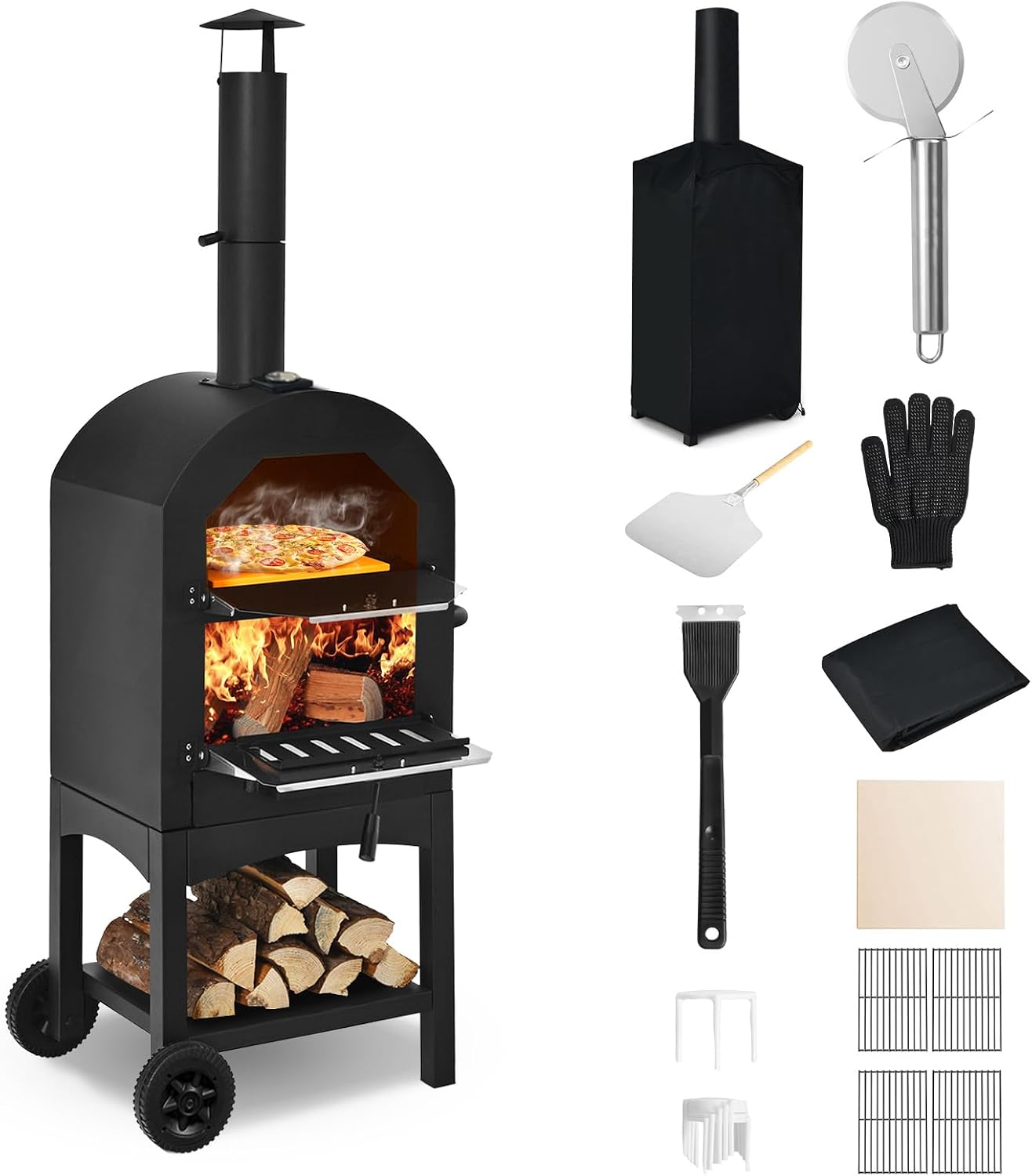 Visit on Amazon → Happygrill Outdoor Pizza Oven |
Wood | Wood-fired chamber, wheels, built-in thermometer | Weekend cooks who want to tend a fire | $163.59 |
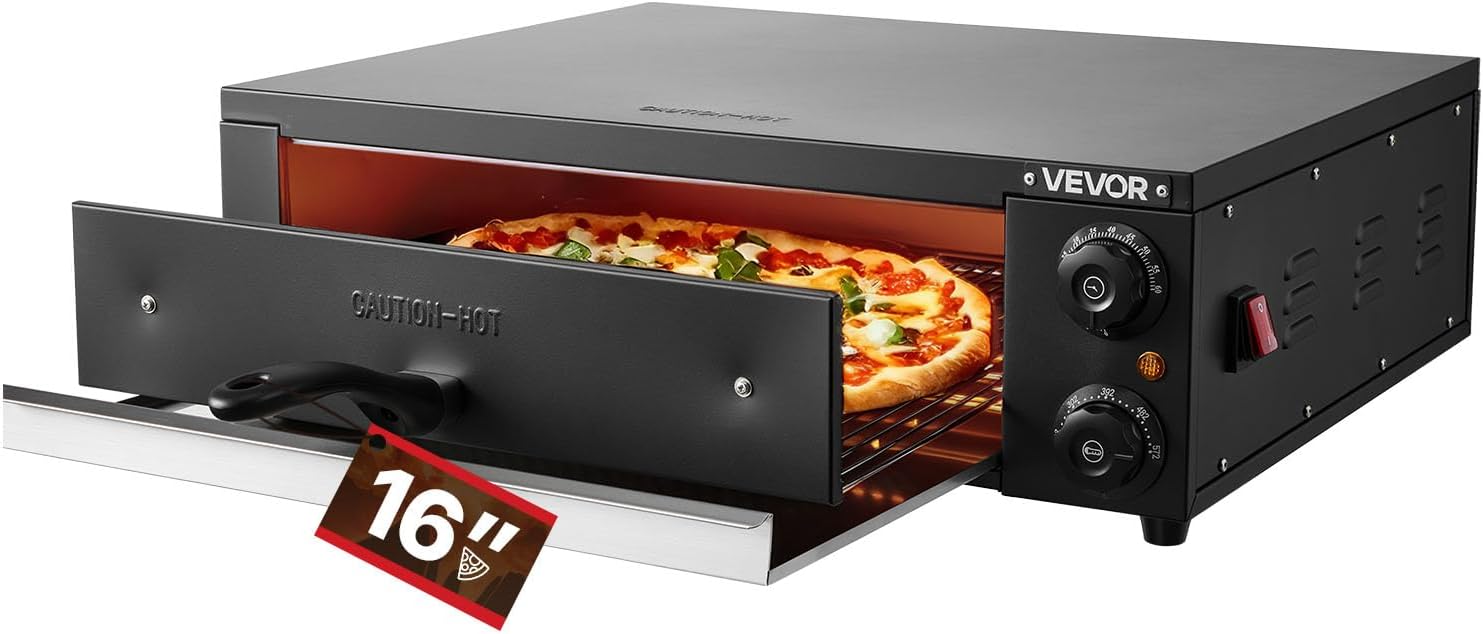 Visit on Amazon → VEVOR Electric Pizza Oven |
Electric | 77 to 572°F, 1750W, dual heat tube, timing and temp control, grill rack | Indoor weeknights and cold weather | $159.90 |
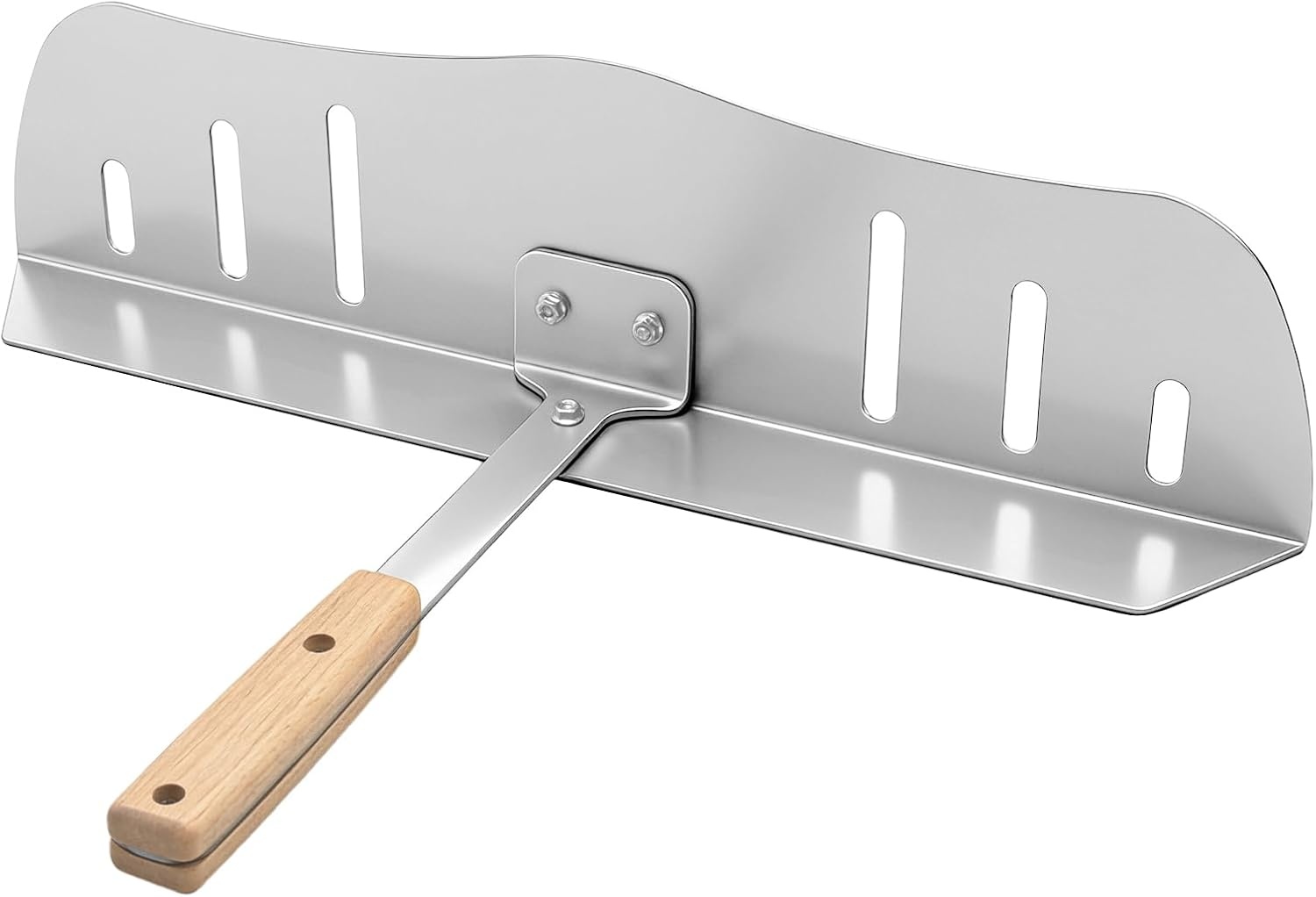 Visit on Amazon → Stainless Steel Pizza Oven Baffle Door |
None, accessory | 16 by 4 in stainless steel door | Wood-fired owners replacing a door | $35.99 |
How I judge an oven
The first pie out of any new oven is bad. Plan for it. The second one tells you what you bought.
I run the same two doughs through every oven I cook on. One at 62% hydration for a Neapolitan-style bake, and one at 70% with a longer ferment for a home-oven style bake. Same sauce, same cheese, same launch technique, same peel. If an oven cannot turn out a decent second pie with dough I have made a hundred times, the problem is the oven and not the dough.
Then I watch four things. Char: is it even across the pie, or is one edge black while the other is pale? Leoparding: are the spots small and distinct, or are they blotches? Rim rise: did the cornicione open, or did the skin stay flat? Bottom crisp: does the base hold under the topping, or does it go limp two minutes after it comes out?
The tool that answers most of this is an infrared thermometer aimed at the stone, not the dial on the front of the oven. A dial tells you what the oven thinks it is. The stone tells you what you are actually baking on.
What the specs actually tell you
Temperature range is the spec that matters most, and it is the one most listings bury.
The electric VEVOR states 77 to 572°F, and that number does real work for you. It says this is an indoor oven built for long, controlled bakes rather than a 900°F blast. It also says it will hold a low temperature, which is useful for proofing dough and for warming, not just for pizza.
The propane VEVOR and the wood-fired Happygrill both give you a live flame, and neither one puts a number in the product name. That is not a red flag on its own, but it is the first thing to look up before you buy. An oven that advertises a high ceiling and tops out well below it is the most common disappointment in this category, and the only way to catch it is to read the stated range and then verify it yourself with a stone reading.
Attention is the second spec, and nobody prints it. Gas asks almost nothing of you. Electric asks nothing at all. Wood asks for a fire, a preheat, and a decision about airflow every single time you cook. Decide how much attention you want to spend before you decide how much money you want to spend.
Should you buy the VEVOR propane oven?
Yes, if you want repeatable pies without tending a fire. The auto-rotating stone does the job a turning peel does in a wood oven, and the carry bag makes it portable. Confirm the top temperature on the listing before you buy, because the name does not state one, and keep it outdoors. Propane belongs outside, always.
Should you buy the Happygrill wood-fired oven?
Yes, if the fire is part of the point. Wheels and a built-in thermometer are the two features that matter at this price of entry, and both are here. Pair the dome dial with an infrared thermometer so you are reading the stone and not the air above it, and expect the preheat to take real time. This is a Saturday oven, and it is honest about that.
Should you buy the VEVOR electric oven?
Yes, if you cook indoors on weeknights. The 77 to 572°F range with separate timing and temperature control means you can set it and leave it, and 1750 watts through dual heat tubes is enough for a solid bake on a stone. Just go in knowing 572°F is a home-oven ceiling, not a pizzeria one. Good pizza, not Neapolitan pizza.
Should you buy the baffle door?
Only if you own a wood-fired oven with a 16 by 4 inch opening. Measure the mouth of your oven first, because this part has to match the opening. If your oven runs on gas or electricity, skip it and spend the money on a better peel.