Shopping for gas outdoor pizza ovens is mostly an exercise in reading between the lines. Every listing promises a hot oven. None of them tells you how the oven behaves on the third pie of the night, when the stone has given back some of its heat and the guests are still hungry.
I worked the oven at a Neapolitan pizzeria in New Jersey for five years before I switched to writing about food, and the lesson from that kitchen travels straight to a backyard: a pizza oven is a heat machine. The dough, the sauce, and the cheese are just there to not get in its way. So when readers ask me to sort through four ovens at four different price points, I start with heat and work outward to fuel, footprint, and the size of the pie the oven is built around.
The four models below are the ones worth understanding in this class right now. They are not interchangeable, and the gaps between them are not marketing noise. They are differences in the kind of night you are planning.
Related: Gas vs Wood Pizza Oven: Which Fuel Fits Your Backyard →
Quick answer
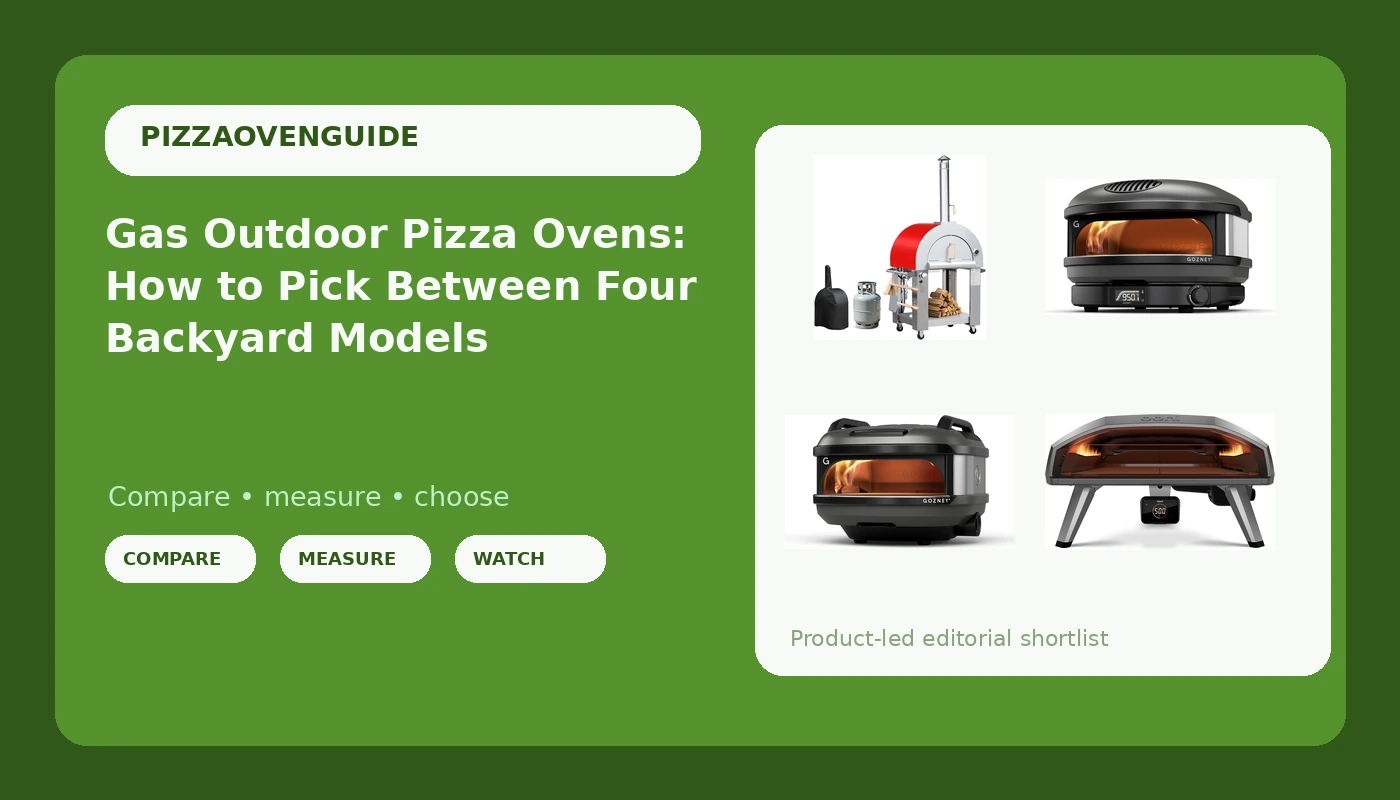
All four are outdoor ovens built for high heat, and the practical differences come down to fuel, maximum pie size, and footprint. The KOSTCH 32.5 inch is the large-format dual-fuel option, running on wood or propane and sized for an outdoor kitchen. The Gozney Arc is a propane oven whose listing states heat up to 950F. The Gozney Tread is the compact one, built around 12 inch pizzas with the same listing figure. The Ooni Koda 2 Pro is an 18 inch gas oven that ships with a regulator and hose. Match the fuel and the pie size to the way you actually cook, then confirm the details on the listing before you order.
Four useful options
| Model | Best fit | What stands out |
|---|---|---|
| KOSTCH 32.5 inch Wood Fired and Propane Gas Pizza Oven for Outdoor Kitchen in Stainless Steel, Large Pizza Oven for Outside, Yard and Party (Red with Cover) | A fixed outdoor kitchen where the oven stays put | Wood and propane in one stainless steel frame, with a cover included |
| Gozney Arc Propane Outdoor Pizza Oven, Heats up to 950F - Off Black | Cooks who want propane only and repeatable bakes | Listing states heat up to 950F |
| Gozney Tread Pizza Oven, Make 12” Pizzas Fast, Heat up to 950F - Black | Small spaces and quick weeknight bakes | Built around 12 inch pizzas; listing states heat up to 950F |
| Ooni Koda 2 Pro Gas Pizza Oven, 18" Gas Powered Outdoor Oven with 28 mBar Regulator and Gas Hose, Gas powered Portable Pizza Oven - Black | Feeding a group from a setup you can move | 18 inch gas oven with a regulator and gas hose included |
The large-format dual-fuel option: KOSTCH 32.5 inch
Dual fuel sounds like having it both ways, and for some cooks it is. The trade-off is complexity and size. A 32.5 inch oven is furniture, not a gadget, so it wants a permanent corner of a patio or an outdoor kitchen rather than a folding table. A frame that big also takes longer to bring up to temperature and burns more fuel per session than a compact oven. One detail worth confirming on the listing: how the wood side actually works, because some dual-fuel designs use a wood tray for smoke while the burner carries the heat, and others expect a live fire you feed by hand. If you want a fire on Saturday and gas on Tuesday without buying twice, this is the category to shop.
The 950F propane option: Gozney Arc
Gozney is the brand I think of as restaurant equipment scaled down for a patio, and the price reflects that. The Arc is propane only, which is the point. There is no wood to source, no fire to manage, and no ash the next morning. What you give up is the smoke and char that a live fire puts on a crust, and that is a real loss for some cooks and no loss at all for others. The 950F figure on the listing is the number to weigh, because temperature range is the spec that separates a real pizza oven from a hot box. My rule of thumb: a 12 inch oven that hits 900F beats a 16 inch oven that struggles past 700F. Gas makes that heat repeatable, which is why propane is what I recommend to anyone cooking pizza on a Tuesday.
The 12-inch fast-bake option: Gozney Tread
The Tread is the compact entry in this group, and 12 inches is the detail that shapes everything else about owning it. A 12 inch pie is a personal pizza in most pizzerias, but it is also the size a smaller stone handles best: less stone to heat, less floor to recover between launches, and less space needed on a balcony or a small patio. Feeding four people means four launches instead of two, so launch speed becomes part of the skill you are buying. For a household of one or two, or a space where a 32 inch frame would never fit, the smaller format is not a compromise. It is the correct shape for the room.
The 18-inch gas option: Ooni Koda 2 Pro
Ooni is the brand that made backyard pizza a thing, and the Koda line is what I point beginners toward because there is very little to learn before the first bake. The 18 inch size is the headline here: an 18 inch pie is a party pie, and it needs a bigger peel, a bigger landing zone, and a little more confidence on the launch. The included 28 mBar regulator and hose matter more than they sound, because the connection is the part people forget until the oven is already on the table. Confirm that the regulator and hose match the propane supply and tank fitting you actually use before you order. Portable here means you can move it, not that it fits in a backpack.
Prices and availability may change. Product images, names, and retailer links are matched to verified listings. No current price, rating, stock status, or measured result is stated here without current evidence.
What a 950F claim actually means
A heat figure on a box usually describes the peak temperature an oven can reach, measured at its hottest point, often the dome or the moving air, and not the surface your dough lands on. The number that bakes your pizza is stone temp, and stone temp is a reading, not a promise. It is why I keep an infrared thermometer within reach on every oven night: it tells me whether the deck is at 750F or 900F, and that difference decides whether the rim rises in 60 seconds or 90.
The second number that matters is recovery. Every time you open the door and slide a pie in, the stone gives up heat to the dough. A good oven claws that heat back between bakes, and a weak one keeps sliding, so pie four comes out pale and pie one came out perfect. That is the difference between an oven that hosts a dinner and an oven that bakes two pies and calls it a night.
I have not put a thermometer on every oven in this list, so I am not going to quote a measured deck temperature for any of them. Treat the stated figures as manufacturer claims to verify, not as readings I took.
Fuel, footprint, and the size of the pie
Fuel decides your weeknight, footprint decides your patio, and pie size decides how many people you can feed per bake. Get those three in order before you look at anything else, because a great oven that does not fit your routine is a bad purchase.
- Pick the fuel you will actually maintain. Propane for repeatable bakes with almost no setup, wood when tending a fire is part of the pleasure, dual fuel when you want both.
- Measure the space, not just the counter. Add room for the door swing, the peel, and your own footing.
- Choose your pie size first: 12 inch for one or two people and tight spaces, 18 inch for groups and party pies.
- Budget for the accessories that do real work: a peel, an infrared thermometer, a cover, and fuel.
- Confirm the listing details before ordering, including what fuel the oven burns, what is included in the box, and current availability.
Practical guidance before you order
- Buy a peel with a lip. A flat peel with no back edge is how a finished pie ends up on the floor.
- Get an infrared thermometer. Reading the stone beats trusting a dial, and it is the cheapest upgrade in this hobby.
- Fix your dough before you fix your oven. A 48-hour cold ferment improves your pizza more than any upgrade under $300.
- Plan for the first pie to be bad. The second one tells you what you actually bought.
- Check whether a cover, regulator, and hose are included, since those are the extras that stall a first bake.
Which option should you choose?
Choose the KOSTCH 32.5 inch when you want one oven that can burn wood on a Saturday and run on propane on a Tuesday, and you have a permanent spot for a large stainless steel frame. Choose the Gozney Arc when you want propane only, repeatable high heat, and a listing that states up to 950F. Choose the Gozney Tread when your space is tight, your pies are 12 inches, and speed matters more than volume. Choose the Ooni Koda 2 Pro when you need to feed a group, want an 18 inch pie, and would rather not shop for a regulator and hose separately.
One caveat on all of this: I have not run an eight-pie test on every oven here, and I will not quote a deck temperature I have not measured myself. Treat every heat figure above as a claim to verify against the listing and your own thermometer.
The bottom line
The oven gets the credit, but the dough does the work. Once you have a ferment schedule you trust, buy the oven whose fuel, pie size, and footprint match your real week, not your imagined one: propane and a compact frame for fast weeknights, dual fuel and a large frame for the nights you want a fire, an 18 inch gas oven when the table is full. None of these four is a bad choice at its own job. The mistake is buying the one that suits someone else's Saturday.