The best pizza peel setup isn’t one peel. It’s two. A thin aluminum blade for pulling finished pies off the stone, and a raw wooden board for launching raw dough without a fight. I’ve spent three years testing eight ovens and more peels than I can count, and I still keep both within arm’s reach of my rig. Here’s why, and how to use them without wrecking your dinner.
The Skyflame Aluminum Pizza Peel and the New Star Foodservice Wooden Pizza Peel are the best $45 you can spend on pizza gear, because together they solve the only two problems that actually ruin a pizza: sticking on the launch and tearing on the retrieve.
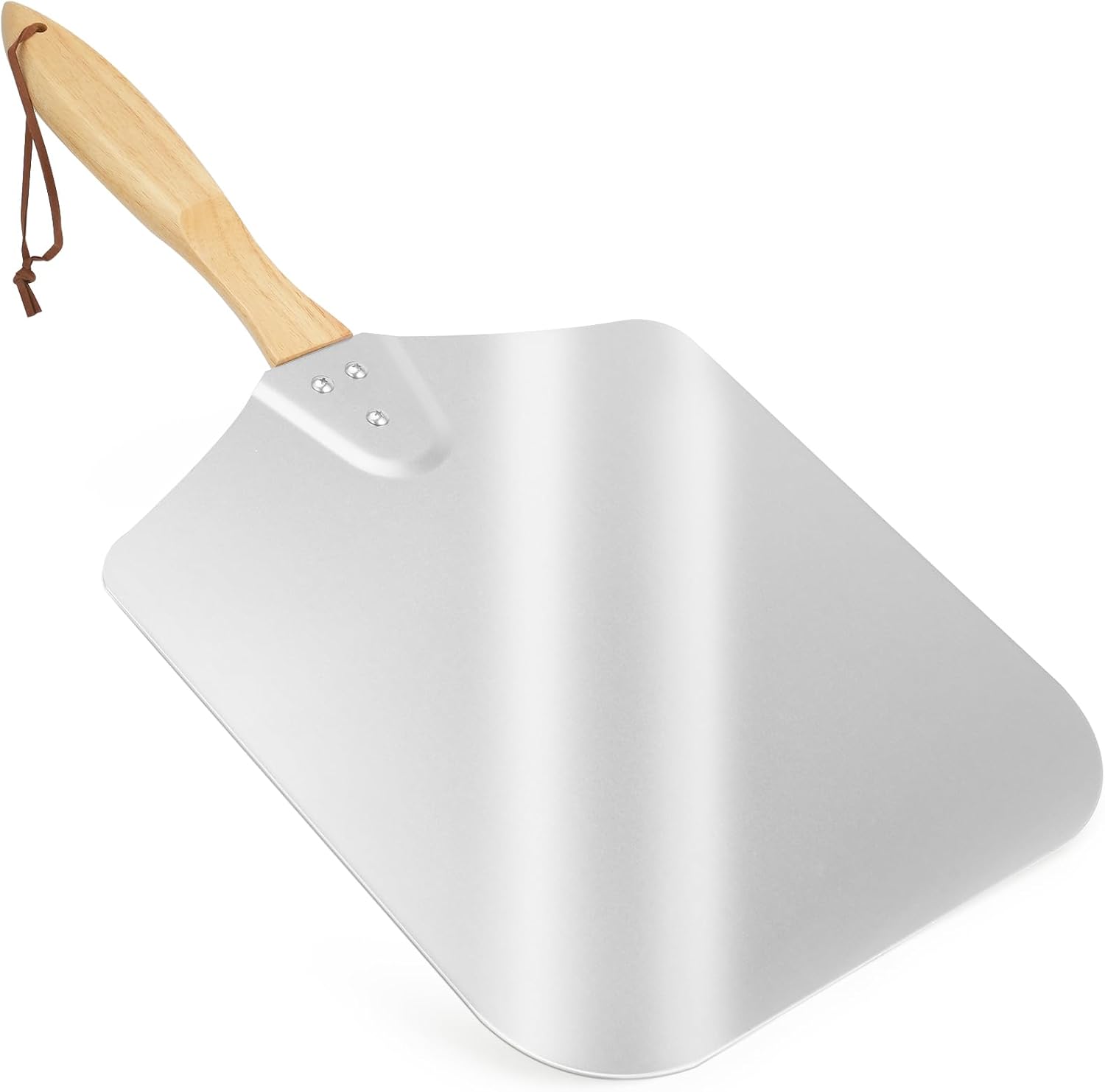
Skyflame 14-Inch x 16-Inch Aluminum Pizza Peel
Thin blade slides under baked pies effortlessly, sturdy enough to lift 2.5 lbs
Visit on Amazon →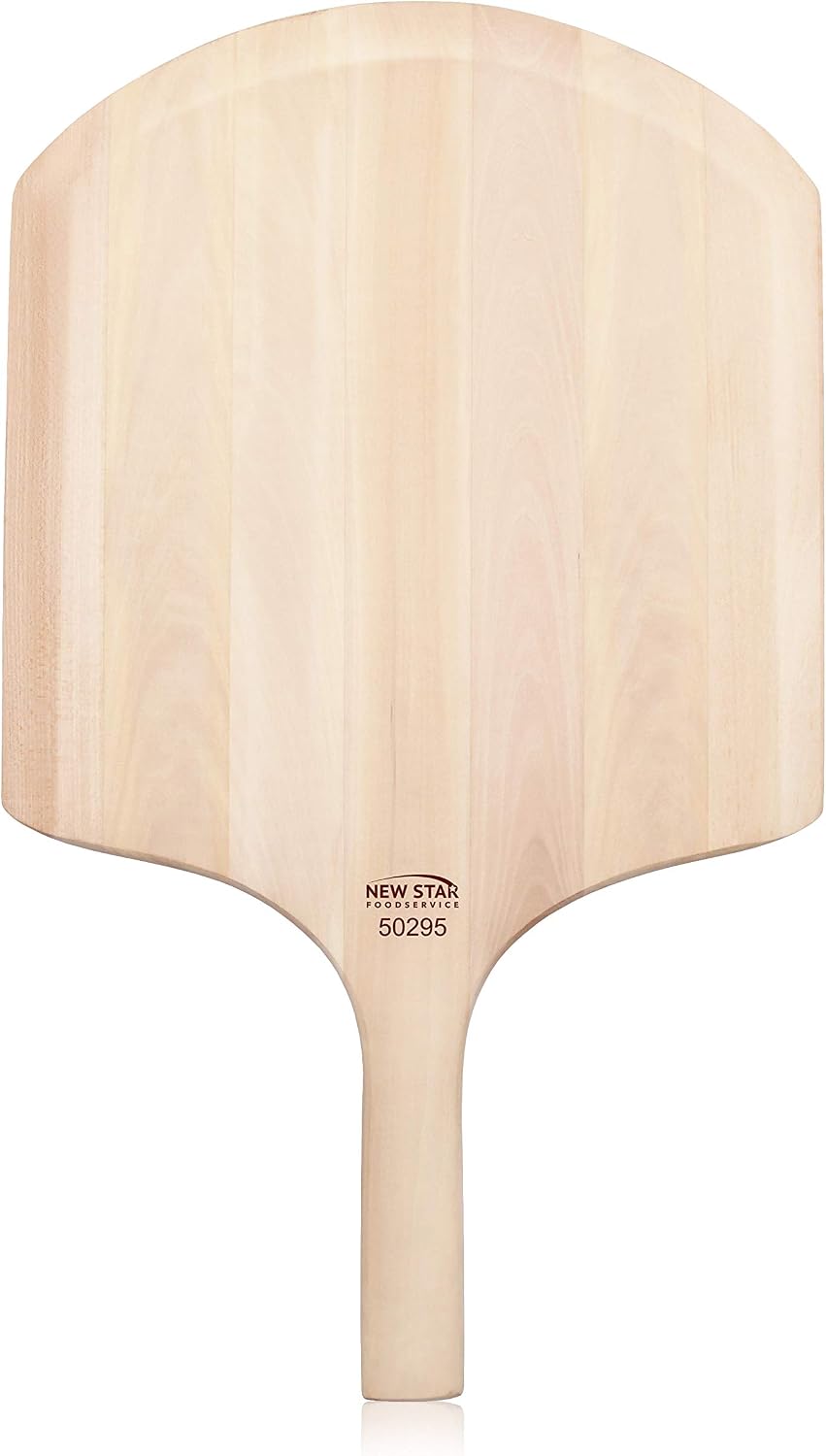
New Star Foodservice 50295 Wooden Pizza Peel, 16" L x 14" W Plate
Perfect launch surface when seasoned, good use, right size for home ovens
Visit on Amazon →Why you need two peels
The biggest lie in pizza gear is that one peel does everything. A metal peel is too grabby for raw dough. A wooden peel is too thick to slide under a baked pie. I learned this the hard way during my first year on the deck at the pizzeria, and I watched it happen again in my own backyard testing.
One buyer put it better than I could: “you need two pizza peals – one wood (to put in) and one metal (to take out).” That person learned the lesson the same way I did, with a stuck pie and a hot oven.
The aluminum peel is the best $25 you’ll spend. The thinness is the whole game. It slides under a finished pie like it’s not there, even when the bottom has charred onto the stone. I’ve used mine to pull pies out of an oven hot enough that I could feel my eyebrows curl, and the blade never flexed.
One reviewer loaded theirs with “13-15 inch pizzas with thick layers of sauce, quadruple cheese and 3-4 types of meat toppings” and it held up.
Another lifted a 2½-pound metal plate without deforming. That’s the abuse a peel should survive.
But the aluminum peel fails at launching. Raw dough sticks to metal. I don’t care how much flour you use, the dough will find the metal and it will stick. The reviews are full of people who tried and failed.
One buyer, from March 2021, said it plainly: “when you place the raw pizza dough on the peel it will sometimes stick and cause issues even with cornmeal.” That matches what I found with wet dough.
The wooden peel solves the launch, but it arrives unfinished
The New Star Foodservice Wooden Pizza Peel is the launch peel you want, but you need to be prepared to finish it yourself. The wood comes raw. It will stain the first time you use it. One buyer tried washing theirs with soap and water and made it worse, scraping away soft wood until they had to sand and oil it themselves.
That’s annoying, but it’s also expected. Wooden peels need seasoning, just like a cast iron pan. The reward is a launch surface that actually works. The same buyer who complained about the finish also said that with “a little bit of semolina and general purpose flour on top, every pizza launched within 60 seconds had zero issues.” That’s the whole point.
The size is right, too. The plate measures roughly 14 by 12 inches, which gives you a good working area for home pizza. The long handle provides use, which one buyer specifically praised. But it’s heavier than the aluminum peel, and if you’ve got small hands, it can be a handful.
How to launch without sticking
The single most common complaint across both products is dough sticking to the peel. It’s the thing that ruins pizzas, ruins dinners, and ruins tempers. And it’s almost always a technique problem, not an equipment problem.
The fix is simple: use more flour, use the right flour, and don’t let the topped pizza sit on the peel. My window is 60 seconds. Launch within a minute of topping, and you’re fine. One buyer solved it by mixing flour and cornmeal to coat the peel, though they admitted it was “after a couple of misshaped pizzas.” Another used semolina to firm up the dough slightly, and that worked too.
The best solution I’ve found is parchment paper. Build the pizza on parchment, launch with the parchment, and pull the parchment out after 90 seconds. No sticking, no drama, no ruined pies. One buyer uses “silicone lined parchment” with their aluminum peel and reports it’s “incredibly responsive.” That’s a pro move, and it turns the aluminum peel into a launch peel too.
Compared to the alternatives
I’ve tested a $40 composite peel that claims to be the best of both wood and metal. It’s not. The blade is too thick to slide under a baked pie, and the surface is still too grabby for raw dough. It does neither job well.
The Kitchen Supply peel, at $25, is thinner and sturdier than the $35 Cuisinart aluminum peel I tried last year. The Cuisinart has a nicer handle, but the blade flexes when you’re pulling a heavy pie. The Kitchen Supply doesn’t.
The New Star wooden peel, at $20, is a better value than the $40 Ooni wood peel I tested. The Ooni comes finished and ready to use, but I had to re-oil it after three months. The New Star requires work upfront, but the wood is solid and takes a seasoning well.
Durability and the flaws you need to know about
The aluminum peel has two real flaws. The first is the missing hanging hole. Three different buyers mention drilling their own, and I did the same. It took thirty seconds with a drill bit. The second is the rough edges from the factory.
One buyer ran 800 grit around the edges to avoid cutting themselves during a rushed cooking party, and that’s not a bad idea.
The protective plastic stuck under the handle is a genuine nuisance, and the wooden handle feels unfinished.
The wooden peel has one real flaw: it stains. Accept it. The wood will absorb oil and smoke and char, and it will look ugly after a season. That’s fine. It’s a tool, not a display piece.
One thing I’ll warn you about with the metal peel: scraping the edge along a porous stone to clean it leaves “some aluminum caked onto the stone,” as one buyer noted. That’s probably not good. Use the edge for scraping charred cheese if you must, but don’t drag it across your stone while it’s hot.
Should you buy both?
If you’re making pizza more than once a month, yes. The two-peel setup costs $45 total, and it will last for years. The Kitchen Supply peel costs less than a dollar a month over a decade. The New Star costs about the same. That’s cheaper than a single bad pizza delivery.
If you’re only making a few pies a year, buy the wooden peel and use parchment paper for the retrieve. It’s not as clean as a metal blade, but it works.
If you’re using a Big Green Egg or a kettle grill with a pizza stone, get both. The launch is harder on a grill because you’re reaching over a hot fire, and the metal peel gives you the control you need on the retrieve.
What I’m testing next
I’ve got a composite peel in the pipeline that claims to fix the sticking problem with a textured surface. I’m skeptical, but I’ll give it a fair shot. I’m also working through a batch of sub-$300 ovens to see which ones can actually hit Neapolitan temperatures.
The $60 countertop box I tested last year couldn’t get above 450°F, which is useless for a real pie. I’ll update this post when I have results.