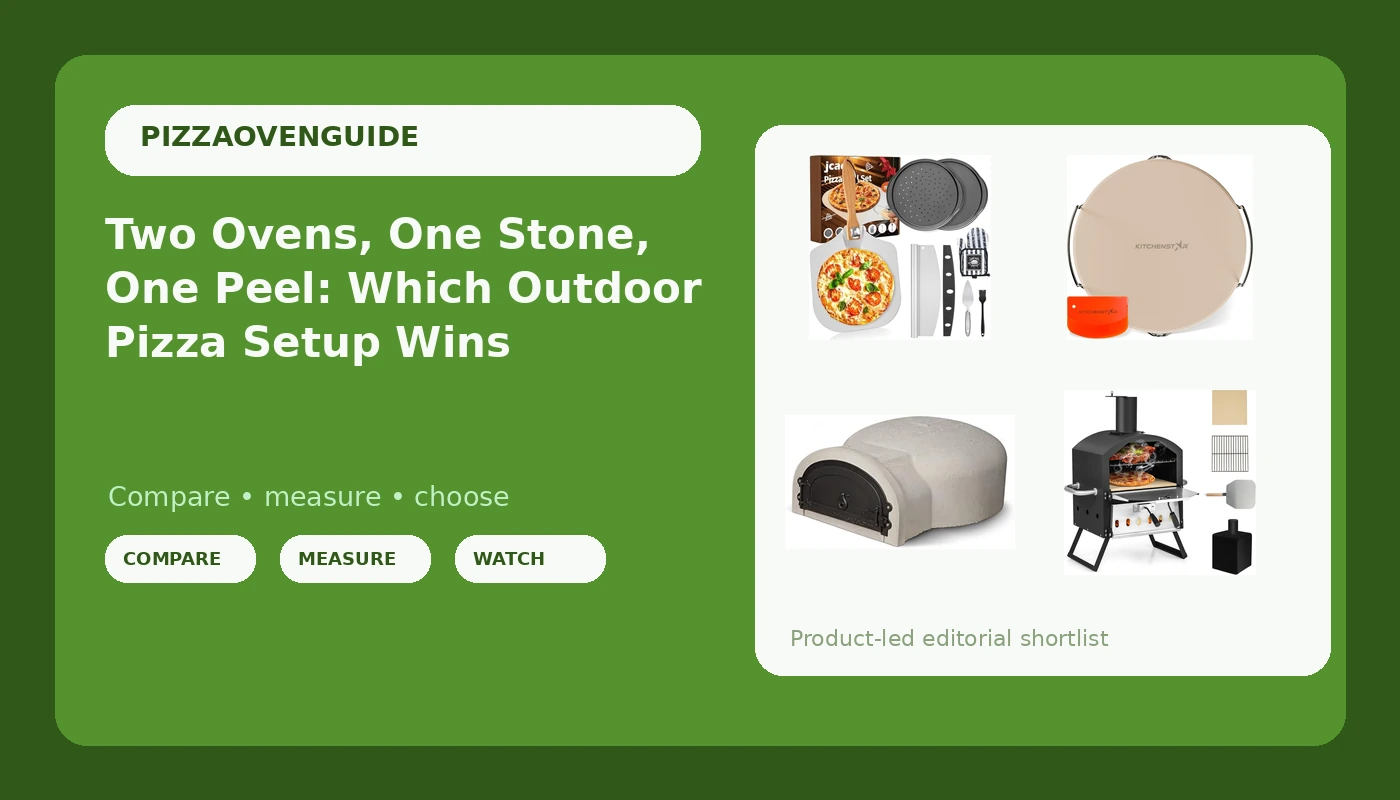
Most people shopping for an outdoor pizza oven setup are shopping for the wrong half of it. They start with the oven, because the oven is the romantic part, the one with the flame and the footage. Then the first pie sticks to the peel, the second one lands on a stone that never got hot enough, and the bottom comes out pale while the top comes out black. They blame the dough. I worked a Neapolitan oven for five years before I switched to food writing, and I can tell you the dough was almost never the problem. Stone temp was.
So this comparison runs in the order I would actually spend money. Four products: two ovens, one stone, one accessory kit. Judged on what each one does for the pie, not on how it looks in a listing photo.
The best first purchase for most people here is the cordierite stone, because it raises stone temp inside the oven you already own and asks nothing else of you. The two ovens are bigger purchases and bigger commitments, and both deserve a hard look before you hand over a card.
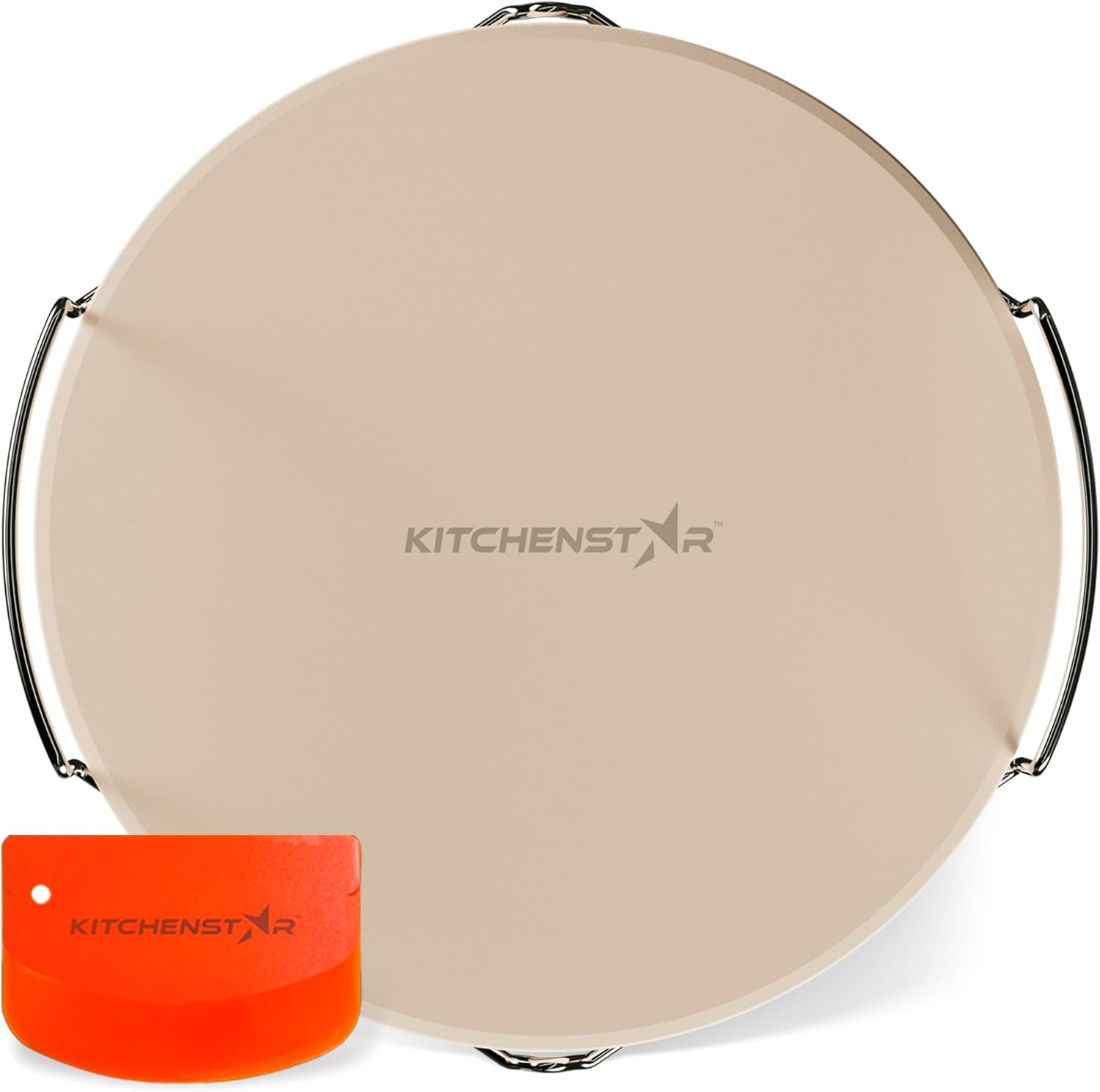
KitchenStar 12-inch Pizza Stone for Oven and BBQ Grill with Handles, Round, 5/8" Thick - Natural Cordierite, 1800 °F Resistant, Baking Stone Set with Stainless Steel Rack & Plastic Scraper Tool
Thick cordierite holds heat, the handles make it movable while hot, and the rack doubles as a serving stand
A 12-inch round caps your pie size, and cordierite can crack if you shock it with a cold topping load
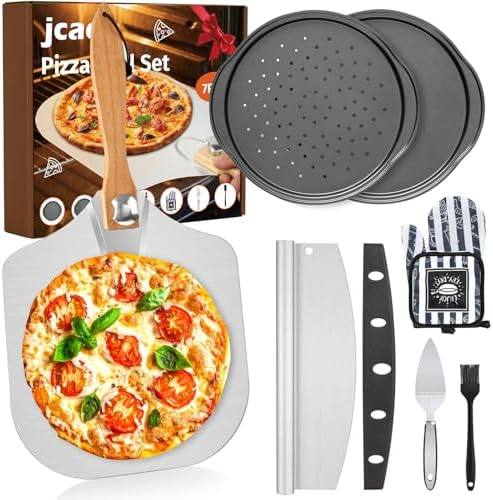
Pizza Peel Pizza Pan Set, 7Pcs Pizza Oven Accessories, 12 Inch Metal Paddle (12"x 14") with Foldable Wooden Handle, 2 Pizza Pans, Rocker Cutter, Pizza Server, Oven Mitts, Oil Brush
The paddle is the piece that matters, and the folding handle means it stores in a drawer instead of a closet
Four of the seven pieces are filler you will use twice and forget
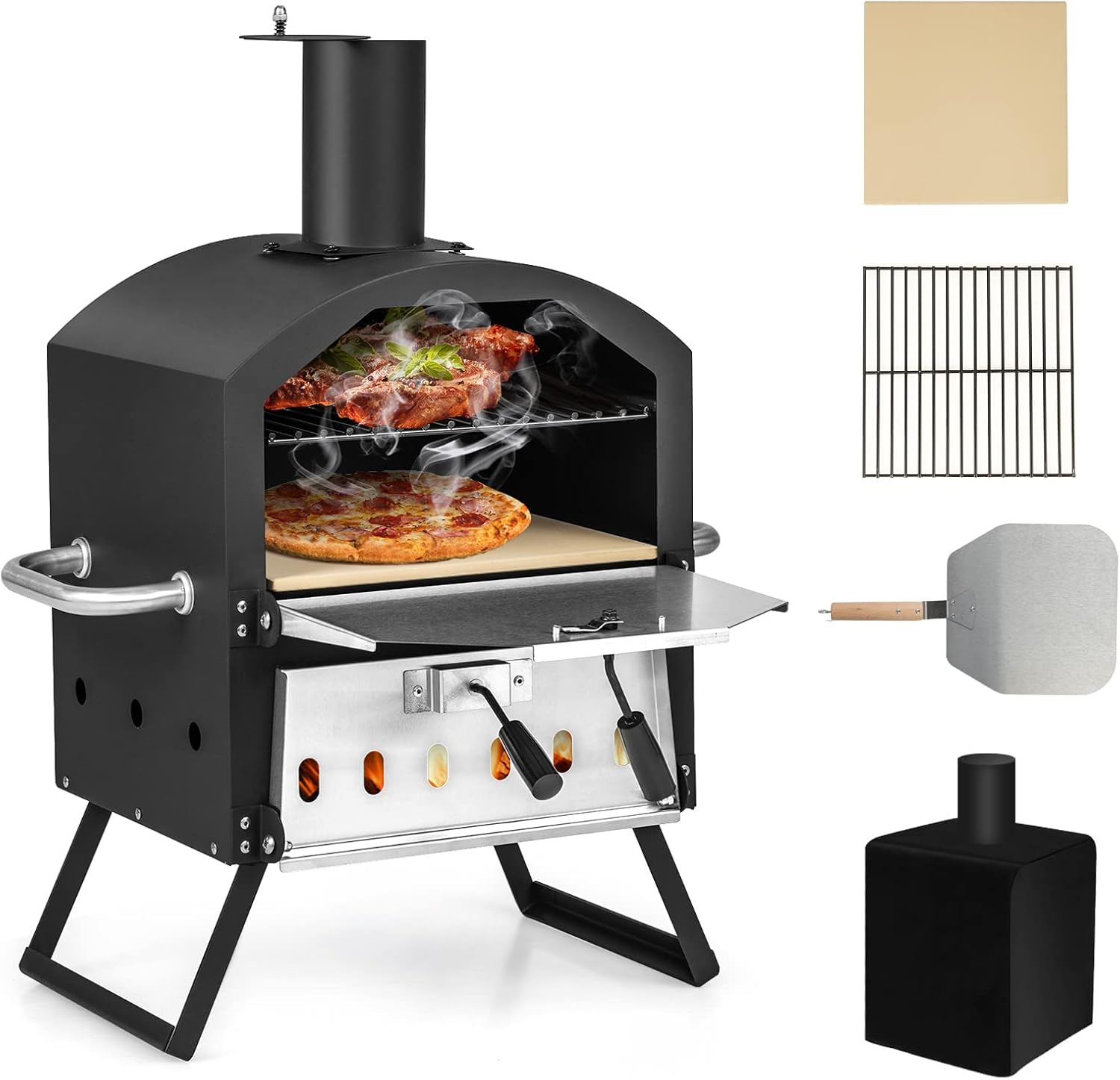
COSTWAY Outdoor Pizza Oven, Wood Fire Stone with Peel, Waterproof Cover
Arrives as a complete Saturday kit: oven, stone, peel, cover
Wood only, no published temperature ceiling, and a thin body sheds heat between pies
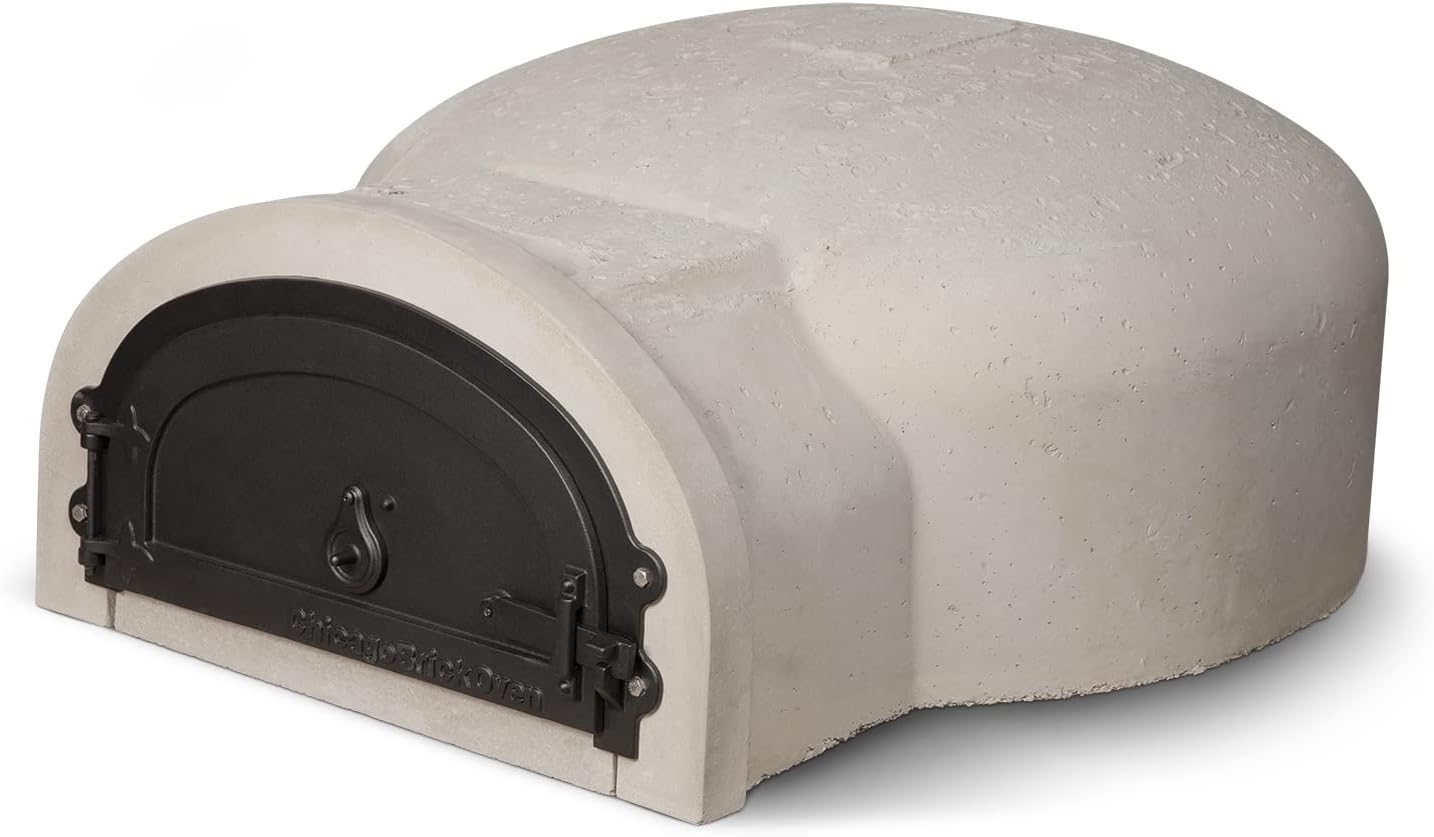
Chicago Brick Oven® Wood-Fired Outdoor Pizza Oven, CBO-750 DIY Kit
Real thermal mass, the thing that makes back-to-back 90-second bakes repeatable
It is a build, not a purchase, and the kit is the cheap part of the project
Prices and availability were captured from Amazon Creators API and may change.
What these four products actually are
Two of these are heat machines and two are tools that support a heat machine. That distinction matters more than brand name.
The stone and the peel set are upgrades you can use tonight, in the oven already sitting in your kitchen, with no fire to light and no footing to pour. The two outdoor ovens are appliances, which means weather, fuel, storage, and a learning curve measured in ruined pies.
I have not run eight pies through every unit on this list, and I am not going to pretend otherwise. What follows is spec-level reasoning plus the test protocol I apply to any oven I do review, so you can see exactly what I would be checking and what would change my mind.
The stone: cordierite and one honest limit
A baking stone is thermal mass, nothing more and nothing less. You are not buying flavor. You are buying a slab that absorbs heat from your oven and dumps it into the bottom of the dough fast enough to set the crust before the interior steams.
This KitchenStar is natural cordierite, 5/8 inch thick, round, rated to 1800 °F, with side handles, a stainless rack, and a scraper. The thickness is the selling point. A thin stone gives up its stored heat the moment a cold dough round touches it, which is why so many home pies come out with a pale, flabby bottom. A thicker slab has more to give.
The handles are a genuinely useful detail that most stones skip, because moving a hot stone with tongs is how people end up with a cracked stone and a scarred countertop. The rack gives you a landing spot that is not your stovetop.
The limit is real and I will not pretend around it. Your home oven tops out somewhere around 500 to 550 °F on a good day, and a stone cannot exceed the oven around it. You will get a better bottom, better rim rise, and more even char than a sheet pan gives you. You will not get 90-second Neapolitan leoparding. Anyone who tells you a stone turns a kitchen oven into a wood-fired dome is selling something.
One caution from experience: do not slide a frozen or heavily loaded pie onto a screaming hot stone. Thermal shock is how cordierite cracks, and the crack usually runs right through the middle.
The peel kit: what to keep and what is filler
The paddle is the reason to buy this set, and it is a decent one. A 12 by 14 inch metal blade with a foldable wooden handle covers most home pies and stores in a drawer, which matters in a Hoboken kitchen where counter space is a negotiation.
Metal launches differently than wood. It slides under a set pie more easily, but dough grabs it faster, so you need flour or semolina underneath and you need to move with intent. Wood is more forgiving on the launch and worse on the retrieval. Both work. Pick your frustration.
Then there is the rest of the box: two pizza pans, a rocker cutter, a server, oven mitts, and an oil brush. This is the part of accessory shopping that I complain about, because half of what gets bundled is a solution to a problem you do not have yet. Pans are for a different style of pizza entirely. You will use the cutter and the server. The mitts and the brush are the kind of thing you already own.
None of that makes the set a bad buy, since the paddle is the anchor and the extras ride along. It does mean you should not pay a premium for the bundle.
The COSTWAY oven: the complete Saturday kit
What I like about this one is honesty of packaging. It arrives with the stone, a peel, and a waterproof cover, which means you can light a fire and bake the same weekend without a second order. That cover is not a throwaway either. An outdoor oven that lives uncovered in New Jersey weather is an oven with a wet stone and a rusted body by spring.
Wood fire is the appeal and the tax. You are tending a fire for a while before the first pie goes in, and you are feeding it between bakes. That is the Saturday ritual, and if you want it, this is the cheapest honest way into it.
What I cannot do is tell you how hot it gets, because no temperature ceiling is published, and I do not make temperature claims without a reading from an infrared thermometer. That is my single biggest hesitation. A wood fire will hit high numbers with enough fuel and enough air, but a thin-bodied oven loses heat every time you open the door, which is exactly when you need it. If you buy this, buy a thermometer with it and learn your oven's real working temp instead of trusting the box.
The Chicago Brick Oven kit: thermal mass you build yourself
This is the other end of the category. A wood-fired oven kit with real refractory mass is a different machine from a portable box, because the mass is the point. Heat soaks into the structure, and then it gives that heat back pie after pie without a recovery gap. That is how a pizzeria runs a Friday night: not by making more fire, but by having stored heat in the floor.
It is also not a purchase in any normal sense. It is a project. There is a base to pour, a footprint to plan, a clearance question, possibly a permit, and a mason's number that will dwarf the kit itself. The kit is the cheap part of the build. If you rent, if you move in three years, or if you want pizza this month, this is not your product. If you own the yard and you are building the thing you will still be using in 2040, it is the only product on this list that qualifies.
How I judge an oven before I recommend it
My rule is eight pies minimum, using the same two recipes every time so results actually compare: one 62% hydration Neapolitan-ish dough with a 48-hour cold ferment, and one same-day dough for the weeknight case. I log stone temp at launch with an infrared thermometer, floor temp recovery between pies, rim rise, leoparding, and bottom char. I time the bake. I take photos so I cannot revise my memory later. If a unit is loaned for review, I say so.
That protocol is why I am careful with these four. The stone and the peel set are tools, and tools are easy to judge from specs because they do one job. The two ovens make promises about heat, and heat is where the marketing and reality separate.
The trade-offs, plainly
Heat ceiling against convenience against permanence. Pick two.
The stone gives you the most improvement per dollar of anything here and the lowest ceiling, because it cannot beat your kitchen oven. The peel set removes the single most common failure point, which is the launch, and does nothing for heat. The COSTWAY gives you flame, smoke, and a complete kit, and asks for fire-tending and a thermometer to know what you actually bought. The Chicago Brick Oven gives you restaurant-grade thermal mass and asks for a construction project.
There is no universal winner, and anyone who tells you one of these is objectively better has not cooked on both. Gas for Tuesday, wood for Saturday, stone for the night you get home at 6:40 and still want pizza.
What I would buy, in order
If you are starting from nothing and you want better pizza this week, buy the stone and the peel set. That combination fixes stone temp and fixes the launch, and it works in the oven you already have. Practice ten pies. Get your hydration and your stretch right before you spend on hardware.
If you want fire, buy the COSTWAY, and buy an infrared thermometer in the same order. Budget a few Saturday evenings to learn the fuel load your oven actually wants.
If you are building a permanent outdoor kitchen and you plan to be in that house for a decade, go straight to the Chicago Brick Oven kit and start pricing the base. Everything else on this list is a stepping stone to that oven.
What I am testing next
Indoor electric against gas, which is the question I keep getting asked. My prediction stands: the convenience gap is too wide, and the sub-$300 electric class will get hot enough to matter within two years. I have a thermometer, two dough recipes I have made a hundred times, and eight pies to bake in each unit before I write a word. That report comes next.