I spent five years on the oven line at a Neapolitan pizzeria before I switched to writing about food, and the lesson that job drilled into me is simple: a pizza oven is a heat machine. The dough, the sauce, the cheese, all of it is just there to not get in the way. So when people ask me what to buy, I do not start with brands. I start with where the heat comes from and how quickly it gets into the stone.
I live in Hoboken, two blocks from a pizzeria that has been running since 1948, and I keep a crust scorecard on every pie I pull: char, leoparding, rim rise, bottom crisp. That card is why this home pizza oven setup comparison looks the way it does. Four products, four different jobs, and only two of them are actually ovens. The other two decide whether the pie gets in and whether the heat arrives evenly once it does.
The best home pizza oven setup for most people is an oven that puts real heat into the stone, plus a peel with a lip to launch into it. If that oven is electric and lives on the counter, you are trading top-end heat for the ability to make pizza on a Tuesday, and that trade is worth it far more often than the internet admits. The rest of this guide is about the two pieces people skip, and why skipping them costs you more pies than a cheaper oven ever will.
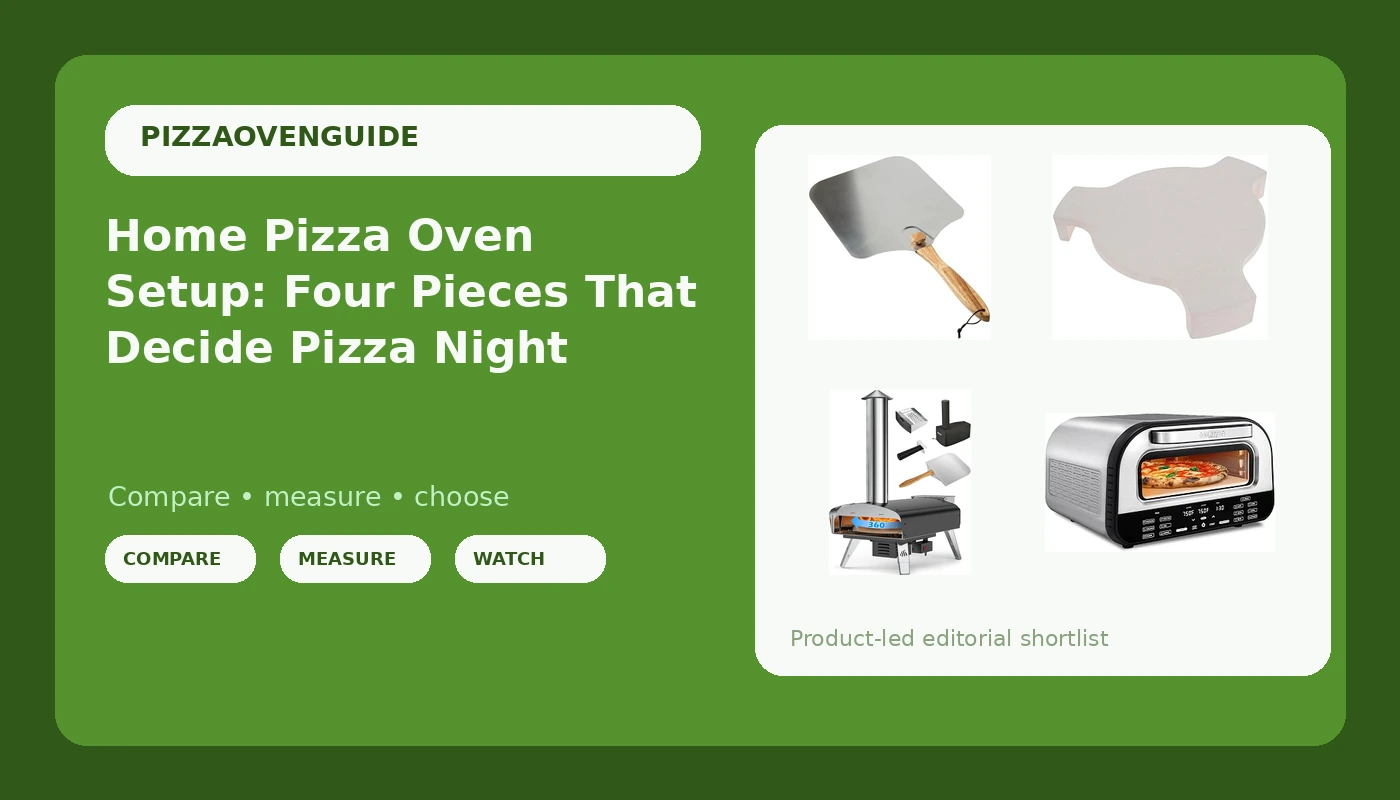
Gourmia Electric Indoor Pizza Oven, Countertop Air Fryer Toaster Oven Combo with 6 Pizza Presets and Cordierite Stone
Plugs into a standard counter outlet, runs six pizza presets and seven cooking functions, and ships with a cordierite stone, so a weeknight pie becomes a decision instead of a project
Countertop electric heat will not lay Neapolitan leoparding on a 48-hour dough, and it is an indoor oven, not a dome
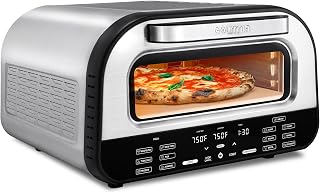
Old Stone Pizza Kitchen Aluminum Pizza Peel with Collapsible Wooden Handle, 14x16-Inch
A 14x16 aluminum blade with a lip, and the wooden handle collapses so it fits in a small kitchen drawer or a narrow cabinet
It is a launch peel, not a turning peel, so a live fire still wants a second tool for rotating the pie
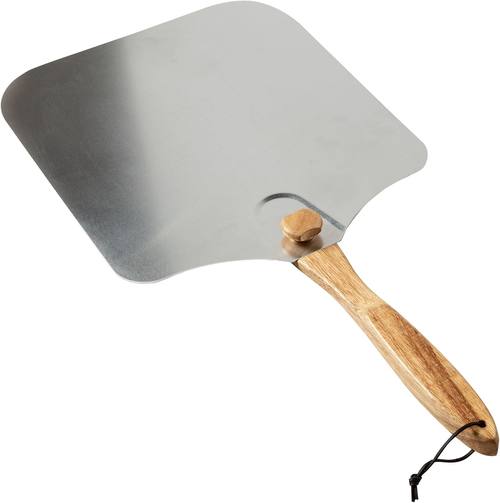
Heat Deflector 76251 for Pit Boss/Louisiana Grill K24, Heat Deflector 60131
Sits between the fire pot and the cooking surface and spreads direct flame into even radiant heat, which is what keeps a stone from running hot on one side
It is a part, not an upgrade. On a grill outside that family it does nothing, and it does not raise your ceiling on temperature
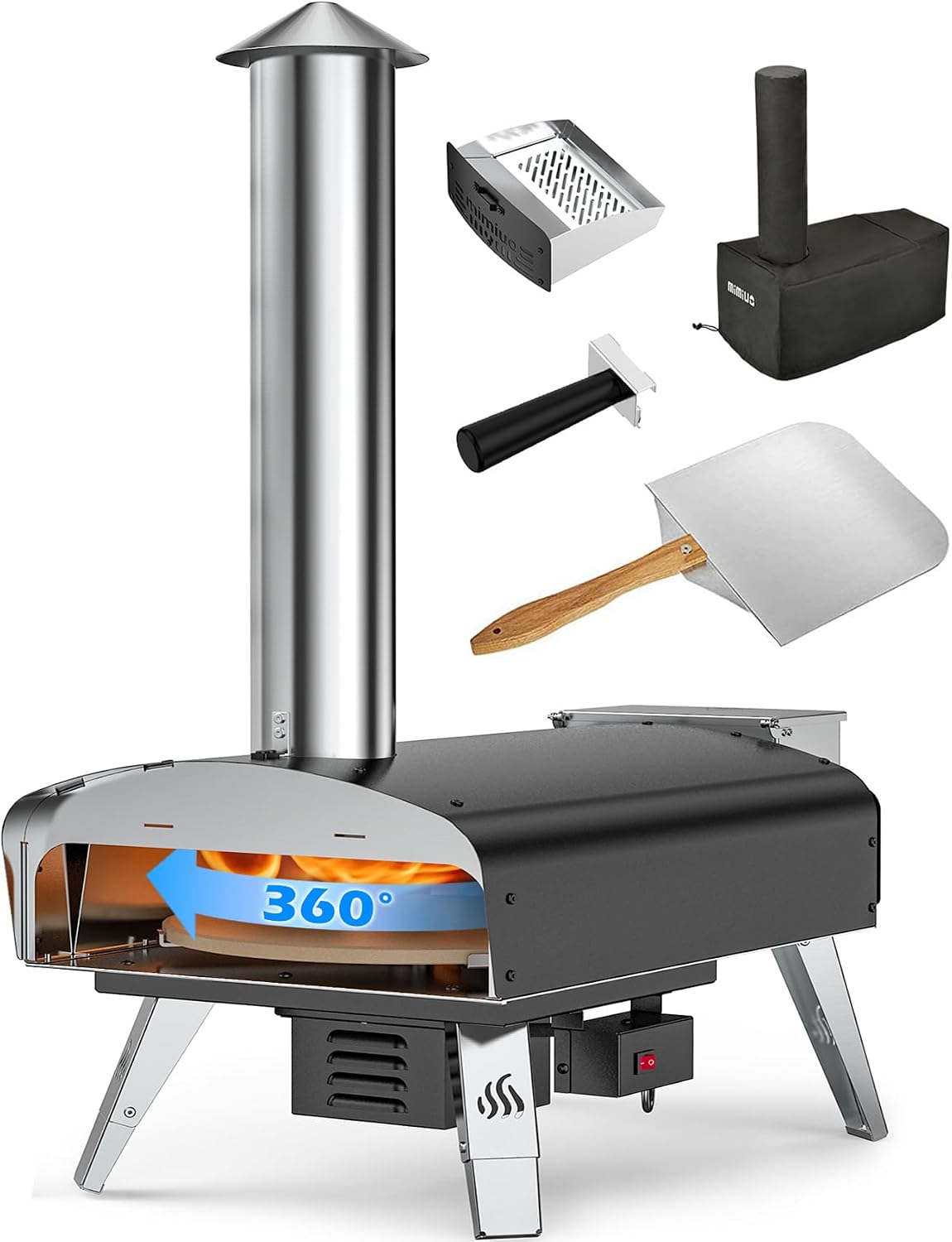
Mimiuo Auto-Rotating Wood Pellet Pizza Oven Outdoor, 40Lbs Hopper, 60S Bake with Stone
An auto-rotating stone and a 40-pound pellet hopper mean a 60-second bake without a human standing there turning the pie
It needs outdoor space, a pellet supply, and a real start-up window, so it is a Saturday oven, not a Tuesday one
Prices and availability were captured from Amazon Creators API and may change.
How I judge pizza gear
My rules are boring and they do not change. No opinion on an oven until it has cooked at least eight pies, and always the same two doughs so the results compare: a 62% hydration, 48-hour cold ferment, and a same-day 70% emergency dough for when I forget to plan. I read stone temp with an infrared thermometer before every launch, because the number printed on the box is marketing and the number on the stone is dinner.
That habit is why I do not trust temperature claims. Plenty of ovens promise a figure they never reach at the stone, and the gap shows up as a pale bottom with a charred rim, which is the most disappointing pizza there is. A pizza oven that hits 900F at the stone beats a bigger oven that struggles past 700F every single time.
Indoor electric: the weeknight answer
The Gourmia is the piece of this setup that changes your week rather than your weekend. It is a countertop air fryer toaster oven combo that also runs six pizza presets and seven cooking functions, and it arrives with a cordierite stone included. That last detail matters more than the presets. A stone in the box means you are not hunting for a matching accessory on day one.
Where it earns its place: indoor electric ovens made weeknight pizza a real thing. Nobody wants to light a fire at 7pm on a Tuesday, and no one wants to haul a propane tank up from the basement for two pies after work. An oven that plugs into a normal outlet and preheats while you stretch dough is solving the actual problem most households have, which is not peak heat. It is frequency. The more often you make pizza, the better your dough gets, and the better your dough gets, the less the oven matters.
Where it loses: top-end heat, and there is no way around it. Countertop electric ovens live in a temperature band well below what a Neapolitan dough wants, so you should not expect leoparding on a 48-hour ferment. What you should expect is a good rim rise and an even bottom crisp on a same-day dough, plus air fryer and broil functions that justify the counter space on the other five nights. Buy it as a weeknight oven and it will overdeliver. Buy it expecting a dome and it will disappoint you by pie three.
Pellet-fired outdoor: the Saturday answer
The Mimiuo is the other end of the same argument. It is an outdoor wood pellet pizza oven with a 40-pound hopper and an auto-rotating stone, and the spec sheet promises a 60-second bake. Auto-rotation is the feature I would pay for on any oven, because it removes the single most common failure in a live fire: a pie that sits still while one side burns and the other stays blond. A rotating stone means the heat does the work and you stand there with a drink.
Pellet fuel is the quiet advantage. It gives you a wood fire without splitting logs or babysitting splits every four minutes, and the hopper means you are not feeding it mid-bake. Forty pounds is a lot of fuel, which translates into a lot of Saturday nights before you think about restocking.
What it costs you is friction. This oven needs outdoor space, a weather-safe spot to live, and a start-up window that a countertop oven does not have. It is not the oven you fire up because you got home late and the dough is already out of the fridge. Gas is for Tuesday, wood is for Saturday, and anyone who tells you one is objectively better has not cooked a full dinner service on both.
The peel: the tool you touch most
The Old Stone peel is a 14x16 inch aluminum blade with a collapsible wooden handle, and it is the accessory I would hand a new owner before anything else. You touch the peel more than you touch the oven. It is the difference between a pie that launches flat and a pie that folds onto the stone and becomes a calzone you did not plan.
Aluminum is the right material for a launch peel because it is light enough to maneuver with one hand and it does not grab a wet dough the way a rough wooden board can. The lip on this one matters too. A peel with no lip is a flat sheet with a handle, and once the pie is on it you have no reference for where the edge is. Small thing, real consequence.
The honest limitation: this is a launch peel, not a turning peel. In a live fire you still want a smaller round peel to rotate the pie a quarter turn halfway through, because a 14x16 blade is too big to spin inside a hot dome without drama. Buy this one for getting the pie in. Plan a second, smaller tool for the turn.
The heat deflector: the piece nobody thinks about
The Heat Deflector 76251 is the least glamorous item here and the one most likely to fix a problem you already have. It fits Pit Boss and Louisiana Grill K24 models, with the 60131 pattern also referenced, and it sits between the fire pot and the cooking surface to convert direct flame into even radiant heat.
Why that matters for pizza: direct flame on one spot of a stone creates a hot zone, and a hot zone means one side of the crust sets before the other side has even started. A deflector spreads that energy across the full surface, which is the same principle behind the baffle in any serious oven. Even heat is what gives you a consistent bottom crisp across the whole pie instead of a burnt heel and a doughy center.
Where it fails: it is a part for a specific grill family, and it does nothing outside it. It also does not raise your maximum temperature, so it will not turn a low-ceiling grill into a pizza oven. It makes the oven you already own behave better, and that is the whole promise. If you own a compatible grill and you have been fighting uneven pies, this is the cheapest fix in this article.
The trade-offs, in plain terms
Heat source decides your schedule, not your skill. Electric indoors means frequency and low ceilings. Pellet outdoors means high ceilings and friction. If you cook pizza once a month, the outdoor oven is a beautiful object that will sit under a cover. If you cook it twice a week, the countertop unit will teach you more about dough in one season than a dome ever would.
Then there is the question of what actually improves your pizza. Half the accessories sold are solutions to problems you do not have yet, and I say that as someone with a drawer full of them. A peel and an infrared thermometer cover most of it, and the thermometer is the one people skip. You cannot diagnose a pale bottom without knowing your stone temp. Guessing is how people end up blaming their dough for an oven problem.
The last trade is money, and it is less dramatic than the marketing suggests. You do not need a restaurant-priced oven to make a good pizza. You need an oven that gets properly hot, a stone with enough thermal mass to hold that heat through a launch, and a dough recipe you have made ten times. The dough does the work. The oven gets the credit.
What I would buy, in what order
If you are starting from nothing and you cook indoors, buy the electric countertop oven first. It gets you reps, and reps are the only thing that makes dough predictable. Add the peel in the same order, because launching badly will convince you that your oven is broken when it is not.
If you already own a Pit Boss or a Louisiana Grill K24 and your pies come out uneven, buy the heat deflector before you buy anything else. It is a targeted fix for a specific symptom, and it is far cheaper than replacing a grill that is working fine.
If you have outdoor space, patience, and a Saturday habit, the pellet oven is the one that will produce the pies you are picturing. Just be honest with yourself about the start-up window. The first pizza you make in any new oven will be bad. Plan for it, and the second one will tell you what you bought.
What I am testing next
I am running indoor electric against gas this season to answer a question I keep getting: can a weeknight oven match a weekend one on a same-day dough? The answer so far is yes on rim rise and bottom crisp, and no on leoparding, which is roughly what the physics predicts. I will have numbers from the infrared thermometer and the scorecard when the test finishes, and I will publish the ones that make my earlier picks look bad, because those are the useful ones.