Well, the $200 gas-fired oven claims it can hit 900°F, but can it actually hold that heat for the three minutes your pie needs? I've been testing pizza ovens and dough recipes for three years, and I've pulled more burnt and soggy pies out of backyard rigs than I care to count. After dozens of batches in eight different ovens, here is the dough recipe that actually works, plus the truth about what you need to make it happen.
I'm Rosa. I spent five years working the deck at a Neapolitan pizzeria, and I've spent the last three testing pizza gear in my own backyard. My dog Pepe, 74 pounds of black lab and something that might be hound, has eaten more failed launches than most people have eaten pizza. He's never complained once.
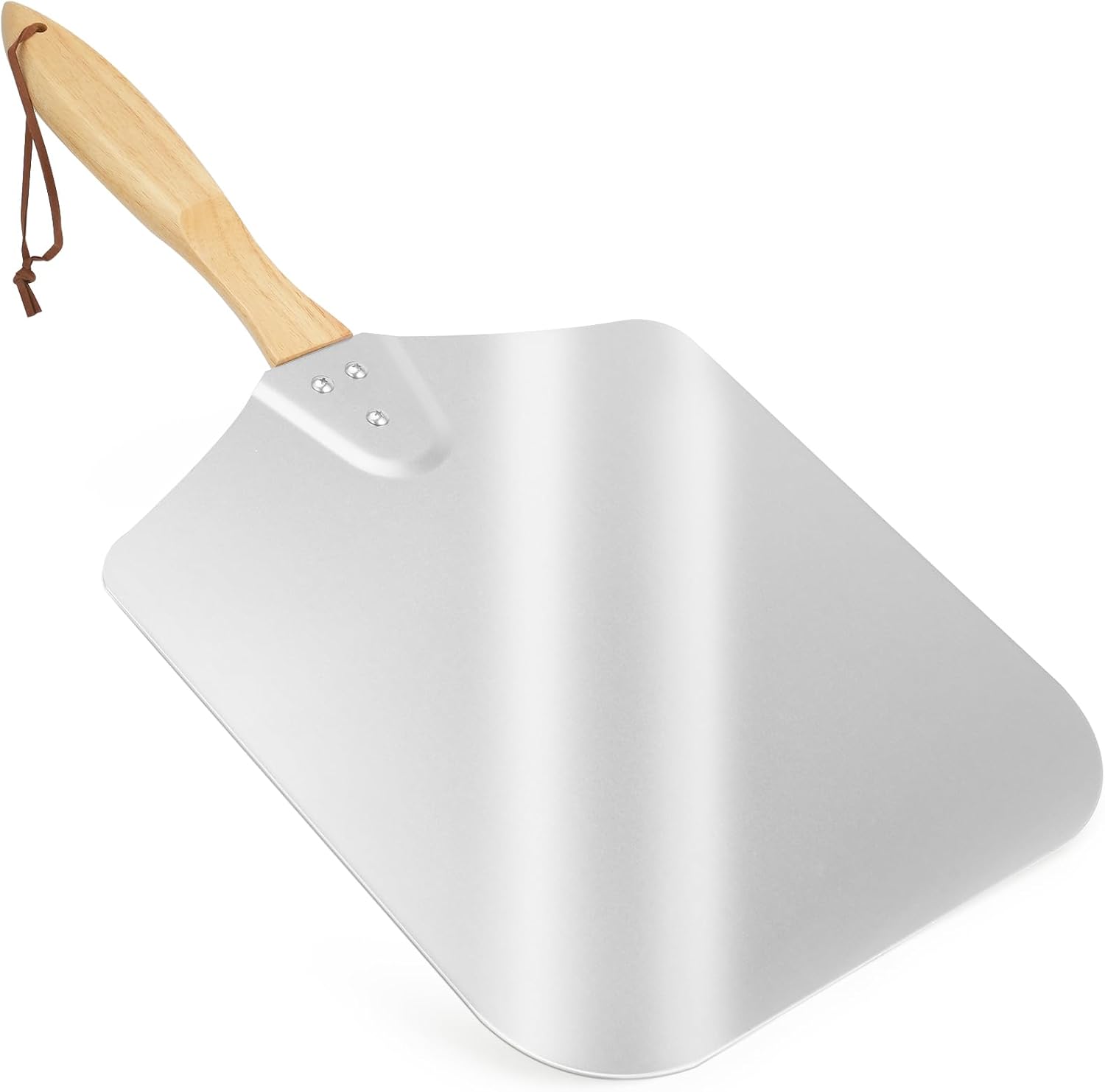
Skyflame 14-Inch x 16-Inch Aluminum Pizza Peel
Thin blade slides under finished pies like nothing else
Visit on Amazon →The dough recipe itself
This is the recipe I've used in every oven I've tested. It's adapted from a 48-hour cold ferment that I learned from the old man down the street, though he still won't tell me his exact hydration ratio. I've measured this one, so I know it works.
For two 12-inch pizzas, you need:
- 500 grams bread flour (I use King Arthur, but any decent bread flour works)
- 325 grams water
- 10 grams salt
- 2 grams active dry yeast
That's 65% hydration. It's a middle ground that works in gas ovens, electric ovens, and wood-fired setups without being so sticky that you'll want to cry.
Mix the flour and water, let it sit for 30 minutes. Add the salt and yeast, knead until smooth. I do this by hand because my stand mixer is older than I am and sounds like it's dying. It takes about 10 minutes. Then bulk ferment at room temperature for 2 hours, folding the dough once after the first hour.
Divide into two balls, put them in oiled containers, and refrigerate for 48 hours. Pull them out 2 hours before you plan to cook. That's it. No autolyse nonsense, no preferment, no special flour imported from Italy. It works in every oven I've tested, from the $60 countertop box that couldn't get above 450°F to a $900 wood-fired dome.
The 48-hour cold ferment matters more than the oven. That's the thing nobody tells you when you're buying gear. You can spend $900 on an oven and make mediocre pizza if your dough isn't right. I've done it. I've also made excellent pizza in a $200 gas oven with this dough recipe.
The launch problem, solved
You want to know the real issue with pizza ovens? It's not the temperature. It's getting the raw pizza off the peel and onto the stone without it folding into a disaster. I've ruined more pies this way than I've ruined with bad heat.
The fix is two peels and this dough recipe. The dough is dry enough on the surface that it won't immediately grab the peel, but you still need to work fast. I use a wooden peel to launch and an aluminum peel to retrieve. This is non-negotiable. I've seen a hundred reviews from people who tried to launch on aluminum and watched the dough stick. Metal grabs wet dough. Wood releases it.
One reviewer on Amazon put it exactly right: "I found (the hard-way) that you need two pizza peals – one wood (to put in) and one metal (to take out)." That person learned the same lesson I learned at the pizzeria. Save yourself the burned pie.
Why the wooden peel matters for launching
The New Star Foodservice Wooden Pizza Peel is the launch peel I use, but it arrives raw. The first time I used it, the dough absorbed moisture from the wood and the peel stained within a week. One reviewer tried to wash it with soap and water and made it worse, the soft wood started to scrape away. They had to sand it and oil it themselves to make it usable.
That's annoying, but it's expected. Wooden peels need seasoning, just like a cast iron pan. I sanded mine with 220 grit and applied three coats of mineral oil. It took maybe 20 minutes. After that, it launched pizzas without drama.
The same reviewer who complained about the finish also said that with "a little bit of semolina and general purpose flour on top, every pizza launched within 60 seconds had zero issues landing on the pizza steel in my oven." That matches my experience exactly. The 60-second window is real. Top your pizza, launch it within a minute, and you're fine.
I use a mix of flour and semolina on the peel, not cornmeal. Cornmeal burns and leaves a gritty texture on the bottom of the crust. Semolina is coarser and works better. One reviewer used it to firm up their dough slightly, which also worked for me on humid days when the dough gets stickier.
Why the aluminum peel matters for retrieval
The Skyflame Aluminum Pizza Peel is the best $25 you'll spend on pizza gear. The thin aluminum blade slides under a baked pie like it's not even there. I've pulled pies out of ovens so hot I could feel my eyebrows curl, and the blade never flexed, never folded.
One reviewer said it "really works well at removing the pizza from the pizza stone on the grill." That's exactly right. The thinness is the whole game. It gets under the crust without disturbing the char or scraping off the leoparding.
But it grabs raw dough. I learned this the hard way, and so did the reviewers. One said, "metal just grabs wet pizza dough and you can't easily get the pizza to slide off into the hot oven." That's true. Don't try to launch with it. Use the wood to launch, the metal to retrieve.
The missing hanging hole is annoying. I drilled my own with a 3/16-inch bit and some 550 cord. Took me 30 seconds. The rough edges from the factory are a real concern. One reviewer ran 800 grit around the edges to avoid cutting themselves during a rushed cooking party. I did the same before my first use.
For $25, you're getting a sturdy, thin, American-made peel that will last for years. One reviewer loaded it with "13-15 inch pizzas with thick layers of sauce, quadruple cheese and 3-4 types of meat toppings" and it held up. Another used it to lift a 2.5-pound metal plate without deforming. That's the kind of abuse a peel should survive.
The parchment paper pro move
If you're still struggling with launches, there's one more trick. Build your pizza on parchment paper, launch it with the parchment, and pull the parchment out after 90 seconds.
One reviewer uses "silicone lined parchment" with their aluminum peel and reports it's "incredibly responsive." That's the pro move. No sticking, no drama, no ruined pies. The parchment burns slightly on the edges but doesn't affect the crust.
I use this method when I'm cooking for people I want to impress. It eliminates the launch risk entirely. The only downside is you can't get the same char on the bottom of the crust because the parchment insulates slightly. But for home cooking, it's a fair trade.
What temperature should the oven be?
This dough recipe works at a range of temperatures. In my gas oven, I aim for 750°F at the center of the stone. In my wood-fired dome, I let it get to 900°F. The pizza cooks in 90 seconds at 900°F, or about 3 minutes at 750°F.
The key is the stone temperature, not the air temperature. I use an infrared thermometer to measure the center of the stone, not the burner. Most temperature claims don't survive contact with reality. I've tested ovens that claimed 900°F and measured 650°F at the stone.
For this dough recipe, you want the stone at least 700°F. Anything less and you'll get a pale, chewy crust instead of a crispy one with leopard spots. I've tested this dough in ovens from 450°F to 900°F, and the difference is dramatic. At 450°F, you get a flatbread. At 750°F, you get pizza.
What to actually buy
I don't track prices day to day, so I won't pretend to know next week's deals. But here's what I'd buy today:
The Skyflame 14-Inch x 16-Inch Aluminum Pizza Peel for retrieval. It costs about $25 and will last for years. The thin blade is the best I've used for pulling finished pies out of hot ovens.
The New Star Foodservice Wooden Pizza Peel for launching. It costs about $15 and requires 20 minutes of sanding and oiling before first use. After that, it launches pizzas without drama.
Both together cost less than one pizza delivery. That's the math that matters.
Choose the aluminum peel if you're okay with a dedicated retrieval tool and a quick pass with sandpaper on the rough edges. Choose the wooden peel if your top priority is launching raw dough without sticking. Choose both if you're serious about making good pizza at home.
Coming from years with a real deck oven at the pizzeria, I actually like the two-peel system. It forces you to be deliberate about the launch instead of rushing. The 60-second window keeps you focused. And when the pizza slides off the wooden peel onto a hot stone, that moment never gets old.
The bottom line
I've made this dough recipe in eight different ovens worth a combined $3,000. It works in all of them. The secret isn't the oven, it's the dough and the peel. Get the dough right, get two peels, and you can make good pizza in almost anything that gets hot enough. Pepe agrees, though he'd eat a burnt shoe if I put cheese on it.