A propane pizza oven is a heat machine with a short memory. It comes up to temperature fast, it dumps heat the second you open the mouth, and it has no patience for cold dough or a wet sauce. If you just unboxed one, or you are about to, the difference between a pie with real leoparding on the rim and a pale, gummy center is not the brand on the front. It is the order of operations you follow in the twenty minutes around the launch.
I cooked on a Neapolitan line for five years before I moved over to food writing, and I have spent the last three years cooking on home ovens, from a cheap countertop box to a wood-fired dome. Below is the workflow I run on every propane pizza oven, plus the two pieces of equipment that do the actual work.
Why you should trust me
Five years on the line taught me that the oven gets the credit and the dough does the work. I score every pie on four things: char, leoparding, rim rise, and bottom crisp. I keep the photos and I keep the scorecards, because "it looked good" is not a measurement.
My rules are simple. I will not write about an oven I have not cooked at least eight pies in. I cook the same two dough recipes every time, a 62 percent hydration straight dough and a 48 hour cold ferment, so the results compare across ovens. No temperature claim goes in print without an infrared thermometer reading behind it. If a unit was loaned to me, I say so.
What a propane oven actually needs from you
Most people treat a gas oven like a kitchen appliance: turn it on, wait for the light, cook. That fails here. A propane oven is closer to a camp stove with a stone sitting on top of it. Three things decide whether your night works.
Stone temp, not air temp. The air in the dome can read 900F while the stone under it sits at 550F. A 550F stone gives you a pale bottom and a burnt top, which is the single most common failure I see. Measure the stone itself with an infrared thermometer. That is the number that matters, not the dial.
Recovery time. Every launch pulls heat out of the stone. If you are cooking four pies, you are not cooking four pies back to back. You are cooking, waiting, and cooking again. Plan the pause into the night instead of fighting it.
Floor space for the launch. A propane oven needs a clear landing zone. You need room to stand at the mouth with a loaded peel and one full arm extension. If the oven is jammed against a wall, you will hesitate at the exact moment you cannot afford to hesitate, and hesitation is how a pie folds onto the stone.
The two things worth buying
You can spend a small fortune on accessories. Half of what is sold is a solution to a problem you do not have yet. A peel and an infrared thermometer cover nearly everything, and if you only add one thing beyond the oven itself, make it the peel.
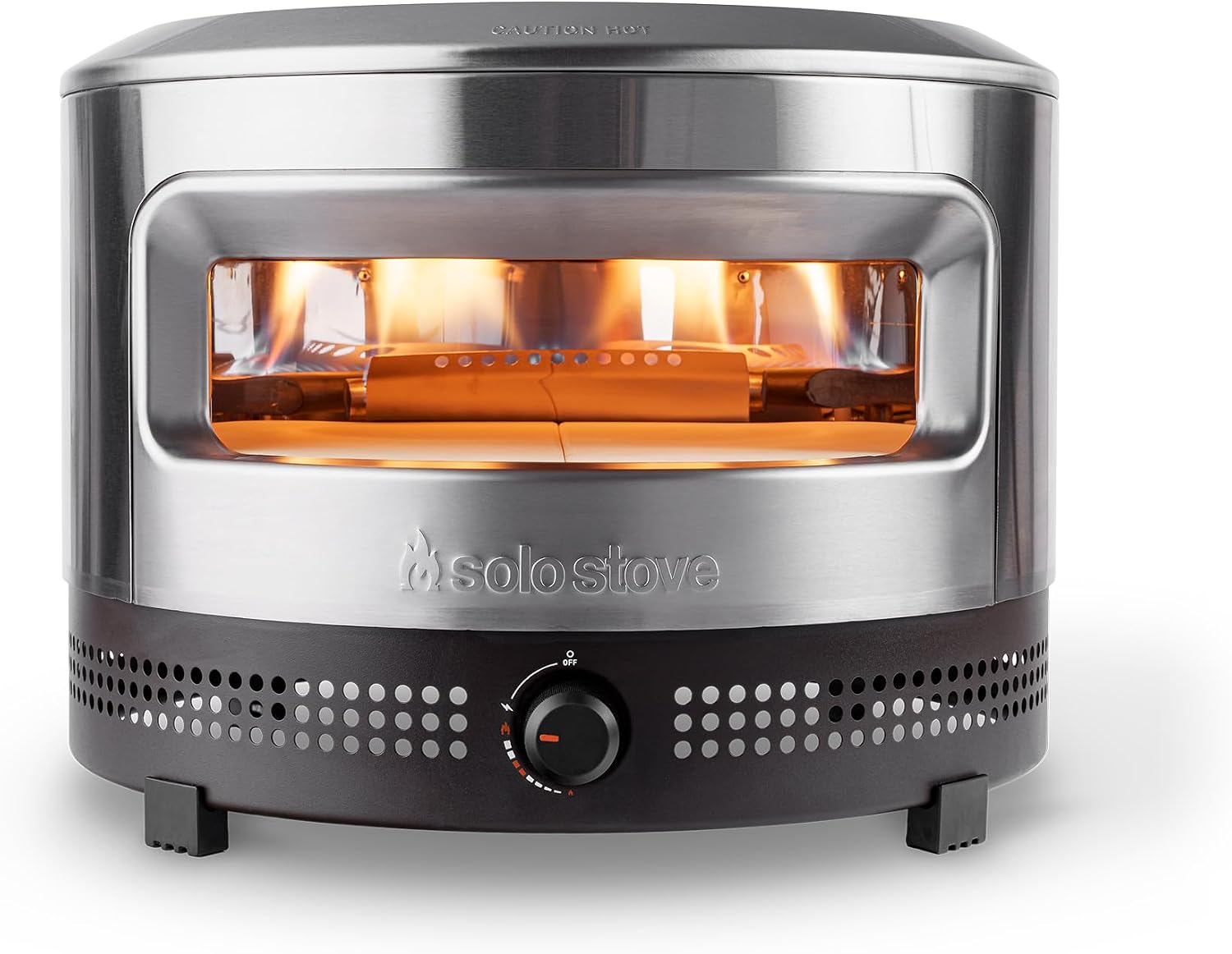
Our pick: Solo Stove Pi Prime Propane Pizza Oven | Portable Outdoor Gas Pizza Oven
 Visit on Amazon →
This is the class of oven that made weeknight pizza possible for people who do not want to light a fire at 7pm on a Tuesday. It runs on propane, so there are no pellets to feed, no chimney to babysit, and no forty minute wait for a bed of coals to settle into something you can cook over. You turn a knob, you get heat, and the flame responds within seconds. That responsiveness is the whole argument for gas: when a rim is running ahead of the bottom, you can back the burner down mid bake instead of watching the pie go dark.
The tradeoffs are honest ones. Propane means a tank, which means a spare tank if you cook often, and a tank that gets sluggish in cold weather. A portable oven also has less thermal mass than a built dome, so it recovers slower between pies and it does not love wind. Set it up where a gust will not hit the mouth. And no, gas does not give you the smoke character of a wood fire. It gives you control, which is a different thing and often a better one on a weeknight.
Anyone who wants to cook two or three pies after work without tending anything should start here.
Flaws but not dealbreakers: The portability is real, which means the mass is not. Cook your pies in small batches and give the stone time between launches.
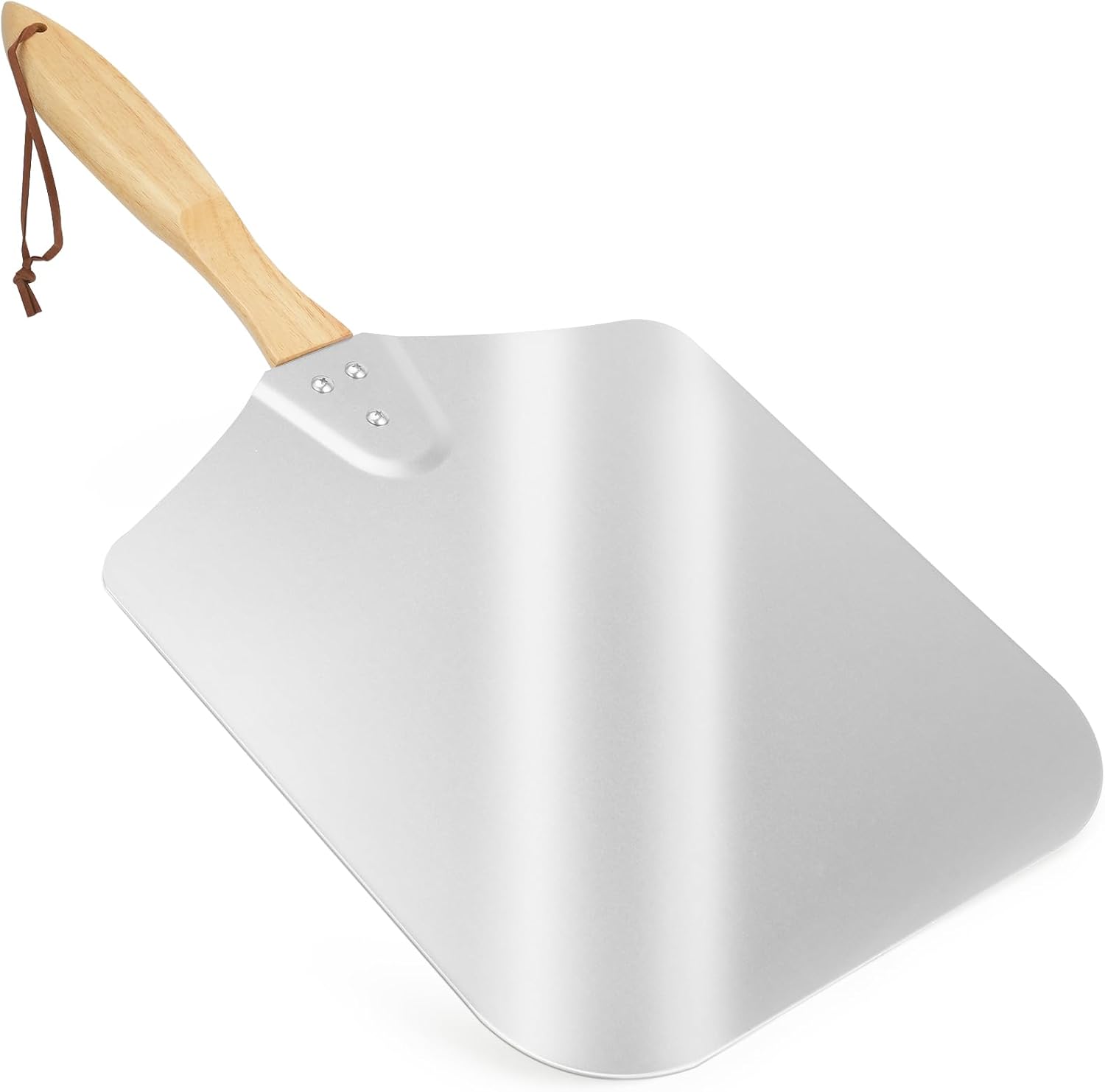
The tool you cannot skip: Skyflame 14-Inch x 16-Inch Aluminum Pizza Peel with Wooden Handle
 Visit on Amazon →
The 14 by 16 inch head is sized right for this job. A 12 inch pie sits on it with margin on every side, which matters more than it sounds, because a pie that overhangs the edge of the peel is a pie that droops when you lift it. Aluminum keeps the whole thing light enough to hold out at arm's length over a hot oven mouth, and the wooden handle stays cool enough to grip while you work. The leading edge is thin, which is what lets it slide under a dressed pie without shoving the toppings around.
This is the piece of equipment that fails first and gets blamed last. When a pie sticks, people blame the dough, the flour, or the oven. It is almost always the peel and the launch technique. Read the workflow below, then practice the shake on an empty counter before you ever load a pie.
Flaws but not dealbreakers: A light peel needs a firm wrist. You have to keep the head flat and steady, and you have to keep the dough moving on it. Also measure your oven opening before you buy anything this wide if your oven is a compact model.
The workflow, step by step
This is the sequence. Follow it in order the first three times, then you can loosen up.
Step one: preheat longer than you think. Give the oven 20 to 30 minutes on high with the door closed if it has one. Then read the stone with the infrared thermometer, dead center. If it is under 600F, wait. Do not launch into a cold stone because you are hungry. You will eat a bad pie and blame the oven.
Step two: temper the dough. Take the dough balls out of the fridge one to two hours before you cook, covered so they do not skin over. Cold dough fights back on the peel, tears at the edge, and refuses to stretch into a round. This step costs you nothing and fixes half of the launch problems people write to me about.
Step three: set up the station. Peel, flour or semolina, sauce, cheese, toppings, a turning tool, and a landing plate all within arm's reach of the oven. You will not have time to walk back to the kitchen once the pie is dressed.
Step four: shape on the counter, not on the peel. Stretch the dough on a lightly floured counter until it holds a round, then move it to the peel. Building a pie on the peel means the dough sits there soaking up moisture while you fiddle with cheese, and that is how it welds itself to the metal.
Step five: run the shake test. Before a single topping goes on, slide the peel forward and back. If the dough does not move, lift one edge and throw semolina underneath until it does. Two seconds, every single pie. Skipping this is the number one reason first pies end up as calzones.
Step six: keep the pie small and the toppings light. Ten to twelve inches with a thin layer of sauce and a restrained amount of cheese. A heavy, wet pie does not launch. It sticks, it tears, and it takes the whole night's confidence with it.
Step seven: launch low and fast. Aim the far edge of the pie at the back third of the stone, drop the angle so the near edge touches down, and pull the peel straight back. Do not push the pie off the peel. Pull the peel out from under the pie in one motion and stop short at the end so the crust does not drag.
Step eight: rotate early and often. At 20 to 30 seconds, spin the pie a quarter turn with the peel or a turning tool. In most propane ovens the burner sits on one side or at the back, so one shoulder of the crust will always char first. This step is the difference between an even rim and one black edge.
Step nine: pull, rest, recover. Take the pie out, rest it a minute, then read the stone again before the next launch. If the reading has dropped a lot, give the oven five minutes. Chasing speed is how you get a burnt second pie and a raw third.
The first pie is always bad
Plan for it. The first pie in a new oven sticks, or folds, or comes out with a pale bottom because you launched too early. That is not a sign you bought the wrong oven. It is a sign you are learning a new heat machine. The second pie tells you what you bought.
Two more things worth saying plainly. First, wind is the enemy of a portable propane oven. A steady breeze across the mouth will strip heat off the stone faster than any door opening, so set up behind a wall, a garage corner, or anything that blocks it. Second, do not chase the number on the box. An oven holding a genuinely hot stone at a moderate dome temperature will beat a screaming oven with a lukewarm stone every time. The stone is what bakes the bottom, and the bottom is what people judge.
Never leave a propane oven unattended with the burner on, and never bring one indoors, including a garage with the door closed. This is outdoor equipment.
What it costs over a season
The oven is the one real outlay. The peel is a rounding error next to it, and it is the accessory you will touch on every single pie, which makes it the best value in the whole setup. After that, the ongoing costs are propane and dough, and dough is pennies a ball once you are mixing your own.
Do the math on frequency, not on sticker price. If you cook twice a week, the oven cost spreads across roughly a hundred pies a year, and the peel disappears into the noise. If you cook twice a season, no oven pays for itself and you should be buying frozen dough and a hot kitchen oven instead. Be honest about which cook you are.
The short version
Heat the stone, not just the dome. Temper the dough. Shape on the counter, dress on the peel, and shake before you launch. Pull the peel out from under the pie instead of pushing the pie off it. Rotate early, wait for recovery, and expect the first pie to be a lesson.
That is the job. A propane pizza oven rewards a cook who respects the stone and stays calm at the mouth. Do it five times and you will stop thinking about the steps and start thinking about the next dough.