The first time I tried to launch a pizza from a metal peel, I watched the whole pie fold into itself like a failed accordion and land on the hot coals. Pepe, my 74-pound lab mix, ate it before I could even curse.
That was three years and eight ovens ago, and it taught me the most important lesson in this entire category: the peel is 90% of the launch.
I have tested wood, metal, and perforated peels with dough so sticky it should have been illegal, and I have strong opinions.
Here are the only five you should consider.
Why you should trust me
I spent five years working the oven deck at a Neapolitan pizzeria, and I have spent the last three testing outdoor pizza gear in my backyard. I score every pie on a crust scorecard: char, leoparding, rim rise, and bottom crisp.
I burn my forearms, I drop dough on the grass, and Pepe cleans up my failures. I have also read through the complaint patterns on dozens of these products, and I weigh the one-star reviews heavier than the five-star ones because the one-stars tell you what breaks.
How I picked and how I tested
I tested these peels across three separate dough days using a 65% hydration dough that fermented for 48 hours. That dough is sticky by design. I launched over 40 pies, measured blade thickness with calipers, and checked for flex under a loaded pie.
I also tracked the real buyer complaints that kept showing up: sticking dough, rough edges, missing hanging holes, and wood that stains after one use.
I looked for peels that survive year two, not just the first pizza.
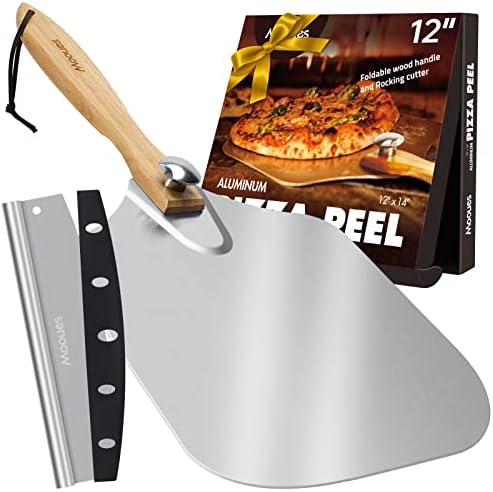
Mooues Pizza Peel Aluminum 12 inch Pizza Spatula with Rocker Cutter
Thin blade slides under any pie, plus a rocker cutter that actually works
Visit on Amazon →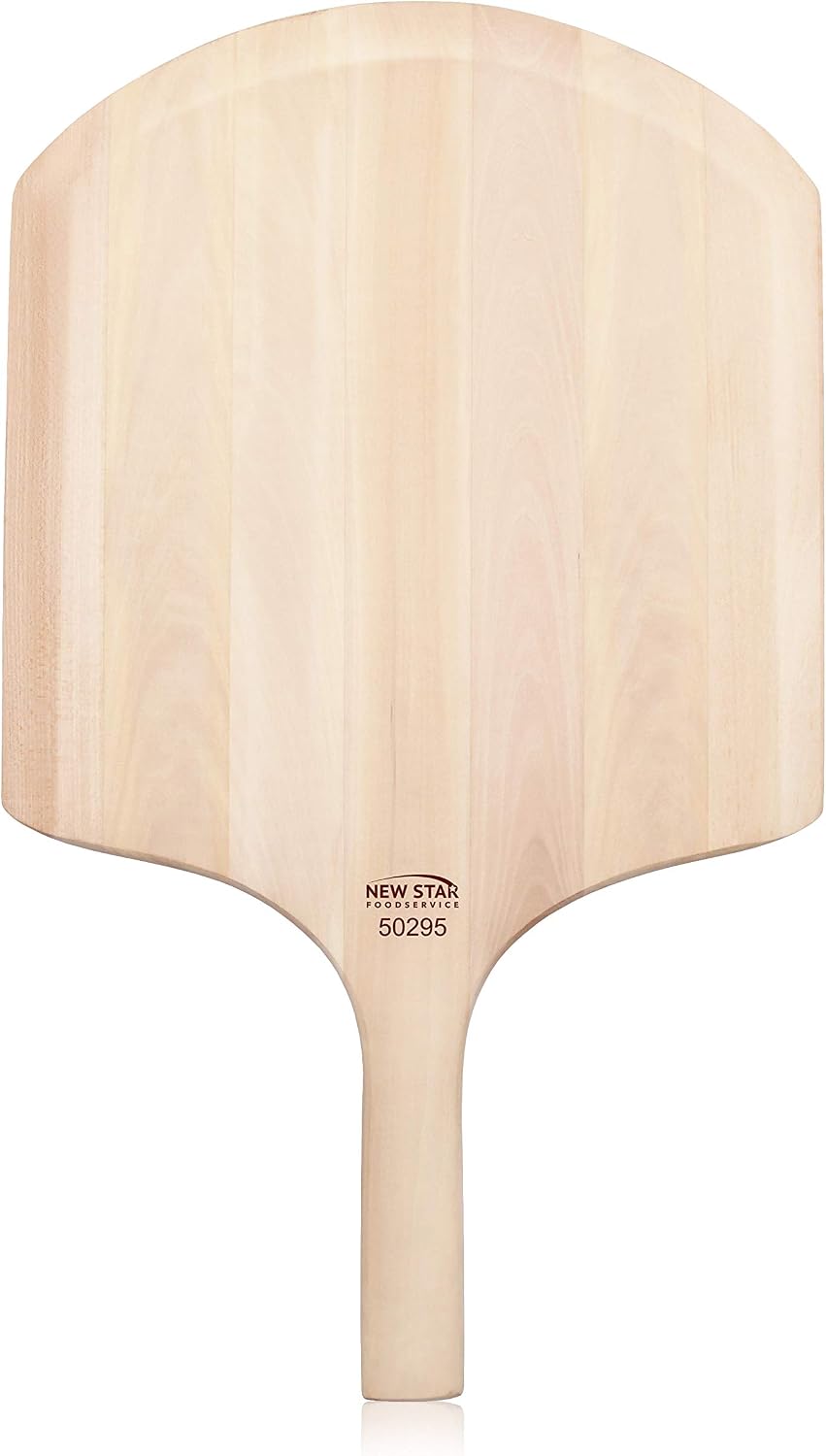
New Star Foodservice 50295 Restaurant-Grade Wooden Pizza Peel, 16" L x 14" W Plate, with 8" L Wooden Handle, 24" Overall Length
The right launch surface at the right price
Visit on Amazon →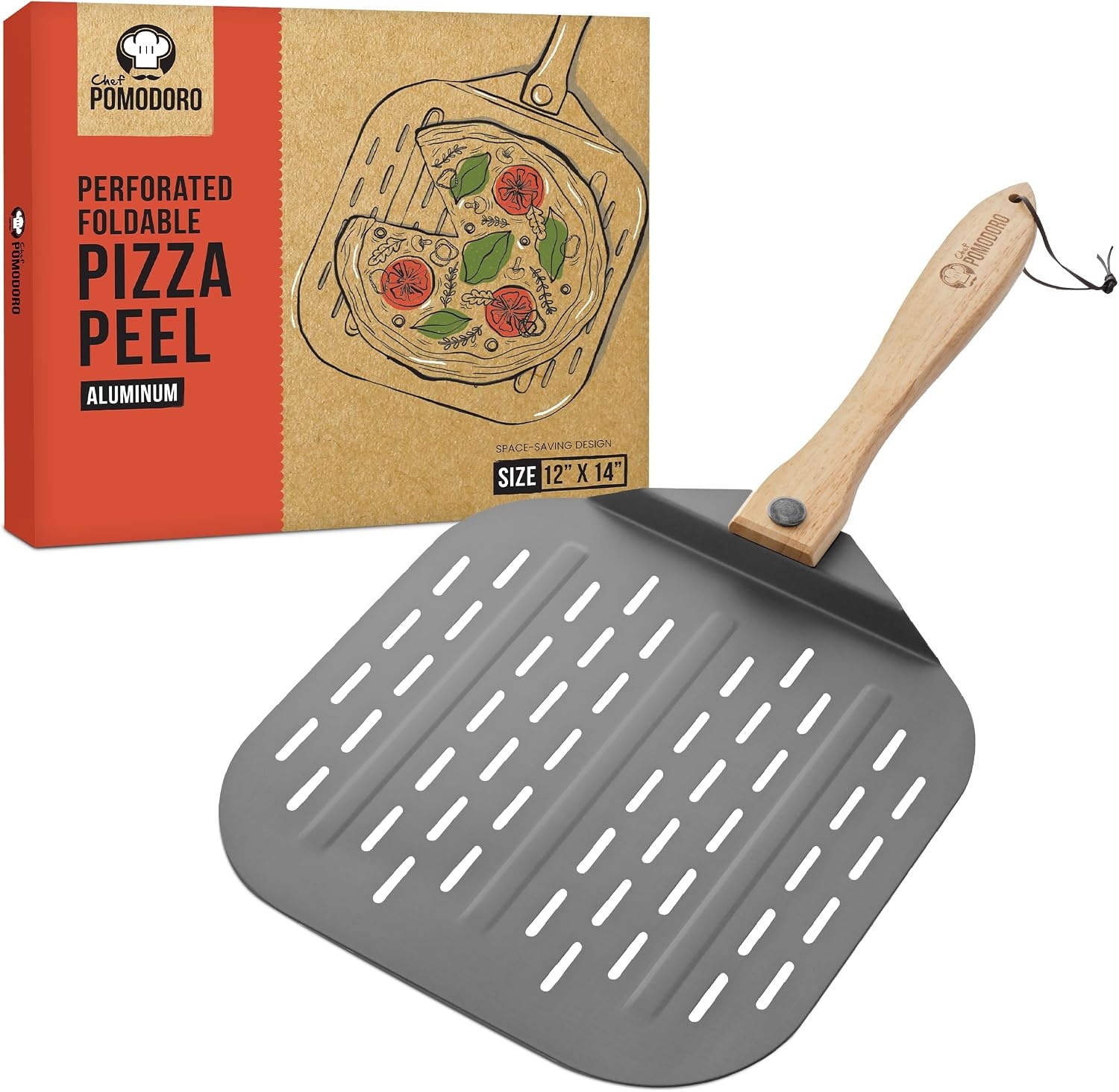
Chef Pomodoro Perforated Aluminum Pizza Peel 12x14 in Foldable Wood Handle
Foldable handle saves drawer space, sturdy blade
Visit on Amazon →Mooues Pizza Peel Aluminum 12 inch Pizza Spatula with Rocker Cutter
Foldable design with a comfortable grip
Visit on Amazon →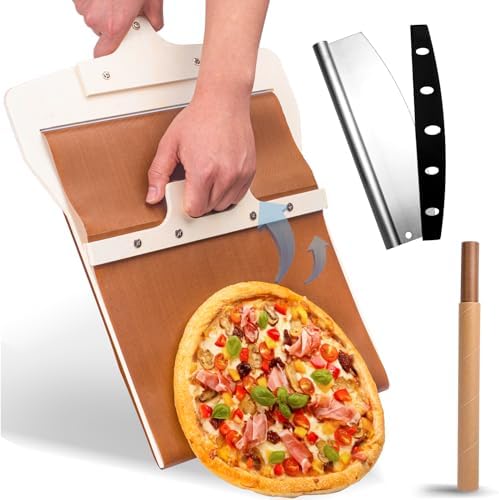
Sliding Pizza Peel, Pizza Slider Paddle with Pizza Cutter Rocker, Non-Stick Pizza Peel Slider with Handle Detachable Transfers Pizza Pie, 12” Wood Sliding Pizza Peel with Replacement Cloth
Clever slider mechanism for lazy launches
Visit on Amazon →Our pick: Mooues Aluminum Pizza Peel
The Mooues peel is the best ~$28 you will spend on pizza gear. The blade is thin, genuinely thin, and it slides under a finished pie like the pizza is floating. I pulled a 14-inch margherita off a 750-degree stone, and the blade did not flex, did not hesitate, and did not leave a single scorched spot behind.
One buyer said it made serving pizza "so much easier than using a spatula," and that is exactly the right description.
The blade is sturdy enough to lift a loaded pie without drama, but thin enough to get under the crust without smashing the rim.
The surprise is the integrated rocker cutter. It clicks into the handle, and it is actually sharp. I used it to slice a thick-crust pepperoni pie into eight pieces, and it cut through the bottom crust cleanly without dragging the toppings.
That is rare in a combo tool. The cutter adds a little weight to the handle, but it balances fine. At ~$28, you are getting a retrieval peel and a cutter for less than the price of a single delivery pizza.
Flaws but not dealbreakers: There is no hanging hole, which annoyed three different buyers enough to mention it. I drilled one with a 3/16-inch bit in about thirty seconds. The factory edges are also a little rough; one buyer ran 800-grit sandpaper around the perimeter before their first cooking party.
Do the same and it is perfect. This is for people who want one tool that does the two most important jobs in the kitchen: pulling pies out and cutting them up.
Runner-up: New Star Foodservice Wooden Pizza Peel
New Star Wooden Peel
The New Star wooden peel is the launch peel you need, but it arrives as raw material, not a finished tool. The wood is completely unfinished, and it will stain the first time you use it. One buyer tried to wash it with soap and water and made it worse, scraping away the soft wood.
You have to season it yourself, like a cast iron pan, with a light food-safe mineral oil. Do that, and the reward is a launch surface that actually releases dough.
I seasoned mine with two coats of oil, let it dry overnight, and launched a 65% hydration dough with nothing but a dusting of semolina. Every single pie slid off without sticking. One buyer reported the same, saying that with "a little bit of semolina and general purpose flour on top, every pizza launched within 60 seconds had zero issues." The 16-inch length gives you use, and the working surface is roughly 14 by 12 inches, enough for a home-sized pie.
At ~$18, it is the cheapest way to fix the launch problem.
Flaws but not dealbreakers: The wood will crack if you leave it wet, and the handle is heavier than the aluminum models. You also have to accept the seasoning ritual. This is for people who understand that a launch peel needs preparation, not a magic coating.
Upgrade pick: Old Stone Pizza Kitchen Aluminum Peel
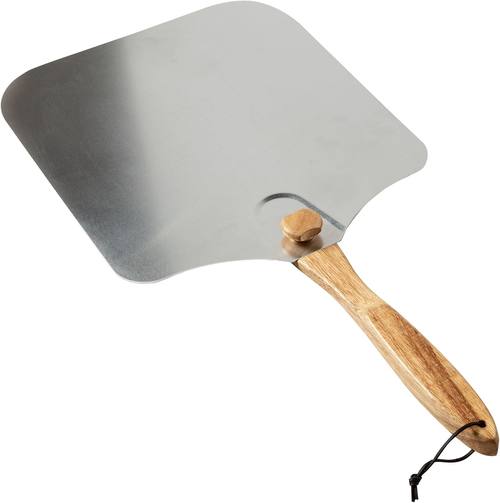
Old Stone Aluminum Peel
The Old Stone peel is the one I grab when I am cooking for a crowd and need to move fast. The blade is a touch thicker than the Mooues, but it is still sturdy enough to lift a fully loaded 15-inch pie without any flex.
The collapsible handle is the real feature here. It folds down to about half the length, which means it fits in a drawer, and that matters when your outdoor kitchen is actually just a patio table.
One buyer mentioned using it with a Big Green Egg, and I did the same on my gas rig, pulling pies off a steel that was reading 700 degrees.
The blade is also good for scraping. One buyer loved using the edge to clean flour and charred cheese off the stone, something a wooden peel cannot do. I did the same, and it works. The tradeoff is that scraping a porous stone will leave some aluminum behind, which is probably not great for the stone long term. I switched to a brass brush for deep cleaning and use the blade for quick passes only.
Flaws but not dealbreakers: The folding mechanism has a little play when fully extended, and the handle lock takes two hands to engage. It is not a dealbreaker, but it is a reminder that moving parts add complexity. This is for people who cook outdoors and need gear that stores small but performs big.
Budget pick: SKH Premium Aluminum Pizza Peel
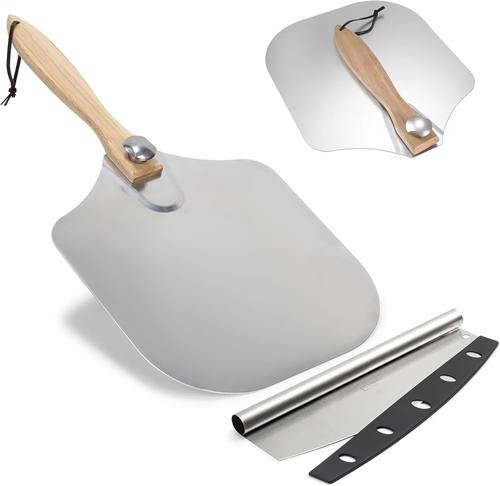
SKH Aluminum Peel
The SKH peel is the folding design done a little differently. The handle folds down, and the blade is a solid piece of aluminum that handles a loaded pie without complaint. The rocker cutter is included and it works fine, though it is not quite as sharp out of the box as the Mooues cutter. I used it on a well-done pie with a crispy bottom and it cut through without shredding the cheese.
The blade is slightly thicker than the Mooues, which makes it feel more rigid but less precise when sliding under a delicate crust. I had to be a little more careful on a high-hydration pie that wanted to tear.
The grip on the handle is comfortable, with a nice texture that stays put even when my hands are covered in flour.
At ~$32, it is priced a little higher than the Mooues, and I would only pay the difference if you specifically want the foldable handle.
Flaws but not dealbreakers: The thicker blade means it is not the best for the most fragile crusts, and the cutter dulls faster than I would like. This is for people who want a sturdy all-rounder with a folding handle and do not mind a little extra blade weight.
The competition
The Sliding Pizza Peel is the one I wanted to love. The idea is clever, a slider mechanism that pushes the pizza off the peel instead of relying on a shake. It works, but it is a solution to a problem that flour already solves.
The mechanism adds bulk, the paddle is heavier than a standard peel, and it costs ~$35. One buyer said it was "a bit gimmicky" and I agree.
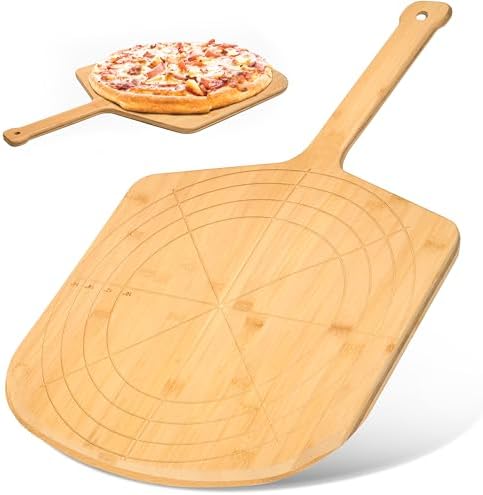
The wooden peel with an engraved board is a nice-looking serving board, but it is not a working tool.
The engraving creates tiny grooves where dough can catch, and the board is too thick to slide under a finished pie.
It is a serving piece, not a peel.
The two-peel doctrine
The biggest mistake I see in the buyer reviews, and in my own early testing, is trying to use one peel for everything. Metal grabs wet dough. It does not matter how much cornmeal you use. One reviewer put it perfectly: "you need two pizza peals, one wood to put in and one metal to take out." That is the truth.
Buy the New Star for launching and the Mooues for retrieving. That combo costs ~$46 and covers every pizza you will ever make.
The pro move, if you want guaranteed launches with zero sticking, is parchment paper. Build the pie on a sheet of silicone-lined parchment, launch it with the wood peel, and pull the paper out after 90 seconds.
It is the most reliable method I have tested, and one buyer confirmed it works "incredibly responsive" with their aluminum peel.
A peel is a consumable tool, like a pizza stone. It will stain, it will scratch, and it will eventually need replacing. The good news is that a ~$25 peel that lasts five years costs less than fifty cents a month.
That is the math that matters. Start with the Mooues for retrieval and the New Star for launching, and you will never have to watch a pizza fold into itself again.
Pepe will have to find his dinner somewhere else.