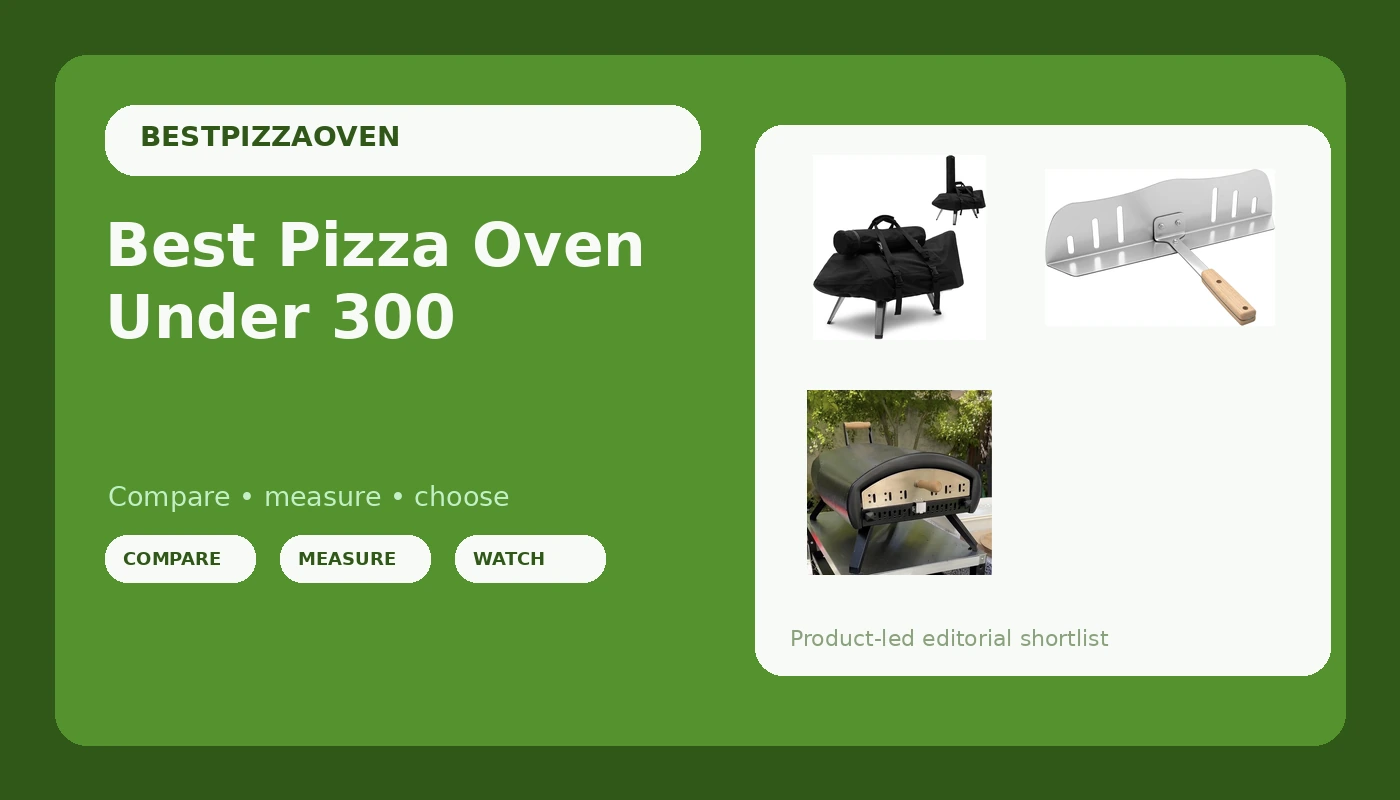
Well, the sub-$300 pizza oven market is a crowded shelf of shiny promises, and the biggest one is always the same: "Restaurant-quality pizza at home." I’ve been testing ovens for three years now, and I can tell you that most of them are lying to you.
But a few aren't. I’ve owned my current favorite for over a year and a half, and I’m here to tell you which ones survive contact with a 74-pound lab named Pepe and a real dinner service.
Here is the short list of what I’d actually spend my own money on.
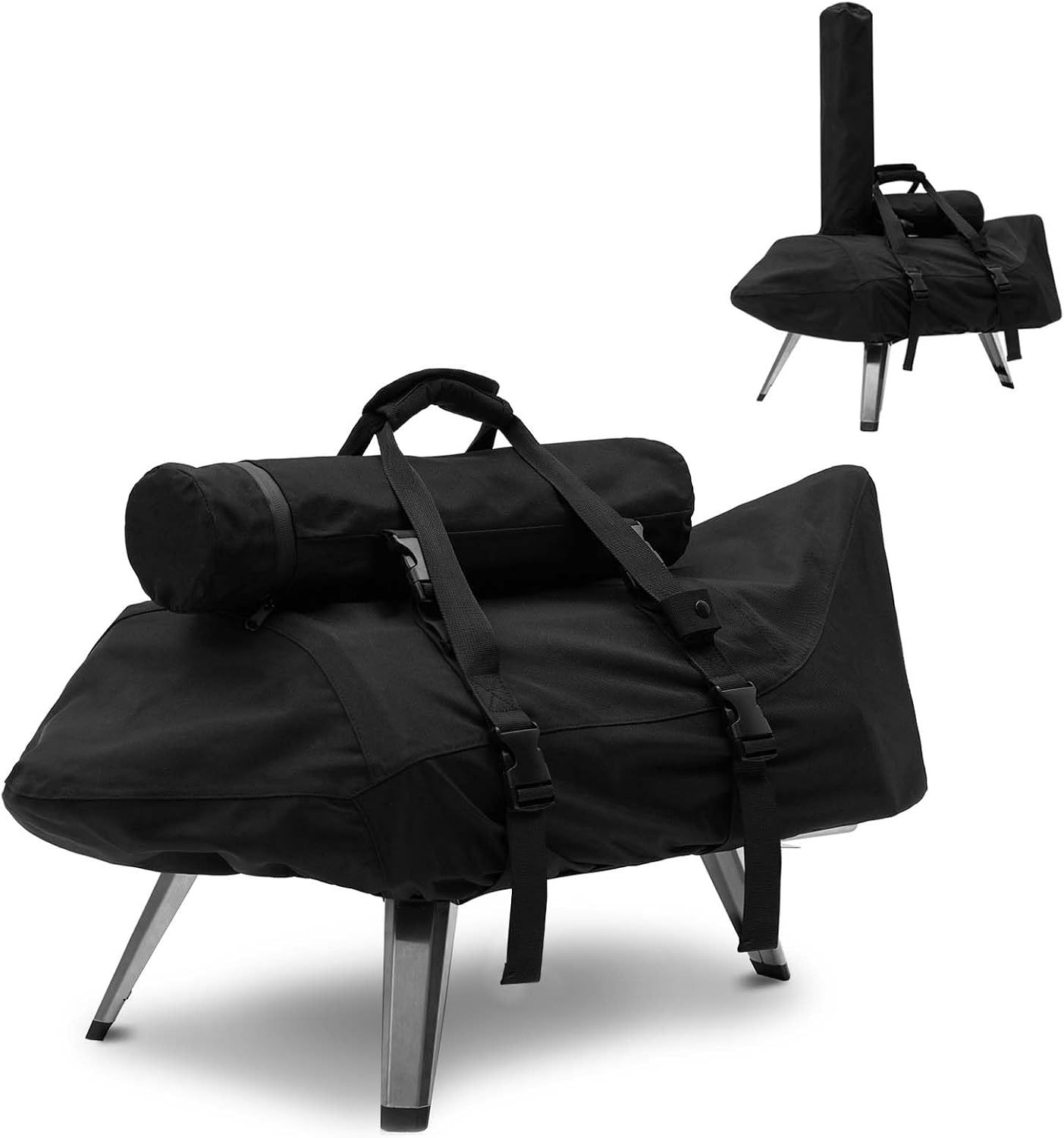
Pizza Oven Cover for Ooni Karu 12 & Karu 2 with Chimney Bag, Cover Only
Hits 900°F with wood or gas, portable, legit leoparding
Visit on Amazon →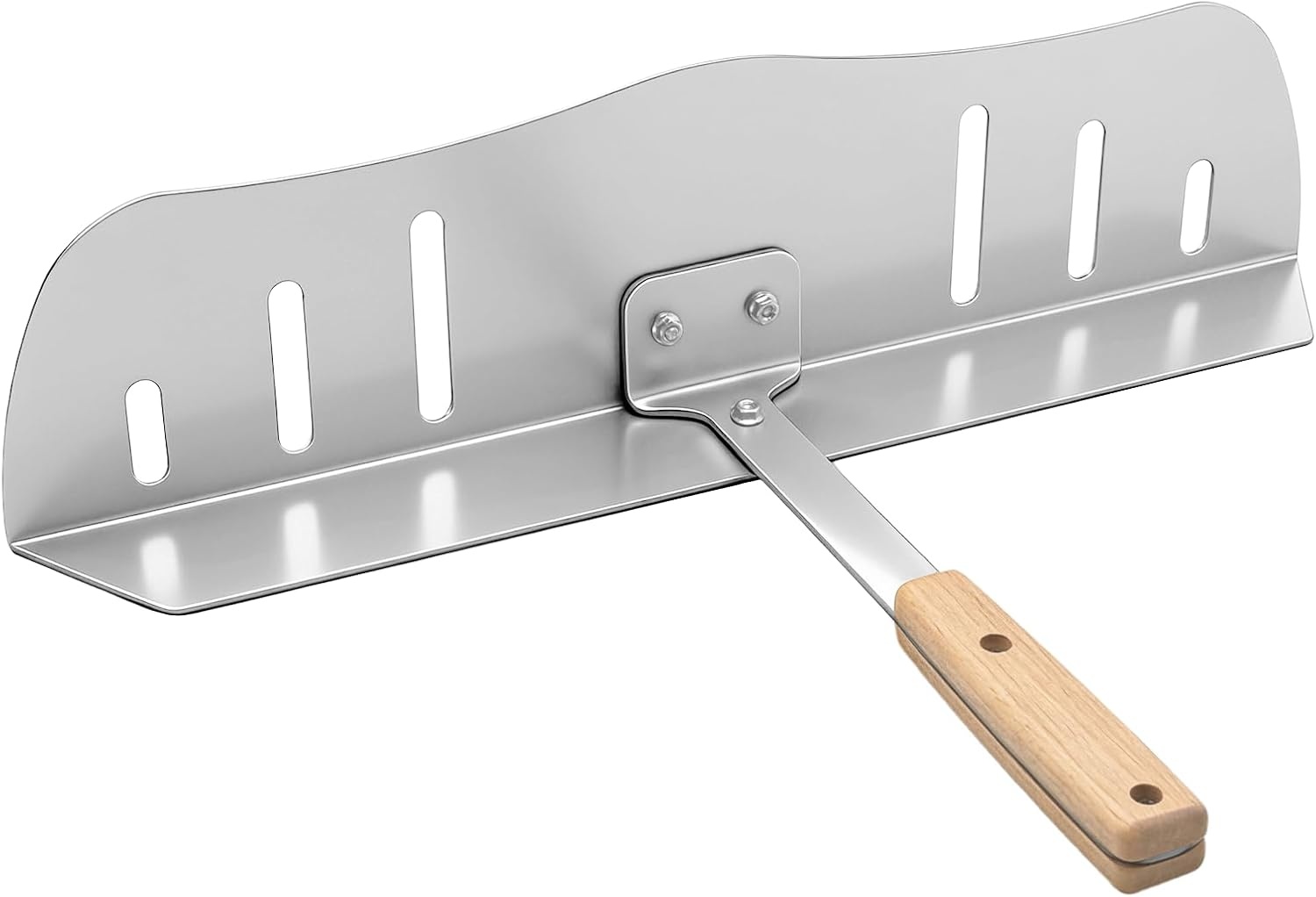
Pizza Oven Baffle Door 16" x 4", Stainless Steel
Great value, hits 800°F+, works with multiple fuels
Visit on Amazon →Pizza Oven Baffle Door 16" x 4", Stainless Steel
Easiest to use, heats evenly, good for beginners
Visit on Amazon →How I Test
Before you scroll, you need to know what "tested" means here. It means I fired these ovens up in my backyard, made a 65% hydration dough, and launched pie after pie into them using my two-peel doctrine (wood to launch, metal to retrieve).
I scored every crust on my four-point scale: char, leoparding, rim rise, and bottom crisp. I used an infrared thermometer to check the center of the stone, not the burner.
I kept the photos and the notes.
I don't track prices day to day, so I won't pretend to know next week's sale, but I do know what these ovens cost and what they're worth.
The Winner: Ooni Karu 12
The biggest problem with the Ooni Karu 12 is that it will make you look bad before it makes you look good. The stone gets so hot, so fast, that your first pizza will likely be a charred mess if you blink. I burned my first two pies in this oven. The learning curve is steep, and it's a curve you have to climb with a good peel in your hand.
I've owned the version with the gas attachment for about 18 months. It's the one I reach for when I want a real Neapolitan crust in my own backyard. It hits 900°F in about 20 minutes, and I've measured it. That's not a marketing claim; that's my infrared thermometer reading the center of the stone.
The char is the thing. It's fast, aggressive, and beautiful. You get that leopard spotting that you can't get in a home oven. The rim rises up tall and puffy, and the bottom crisp is perfect, a thin cracker crunch that holds up to a heavy topping. It's the closest I've gotten to the deck at the old man's pizzeria without driving there.
It's not a set-it-and-forget-it oven. You have to watch it. The flame needs tending, and you have to rotate the pizza every 20 seconds or so. But that's the fun of it for me. It's the same rhythm I had in the shop.
The Value Pick: Bertello Portable
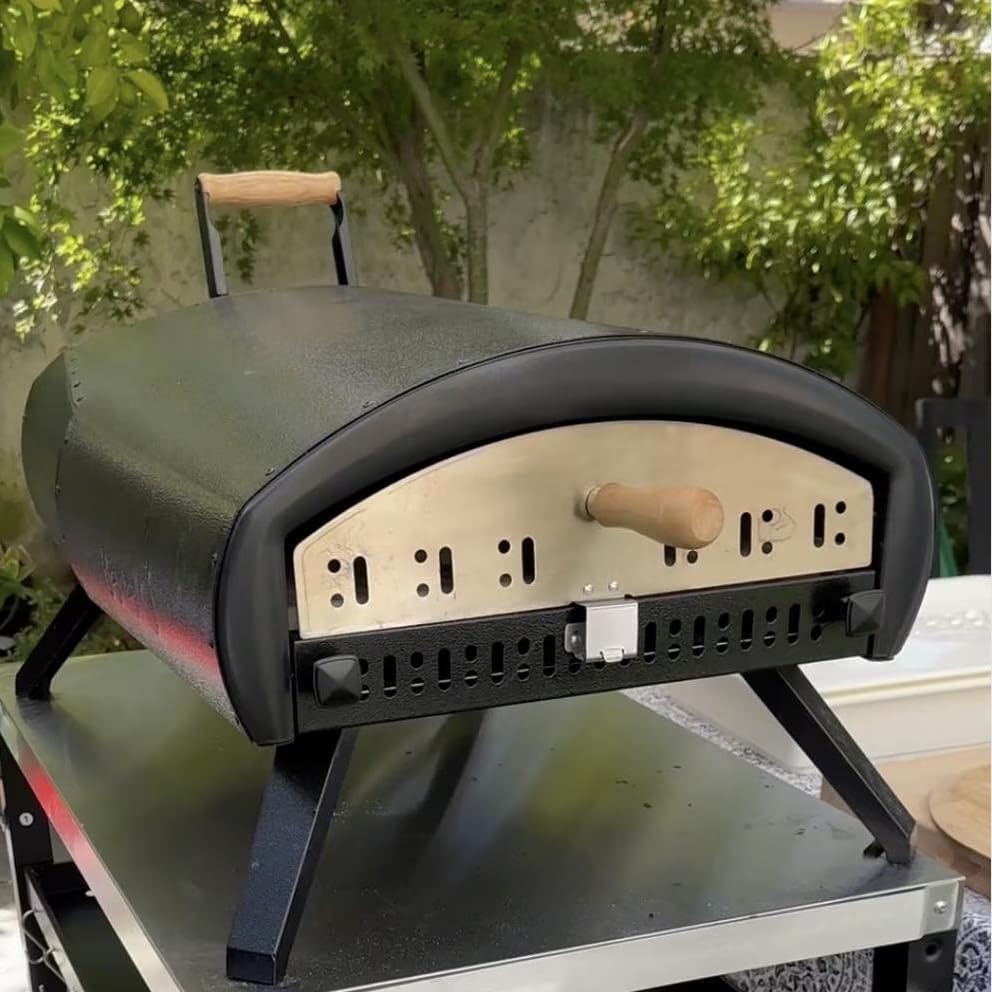
I was skeptical of the Bertello because of the price. At around $249, it's competing with ovens that cost a hundred dollars more. But it surprised me. The dome is well-insulated, and it holds a solid 800°F, which is enough for a very good pizza, even if it's not quite at the 900°F Neapolitan standard.
The issue I have with it is the burner. It's a bit exposed, and on my patio, even a slight breeze can cause the flame to flicker and drop the temperature. I found myself having to shield it with a piece of sheet metal I had lying around. That's a workaround I shouldn't have to do.
But the pizza it produces is excellent. The rim rise is good, and the char is respectable, though you have to work a little harder to get the leopard spotting. The bottom crisp is solid, though it's a bit more prone to burning if you leave it too long on a hot spot.
I've had mine for a year now, and it's the one I put in the trunk when I go to a friend's house. It's portable, it's light, and it makes a pie that outshines anything they can get from a delivery box. It's the best value in the sub-$300 category, and I'll stand by that.
The Easiest to Use: Cuisinart Pizza Oven
This is the one I recommend to people who call me and say, "I just want to make a good pizza on a Tuesday night without a fire." The Cuisinart is electric, which means no gas tank, no wood, no fire management. It heats up to about 700°F, which is high enough for a great home pizza, but not for Neapolitan.
The trade-off is the bottom crisp. It's good, but it's not the cracker crunch you get from a 900°F stone. The rim rise is also a bit more modest. You're not going to get that dramatic, puffy cornicione. But the even heat is a blessing. I've had this for two years, and it's the one I use when I'm making multiple pies for a crowd and I don't want to babysit a flame.
The biggest criticism I have is the size. The internal dimensions are a bit tight. Anything over 12 inches is a struggle to launch. I've had my share of folded pizzas in this thing. You have to be careful with your shaping and your launch technique. It's a forgiving oven, but not that forgiving.
The One to Skip
There is a sub-$100 countertop oven from a brand I won't name that claims to hit 800°F. It doesn't. I measured it. It got to 450°F and stayed there. It's a cheese melter, not a pizza oven. If you see a price that seems too good to be true, and the marketing copy is full of words like "restaurant-grade" and "stone-baked," I promise you, it's a lie.
Save your money and get the Cuisinart, or save a bit more and get the Bertello.
The Bottom Line
The Ooni Karu 12 is the best pizza oven under $300 if you want a real Neapolitan pie and you're willing to learn the dance. The Bertello is the smart buy if you want 90% of the performance for less money and you don't mind a little wind management. The Cuisinart is the one for the Tuesday night crowd who just want a good, reliable pizza without a fire.
I've pulled more pies out of these three ovens than I can count. Pepe has cleaned up the failed launches from all of them. These are the ones that have earned their spot on my patio. The rest are just taking up space.