I spent five years working the oven at a Neapolitan pizzeria before I moved to writing about food, and the lesson that took longest to sink in was this: the oven is a heat machine, but the night is run by everything around it. A grill top pizza oven kit is four decisions, not one. The oven decides how hot you can go. The peel decides whether the pie reaches the stone in one piece. The water decides how the dough behaves. The brush decides whether last week's burger grease ends up in tonight's margherita.
That is the frame for this comparison. I have four pieces on the table, they cost wildly different amounts, and they do completely different jobs. Ranking them against each other by "which one is best" is the wrong question. The right question is which one you are missing.
The short answer: the pizza peel is the piece most kitchens are missing, and it is also one of the cheapest things here. The grill top oven is the piece that changes what kind of pizza you can make. The kettle and the brushes are support crew, and one of them earns its place more than you would expect.
The four pieces, compared
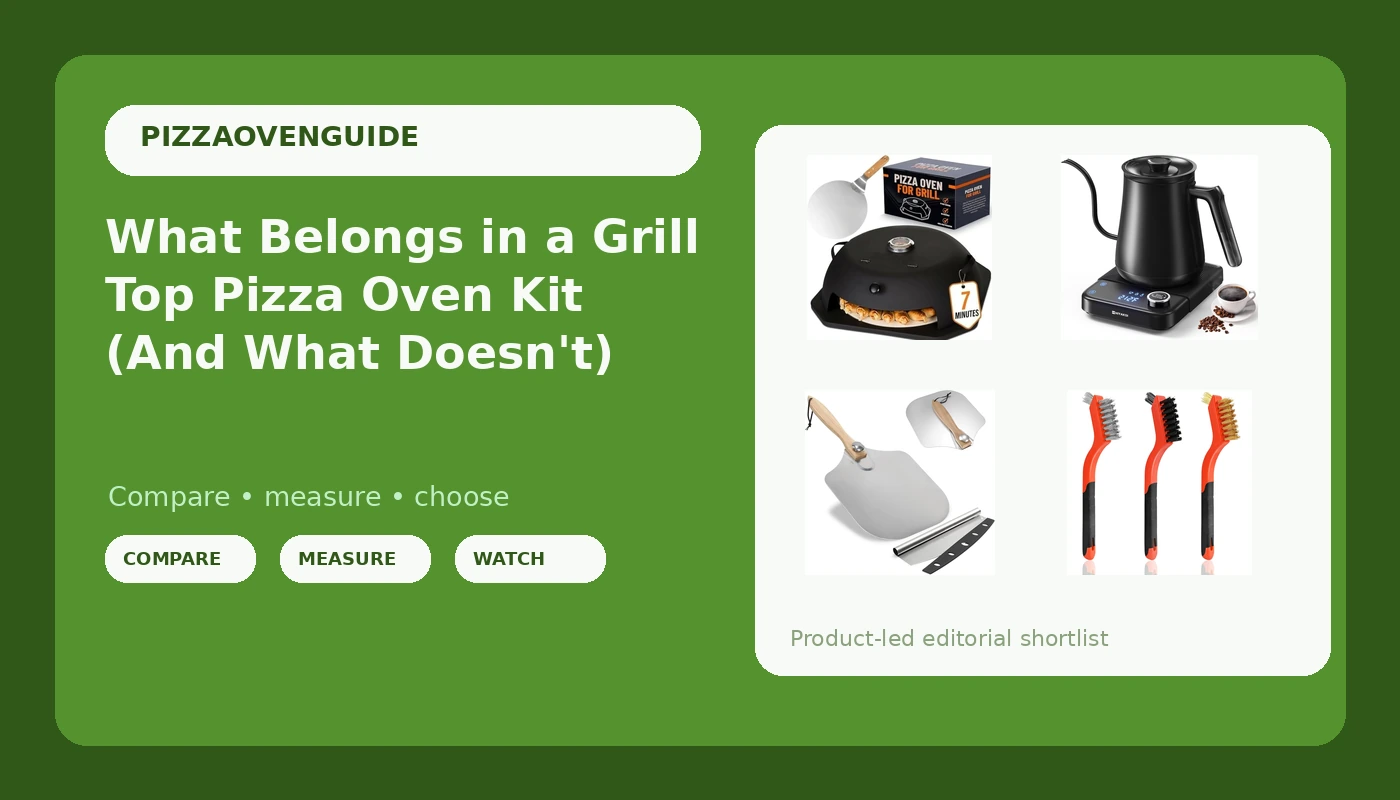
HeatGuard Pro Geras Pizza Oven for Grill
Turns the grill you already own into a pizza oven, and the listing covers charcoal, pellet, propane, and gas with a wood attachment. Ships with a stone and a peel kit, so it can be a first setup rather than an upgrade.
Grill-top ovens depend on the fire below them, so top heat and bottom heat are a balancing act. No chimney means no draft to manage, but also no forgiveness if your grate runs uneven.
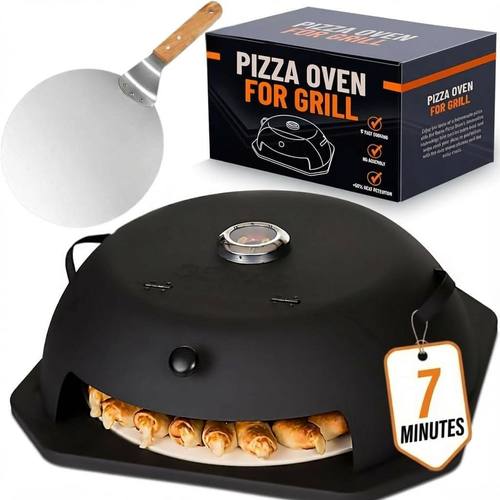
HIYAKOI Gooseneck Electric Kettle
Plus or minus 1 degree control is dough-water control, not just coffee control. 1200W heats fast, the 0.8L capacity covers a batch of dough and a pot of coffee, and the 12 hour keep warm plus built-in timer means you can set water before you light anything.
It is not a pizza tool. If you already have a kettle you like, this is a convenience purchase, not a fix for a problem in your pizza.
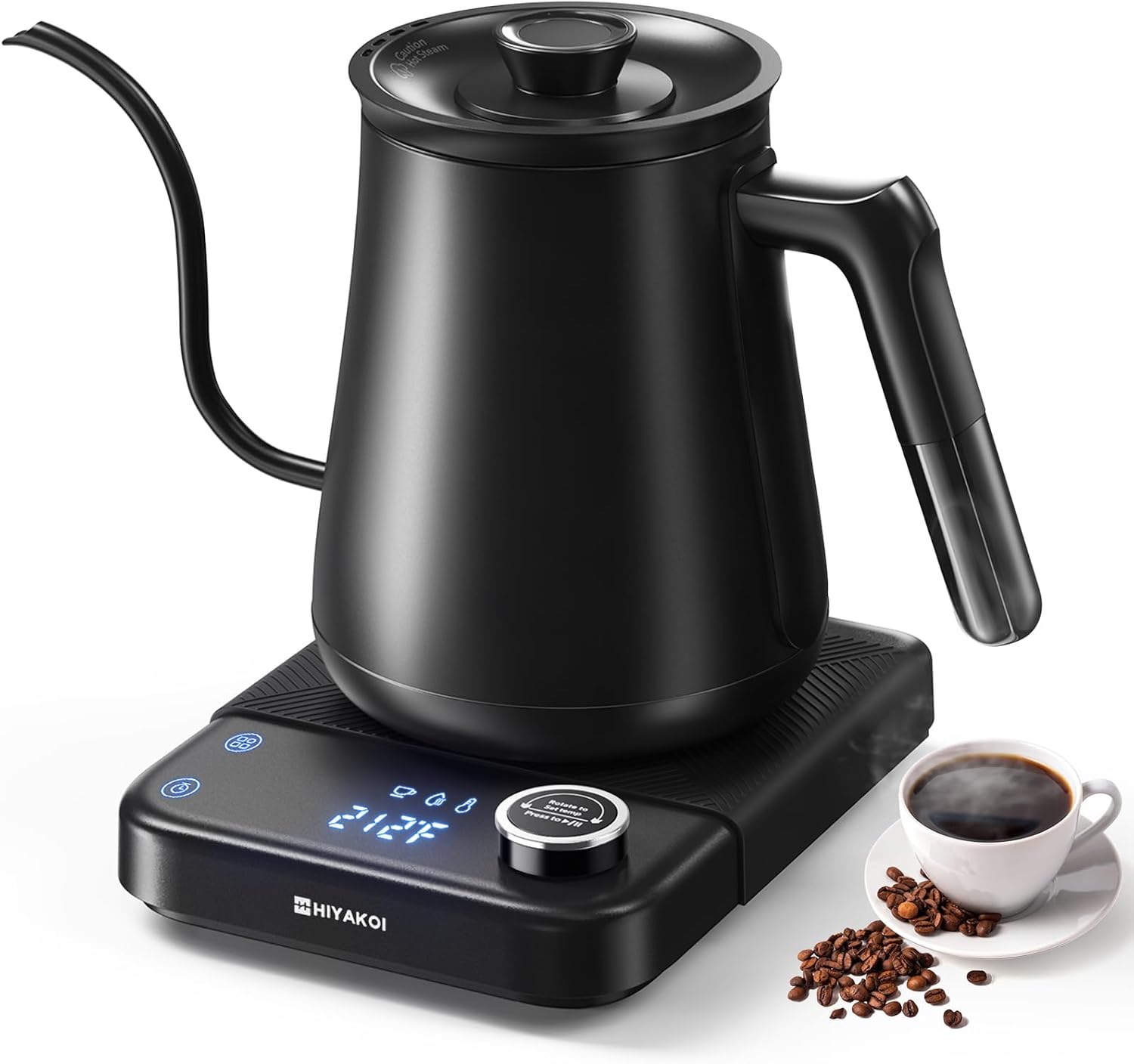
SKH Premium Aluminum Pizza Peel
A 23 by 12 inch aluminum blade that is thin enough to slide under a wet dough and stiff enough to carry a loaded pie. The foldable wooden handle is the difference between storing it in a drawer and storing it in the garage. Includes a rocker cutter.
Aluminum is light, which is a plus until a heavy topping load makes the blade flex. No lip mentioned, so flour your peel and work fast.
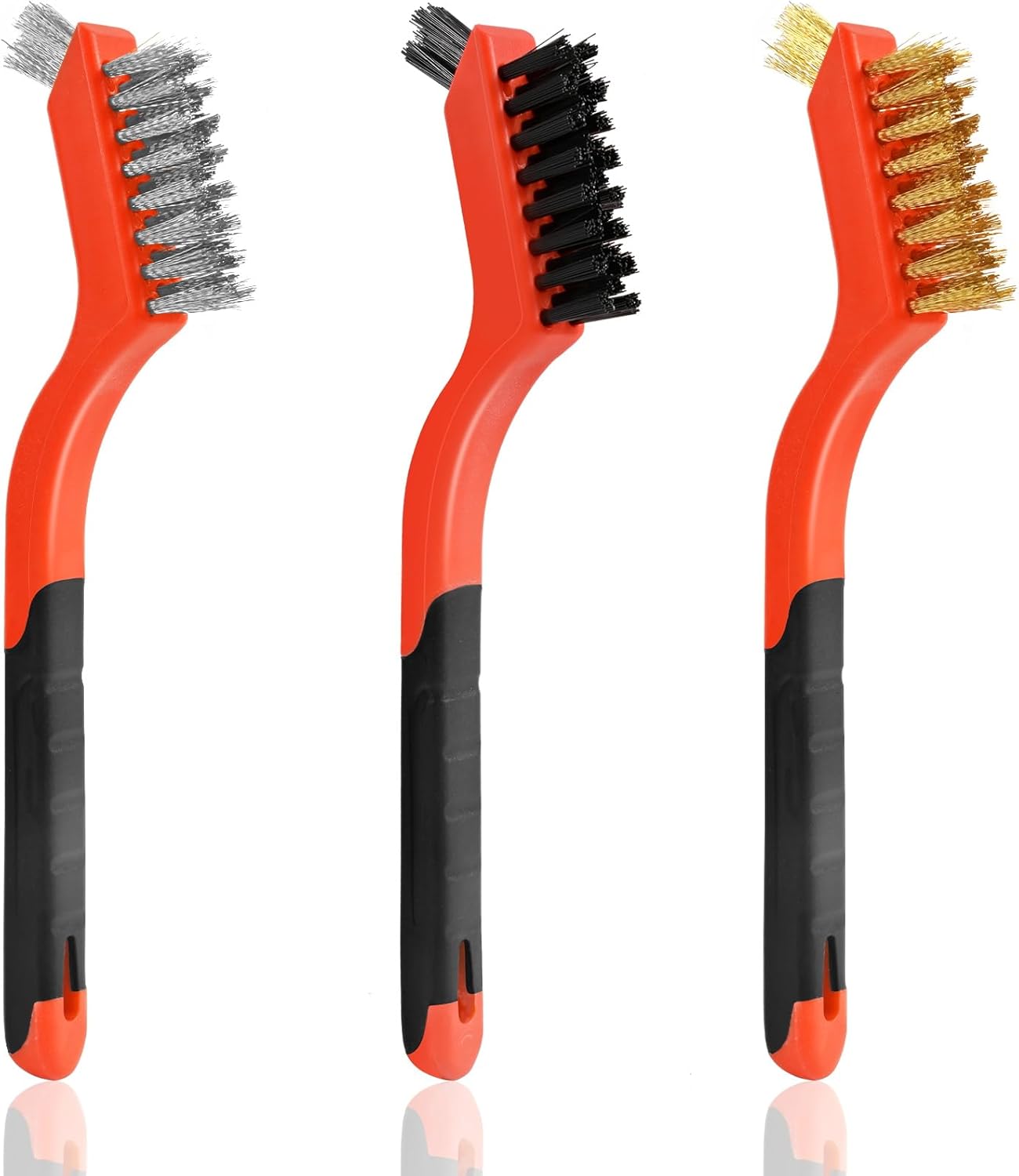
3PCS Wire Brushes
Three brushes with nylon, brass, and stainless steel bristles cover grate scraping, rust, and general cleanup. At this price it is the cheapest way to stop cooking on last week's residue.
Steel and brass bristles shed, and none of these should touch the cooking face of a pizza stone. This is a grate and hardware tool, not a stone tool.
Prices and availability were captured from Amazon Creators API and may change.
Why a grill top oven changes the math
Most people who want better pizza at home get told to buy a dedicated oven. That is a $400 to $900 decision, and it comes with a footprint problem: a dedicated pizza oven takes up patio space that nothing else can use.
A grill top oven is the other path. You already own the heat source. The HeatGuard Pro Geras sits on the grate, and per the listing it works over charcoal, pellets, propane, and gas with a wood attachment. That last part is the interesting bit, because it means the same box can be a Tuesday gas oven and a Saturday wood oven without buying twice. Visit on Amazon →
What it will not do is behave like a dome with a chimney. A grill-top oven is a chamber sitting on a fire, and the fire is underneath it. That shape means the stone takes heat from below and reflected heat from the lid, and the balance between those two is where good grill-top pizza either happens or doesn't. Leoparding on the rim comes from the top. A crisp bottom comes from the stone. Run the grill hot and fast and you get one. Run it low and slow and you get the other. You need both, and you need to know your stone temp before you launch.
I don't print temperature claims I have not measured with an infrared thermometer, and I have not measured this one. What I can tell you is what to look for: a stone reading 700F or better on an IR gun before the pie goes in, and a lid that doesn't dump all of that heat the second you open it. If a grill-top oven can't hold stone temp through two pies in a row, it is a one-pie oven, and one-pie ovens make bad dinner parties.
Also worth noting: this unit ships with a stone and a peel kit, so if you are starting from nothing, it lands closer to a complete first setup than the name suggests.
The peel is the piece that fixes the most problems
If you have ever watched a fully loaded pie fold in half on the way to the stone, you know what a peel is for. It is not a serving tray. It is a launch vehicle, and the difference between a good one and a bad one shows up in about two seconds.
The SKH peel is a 23 by 12 inch aluminum blade with a foldable wooden handle, and it throws in a rocker cutter. The size is the part that matters most. A 12 inch blade handles a 10 inch pie with room to spare, which means you are not fighting the dough to get it centered. The aluminum is thin, and thin is what you want, because a thin blade slides under a wet, floppy dough without tearing it. Thick blades with big bevels catch. Visit on Amazon →
The foldable handle is the feature I would pay for on its own. A solid 23 inch peel is a storage problem in a normal kitchen. It doesn't fit in a drawer, it doesn't hang neatly, and it ends up leaning in a corner where it gets knocked over. A handle that folds turns a two-foot tool into something that fits where you actually keep things.
The criticism: aluminum is light, and light cuts both ways. A heavy topping load, wet mozzarella, a lot of sauce, and you will feel the blade flex when you lift. That is not a defect so much as a trade-off. It also means you should be generous with flour or semolina on the peel and move with some urgency, because aluminum does not hold a dusting of flour the way wood does, and a dough that sits on a metal peel for 90 seconds will stick.
The kettle earns a spot for a reason nobody mentions
A gooseneck electric kettle in a pizza article looks like filler. It isn't, or at least it doesn't have to be, and the reason is water temperature.
Yeast is a living thing and it responds to heat. Water that is too hot kills it, water that is too cool slows it down, and the difference between a same-day dough and a 48 hour cold ferment is partly a difference in what temperature the water was when it went in. The HIYAKOI holds plus or minus 1 degree, which sounds like a coffee spec until you realize it is also a dough spec. Set it, and you remove a variable from your dough instead of guessing at the tap. 1200W means it gets there quickly, and the 0.8L capacity is enough for a batch of dough with water left over. Visit on Amazon →
The 12 hour keep warm and the built-in timer are the features that make it a pizza-night tool rather than a weekday tool. You can set water before you go outside to light the fire. By the time the stone is up to temp, the water is where you want it, and you are not standing at the sink with a thermometer.
The honest criticism: if you already own a kettle you like, this is a convenience upgrade, not a fix. Nobody has ever failed at pizza because their water was 4 degrees off. It is a nice-to-have with a genuinely useful control, and I would rank it behind the peel and the oven.
The brushes are cheap and they solve a real problem
Grill grates rust. That is not a brand problem, it is a cast iron and steel problem, and it happens whether you cook once a week or once a month. The 3PCS set gives you nylon, brass, and stainless steel bristles in one pack, which maps neatly onto three jobs: nylon for lighter residue and surfaces you don't want scratched, brass for rust and stubborn buildup, stainless steel for the heavy scraping. Visit on Amazon →
Here is the rule that matters, and it is the one people get wrong. Do not put steel or brass bristles on the cooking face of a pizza stone. Bristles shed, and stone is porous. Once a fragment works into the surface, it stays there. Use the brushes on the grate, the grill body, and the hardware. For the stone itself, scrape with a plastic or wooden scraper and brush it off with the nylon only if it is completely cool.
A grill-top oven sits directly on the grate, so a clean grate is not cosmetic. Grease smoke from the last cook goes straight into the chamber and onto the bottom of your pie.
The trade-offs nobody puts in the listing
The first trade-off is heat source discipline. A grill-top oven inherits every weakness of the grill under it. A kettle grill with uneven coals gives you an uneven stone. A gas grill with a hot spot gives you a hot spot in the pizza. If you have never checked your grill's temperature across the grate, do that before you buy an oven for it.
The second is that nothing here replaces a dough recipe you have made ten times. I will say this in every article I write on the subject: the oven gets the credit, the dough does the work. A 48 hour cold ferment in a $60 countertop oven beats a rushed two-hour dough in a $900 dome.
The third is storage. The peel folds, which helps. The oven does not. The kettle takes counter space. The brushes take a hook. Before you buy four things, decide where they live.
How I would buy these four, in order
If you own a grill and nothing else, buy the oven first. It is the piece that changes the category of pizza you can make, and it arrives with a stone and a peel kit so you are not dead in the water on day one.
If you own an oven and no peel, buy the peel. It is the single biggest quality-of-life upgrade in this group, and it costs less than a pizza delivery order for four.
If you own both, buy the brushes before the kettle. Grate maintenance is not glamorous, and it is the reason a lot of grill-top pizza tastes like whatever was cooked before it.
Buy the kettle last, and buy it because you want temperature control on your dough water and good coffee during the preheat, not because it will make your crust better on its own.
What to verify before you click
Check the dimensions of your grill before ordering any grill-top oven, because a chamber that overhangs the fire is a chamber that loses heat. Check that the stone in the box is the size you want, since a small stone limits you to small pies no matter how hot the oven runs. Check that the peel blade is wide enough for the pies you actually make, not the pies you plan to make. And buy an infrared thermometer, because without one you are guessing at stone temp, and guessing is how you end up with a pale bottom and a burnt rim.
Bottom line
The grill top pizza oven kit that works is not the most expensive one. It is the one where the oven, the peel, the water, and the grate all get handled. The HeatGuard Pro Geras covers the first and gives you a stone and peel to start. The SKH peel covers the launch and stores like it belongs in a kitchen. The brushes cover the part of cooking nobody photographs. The kettle covers a variable most people never think about.
Buy them in that order, cook the same dough recipe ten times, and the eleventh pizza will be the one you brag about.