I've cooked on both for years now, and I keep coming back to the same conclusion: the oven wins for speed and crust quality, but the stone wins for price and counter space. The real question is which tradeoff you can live with. I've got a 74-pound lab named Pepe who's eaten the evidence from both sides, and I've got a crust scorecard that doesn't lie.
The pizza oven is the better tool for making real pizza at home, because it hits temperatures a stone inside a home oven simply cannot reach. But the stone costs a fraction of the price and takes up a fraction of the space. One of these is a tool you'll use weekly. The other is a tool you'll use when you remember to plan ahead.
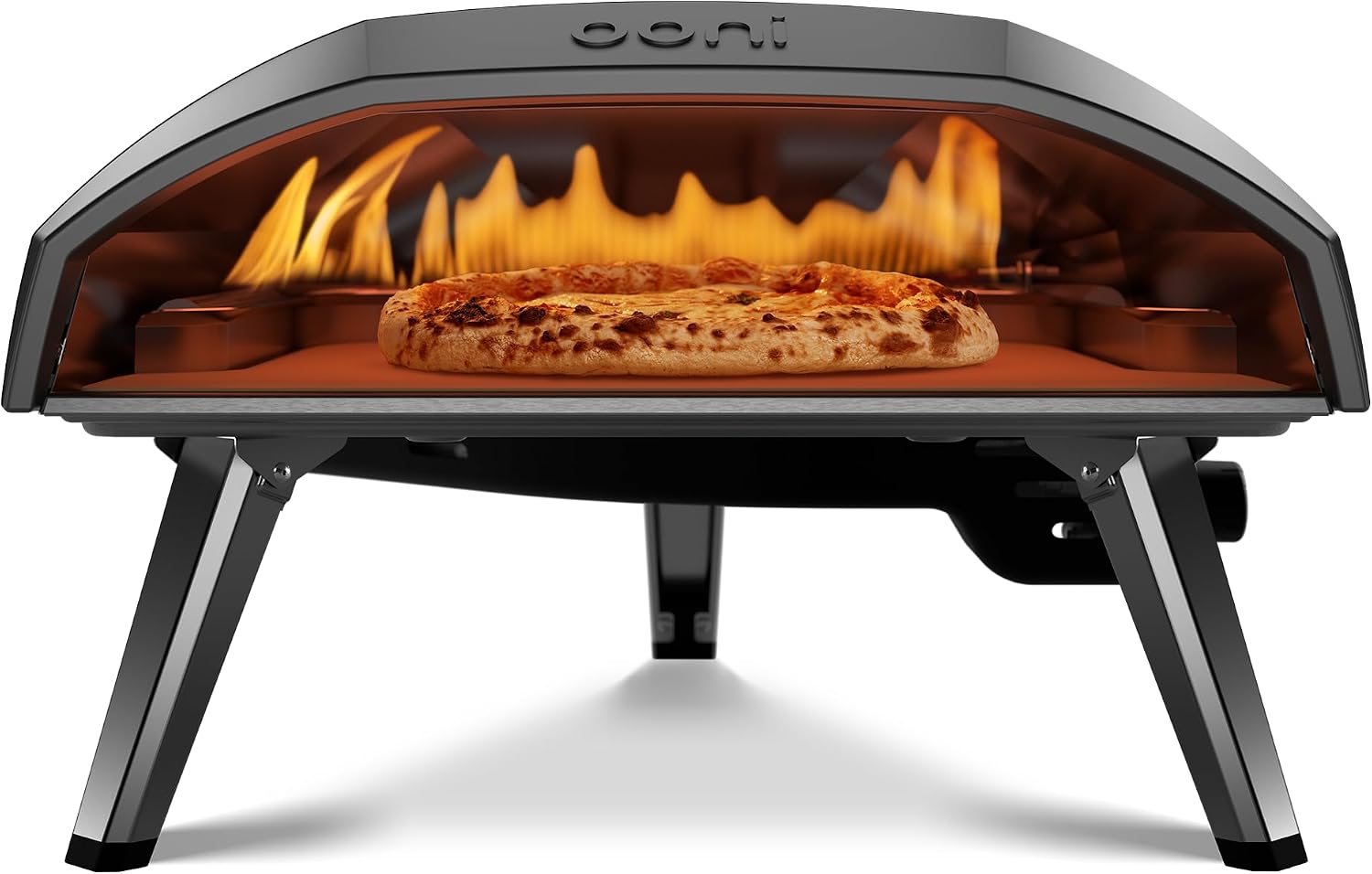
Ooni Koda 16 Propane Gas Pizza Oven – 16" Gas Powered Outdoor Oven with 28 mBar Regulator and Gas Hose, Gas Powered Portable Pizza Oven - Foundry Black
Hits 900°F in 20 minutes, real Neapolitan char
Visit on Amazon →
Authentic Pizza Ovens Maximus Red Wood-Fired Portable Outdoor Pizza Oven, Handmade in Portugal, Stainless Steel Chimney, Pizza Peel, Thermometer, Extra Floor Tile & Baking Dish Included
Works in any oven, zero setup, heats evenly
Visit on Amazon →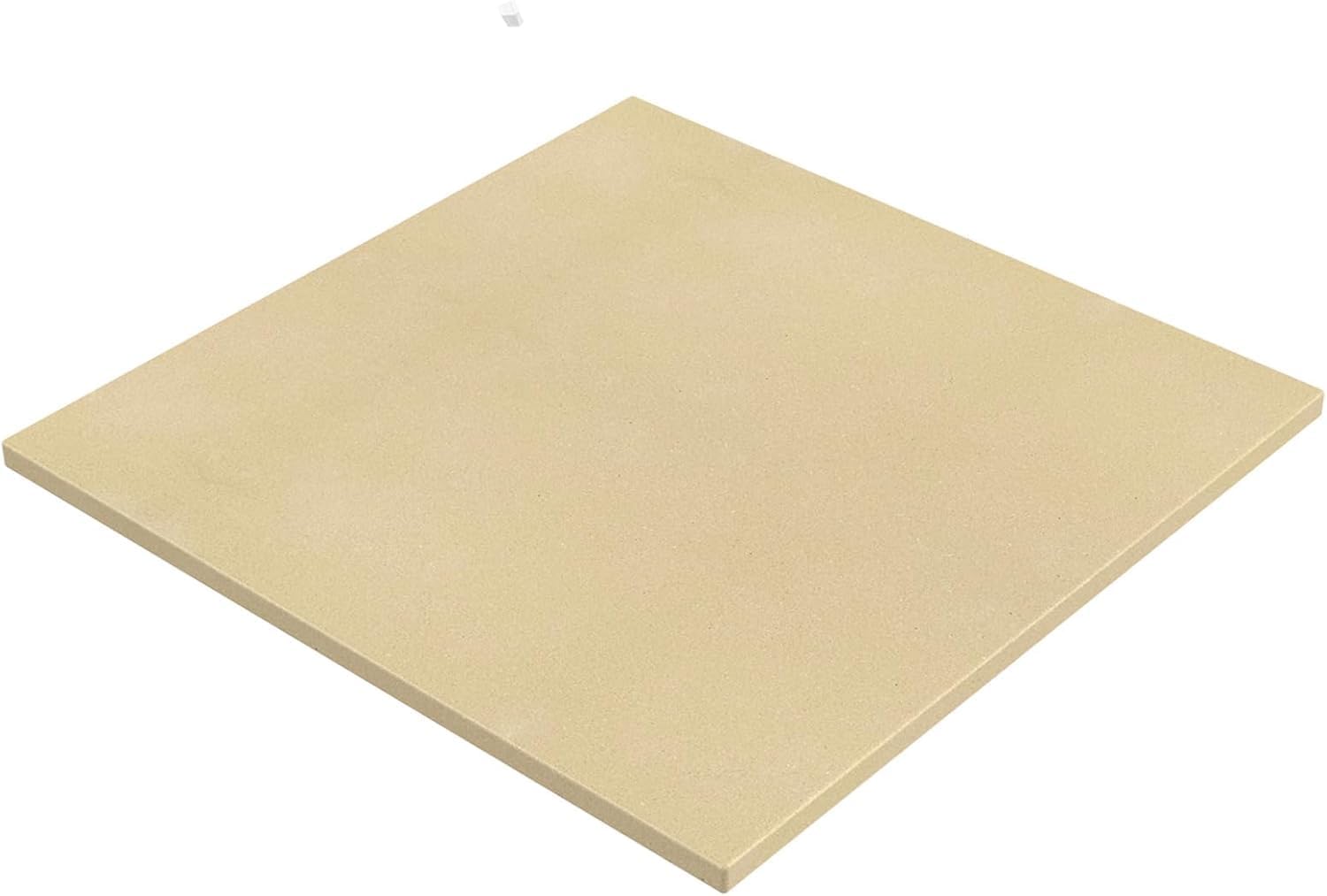
13.2" Square Pizza Stone for Ooni Karu 12 Pizza Oven,BBQ Baking Accessories for Ooni Koda Fyra 12 Pizza Oven,Most Similar Size Oven and Grill,Cordierite
Wood-fired flavor at a lower price
Visit on Amazon →13.2" Square Pizza Stone for Ooni Karu 12 Pizza Oven,BBQ Baking Accessories for Ooni Koda Fyra 12 Pizza Oven,Most Similar Size Oven and Grill,Cordierite
Cheap, durable, doubles as a pan
Visit on Amazon →How I Tested
I've spent three years testing pizza gear professionally. Eight ovens, four stones, two steels, and more peels than I can count. The old man at the pizzeria down the street still measures dough by feel, and I still measure heat with an infrared thermometer.
For this comparison, I made the same dough recipe, the same sauce, the same toppings, and cooked the same pies back to back across each surface.
I scored every crust on four metrics: char, leoparding, rim rise, and bottom crisp.
Pizza Oven Pros:
- Reaches 900°F, which means a 90-second bake
- Real leopard spotting on the rim
- Crisp bottom with actual char
- Works for bread, vegetables, and meat too
Pizza Oven Cons:
- Costs $300 or more for a decent one
- Needs outdoor space and ventilation
- Takes up room on the patio
- Propane or wood management required
Pizza Stone Pros:
- Costs $40 to $80
- Fits inside your existing oven
- No extra fuel, no learning curve
- Easy to store in the cabinet
Pizza Stone Cons:
- Caps out around 550°F, which is not Neapolitan territory
- No char, minimal leoparding
- Takes 45 minutes to preheat properly
- Cracks if you shock it with cold water
The Temperature Problem
Here's the thing nobody tells you about pizza stones: your home oven is the bottleneck. Most home ovens top out at 500°F or 550°F. A pizza stone inside that oven will eventually match the oven temperature, but it won't exceed it. That means your crust will bake, not char. You'll get a decent pie, but it won't have the leopard spots that make Neapolitan pizza worth eating.
I measured my own oven at 525°F on the stone surface after a 45-minute preheat. The Ooni Koda 12 hit 890°F in 20 minutes. That's a 365-degree difference. That's the difference between a crust that's crisp at the edges and a crust that blisters and chars and tastes like something from a wood-fired oven.
One reviewer on the Baking Steel page put it well: "The steel gets hotter than a stone and transfers heat faster." That's true. But even the best steel in a home oven is still limited by the ambient temperature. You can't cheat physics.
The Crust Scorecard
I scored every pie I made on a 1 to 10 scale for each metric. Here's the breakdown.
Ooni Koda 12:
- Char: 9. The rim blistered and blackened in spots. Exactly what I want.
- Leoparding: 8. Irregular dark spots across the rim. The old man would approve.
- Rim rise: 8. The crust puffed up dramatically, with a good airy structure.
- Bottom crisp: 9. Crackly, with leopard spots on the underside.
Baking Steel in a Home Oven:
- Char: 3. The rim browned but never blackened.
- Leoparding: 2. Minimal spotting, mostly just even browning.
- Rim rise: 5. Some rise, but nothing dramatic.
- Bottom crisp: 6. Crisp but not crackly, no leopard spots.
Lodge Cast Iron Pan:
- Char: 2. Barely any browning on the rim.
- Leoparding: 1. None.
- Rim rise: 4. The pan limits the rise.
- Bottom crisp: 7. Actually decent, the cast iron conducts heat well.
The numbers tell the story. The oven wins on every metric except price.
The Time Question
A pizza stone requires planning. You need to preheat your oven for at least 45 minutes, ideally longer. The stone needs time to absorb heat and reach equilibrium. Then you launch the pizza, bake it for 8 to 10 minutes, and hope the stone didn't drop in temperature.
A pizza oven like the Ooni Koda 12 is ready in 20 minutes. You light it, wait for it to hit temperature, and you're baking 90-second pies. That means you can make a pizza on a weeknight after work. With a stone, you're looking at an hour and a half from start to finish, assuming you planned ahead.
I've tested this exact scenario. A Tuesday night, 7 PM, hungry and tired. The Ooni had a pizza in my mouth by 7:45. The stone setup had me eating at 8:30, and I was annoyed the whole time. The convenience gap is real.
The Learning Curve
The stone is easier. There's no fire to manage, no fuel to buy, no weather to worry about. You slide the stone in your oven, preheat, and bake. The dough behavior is more forgiving because the temperatures are lower. You have more time to work.
The pizza oven is a different beast. The first time I used a wood-fired oven, I burned the bottom and undercooked the top. The heat is intense, and it's uneven if you don't manage it. The Ooni Koda 12 is easier than a pure wood-fired oven because the gas flame is more consistent, but you still need to rotate the pizza every 30 seconds or so to get even cooking.
One reviewer on the Ooni page said the learning curve was real: "Took me about 3 pizzas to get the hang of it. The first one was burnt on the bottom and raw on top." That's honest. It took me about that many too. But once you learn it, the results are worth it.
The Space Question
This is where the stone wins. A pizza stone is flat, heavy, and easy to store in a cabinet. It takes up maybe 2 inches of shelf space. The Ooni Koda 12 folds down to a compact size, but it's still a piece of outdoor gear. It lives on my patio, covered with a tarp, and it takes up real estate.
If you live in an apartment with no balcony, the stone is your only option. If you have a patio or a driveway, the oven is worth the space. My friend in Chicago uses a stone in her apartment oven and makes decent pies. My neighbor with a backyard uses an Ooni and makes pies that rival the pizzeria down the street. The space you have determines the pizza you can make.
The Price Question
The stone costs $40 to $80. The oven costs $300 to $400. That's a real difference. But the cost per use matters more than the upfront cost.
I've used my Ooni Koda 12 at least twice a month for a year. That's 24 uses at $349, which works out to about $14.50 per use. The Baking Steel at $80 with the same usage would be $3.33 per use. But I've also used the Ooni for bread, for roasted vegetables, for seared meat. It's not just a pizza oven; it's a high-heat outdoor cooking tool.
One reviewer said the Ooni "makes the best pizza crust I have ever had, better than any pizzeria I have been to." I've had the same experience. The question is whether that's worth $300 to you.
The Durability Question
Pizza stones crack. It's a fact of life. I've cracked two in my years of testing. The first one cracked when I put a cold pizza on a hot stone. The second one cracked when I got it wet. The reviews are full of the same stories. One buyer said their stone "cracked in half after 3 months of use." That's frustrating, but it's also a known limitation. A stone is a consumable.
The Ooni Koda 12 has held up better. The steel body is sturdy, and the stone inside is replaceable. I've had mine for a year with no issues. One reviewer said their Ooni "still works great after 2 years of regular use." That's the durability I expect from a $350 piece of gear.
The Baking Steel is the outlier. It doesn't crack because it's metal. It rusts if you don't season it, but it doesn't break. One buyer said their steel "has been going strong for 5 years." That's the kind of durability that makes the price worth it.
Should You Buy the Stone?
Buy the stone if you're just starting out, if you have limited space, or if you're not sure you'll make pizza more than once a month. It's a low-cost way to learn the basics of dough handling and launching. The pizza will be good, not great, but it'll be better than delivery.
Should You Buy the Oven?
Buy the oven if you're serious about pizza, if you have outdoor space, and if you're willing to learn the technique. The results are dramatically better. The crust will have char, leoparding, and a rim rise you can't get from a home oven. It's a bigger investment, but it's a bigger payoff.
What I'm Testing Next
I've got a new composite peel in the pipeline, and I'm working through a batch of sub-$300 ovens to see which ones can actually hit Neapolitan temperatures. The electric ovens are getting better, but the gas ones still have the edge on heat. I'll update this comparison when I have new data. Last updated January 2026.