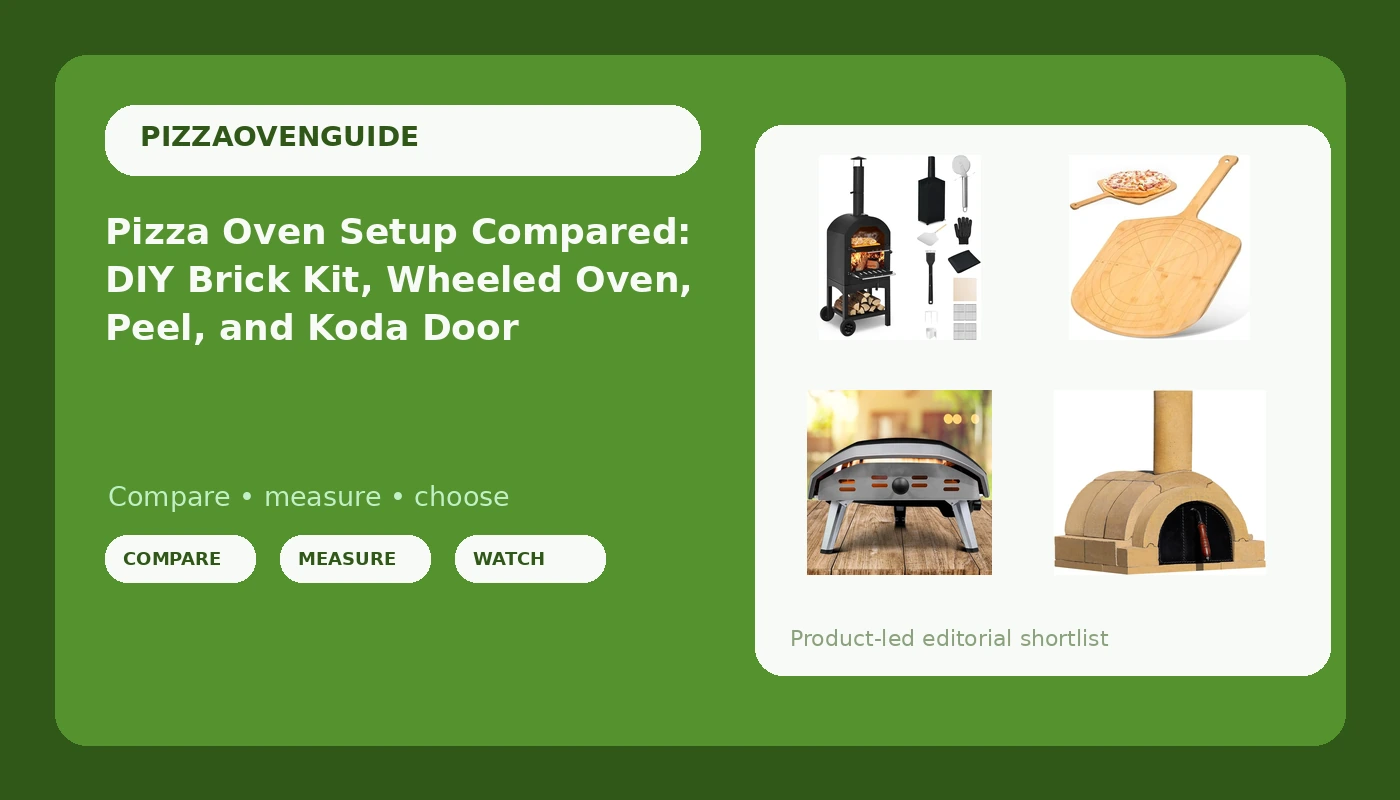
I have cooked in a lot of bad pizza ovens. Five years behind the counter at a Neapolitan pizzeria taught me what a hot oven looks like from the inside, and three years of testing backyard ovens taught me how rarely the box copy matches what happens on the stone. This pizza oven setup comparison puts four very different purchases side by side: a full DIY firebrick kit, a wheeled wood-fired oven, a 16-inch bamboo peel, and a door built for the Ooni Koda 16. Two of them are ovens. One moves dough. One traps heat. They belong in the same article because a hot oven with nothing to launch from, and nothing to hold heat between pies, is only half a setup.
Related: Stone Temperature Beats Oven Size: What Actually Cooks a Pie
For most backyards, the pairing that makes sense is the Happygrill wheeled wood-fired oven plus the 16-inch bamboo peel, because together they cover heat and handling without a masonry project. The BRAVO firebrick kit is the more serious oven and the bigger commitment. The Koda 16 door is the smallest piece here and the one that changes an oven you already own the most.
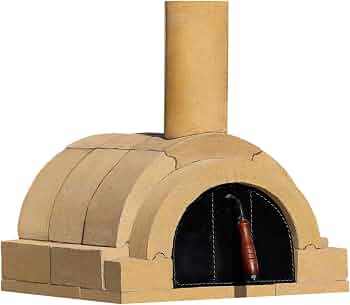
BRAVO Wood Burning Fire Brick Pizza Oven for Outdoor Cooking, FULLY DIY KIT
The most thermal mass of the four, a complete parts list in one box, and heat that stays in the dome between pies
Assembly, curing, and a level base are on you, and once it is built it never moves again
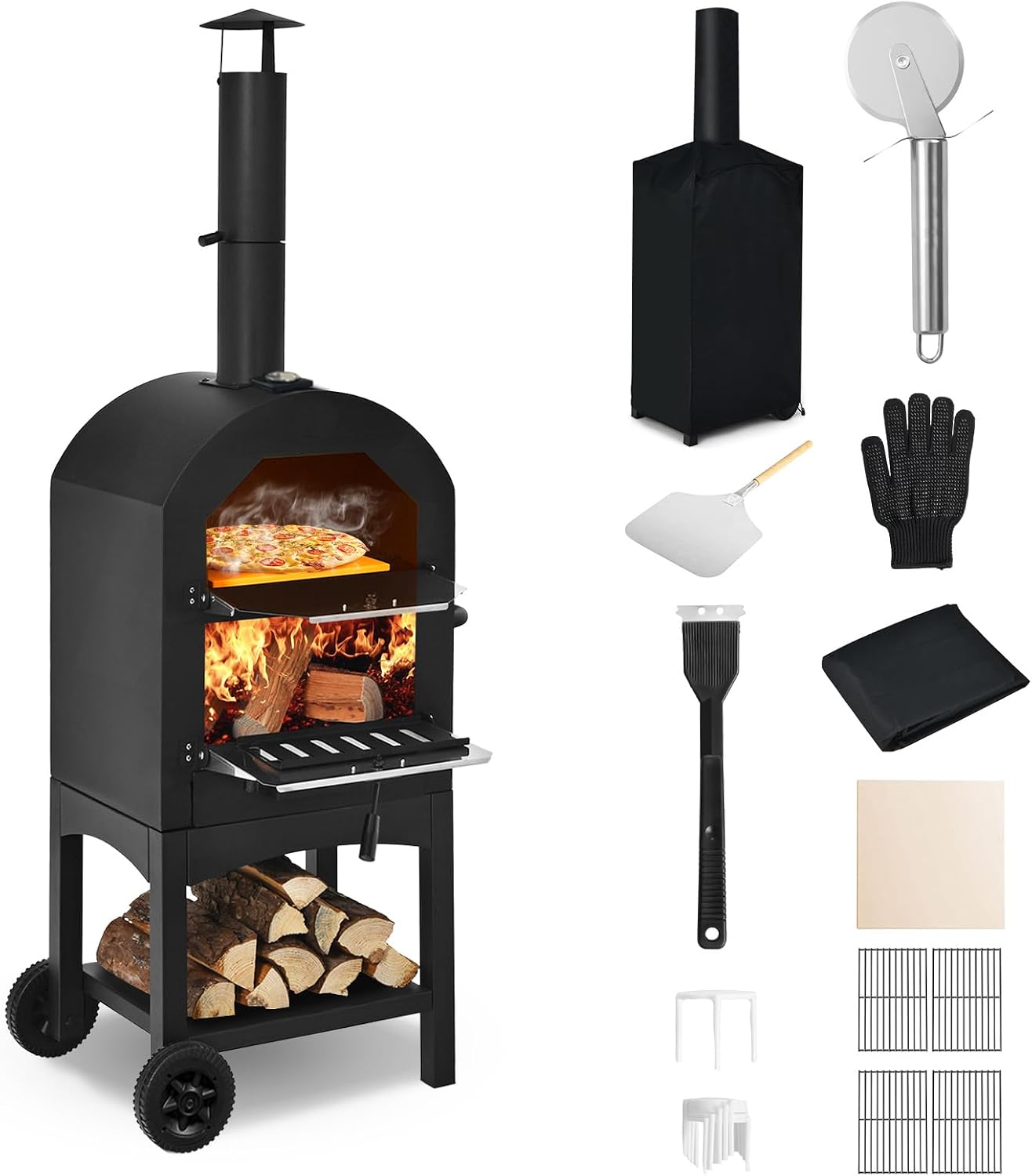
Happygrill Outdoor Pizza Oven Wood Fired with Wheels & Built-in Thermometer
Wheels, a built-in thermometer, and real wood-fired cooking with no construction project
Thin metal recovers more slowly than firebrick, and a lid thermometer reads chamber air, not stone temp
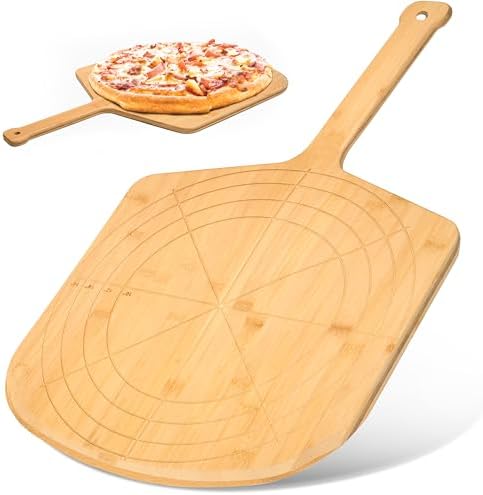
Wooden Pizza Peel 16 Inch Board with Engraved Sizes
Launches, cuts, and serves from one board, and the engraved sizes take the guesswork out of dough diameter
Bamboo needs flour and a confident shake, and a 16-inch board is a lot of board for a 12-inch oven
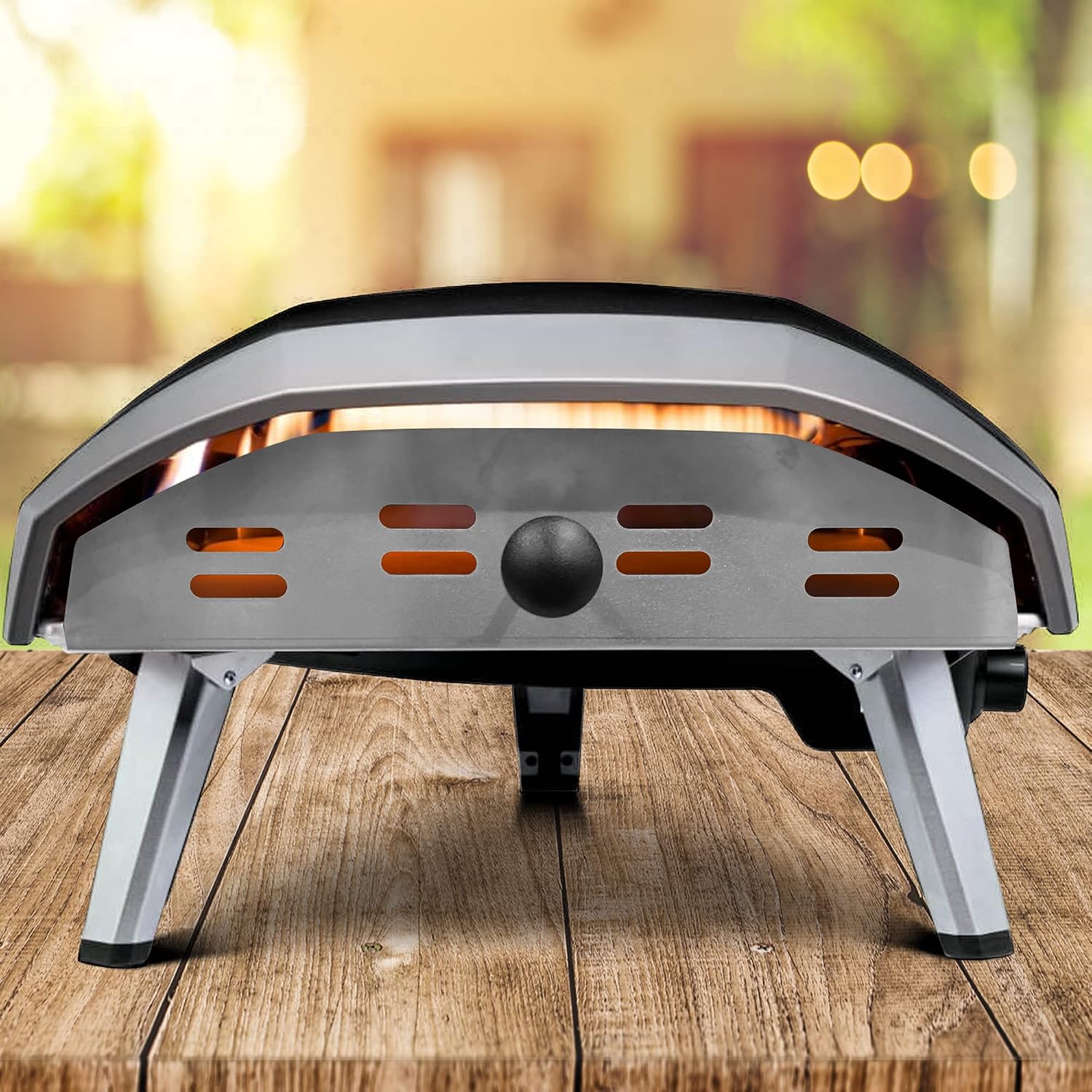
Pizza Oven Door Fits Ooni Koda Pizza Oven (Fits Koda 16)
Turns an open-mouth Koda 16 into a closed chamber so the stone recovers between pies
Fits one model only, and it has to come off before every launch
Prices and availability were captured from Amazon Creators API and may change.
How I judge a pizza oven setup
Four things decide whether an oven earns space in my yard: stone temp, recovery, footprint, and what the box makes you do before the first pie.
Stone temp is the spec that matters most. A 12-inch oven that reaches Neapolitan range beats a 16-inch oven that stalls, every time. I do not accept a temperature number without an infrared thermometer reading, and none of these listings hand you a stone reading, so treat every claim as a claim until you measure the floor yourself.
Recovery is the spec nobody prints. The first pie pulls heat out of the stone, and the second pie tells you what you bought. Thermal mass is what buys recovery: firebrick and refractory hold heat and give it back, thin steel gives it back slowly. That is the single biggest difference between the two ovens in this comparison.
Footprint and fuel come next. A permanent oven is a landscaping decision. A wheeled oven is a storage decision. Wood is a weekend ritual; an oven you can roll under a cover is a Tuesday.
Finally, the box. A kit that ships with firebrick, refractory glue, a trowel, gloves, a cover, a steel gate, and instructions is a kit you can finish. A kit missing any one of those is a second order and a lost weekend. The BRAVO listing names every piece, which is why it gets a fair hearing here.
The firebrick kit: BRAVO Wood Burning Fire Brick Pizza Oven
The BRAVO Wood Burning Fire Brick Pizza Oven is a fully DIY kit, and the listing is unusually specific about what arrives: a firebrick set, refractory glue, a trowel, gloves, a cover, a steel gate, and assembly instructions with a stated three-hour build. That is a real parts list rather than a photo of a finished dome, and it matters more than it sounds. Refractory glue and a trowel are the two items people forget to buy, and forgetting them means your firebrick sits in a pile while you wait on a delivery.
What you are buying here is thermal mass. A firebrick dome soaks up heat and gives it back between pies, which is the difference between cooking one pizza and cooking for eight people. It also means the oven keeps working after the fire burns down, which is how you end up roasting vegetables late at night because the stone is still hot.
The trade-offs are real and they are not small. Three hours of assembly is three hours of assembly, and that assumes a level base you have already prepared. Firebrick wants to be eased into heat rather than blasted on day one, so the first firing is a curing session, not a pizza night. Once it is up, it stays up: no wheels, no rolling it back under a cover, no moving it because the deck furniture arrangement changed. A permanent outdoor oven is also a structure, which means a base, drainage, and local rules, not just a purchase.
If you want the deepest heat of the four, this is where it lives. If you want pizza on Friday, this is not it. Visit on Amazon →
The wheeled option: Happygrill Outdoor Pizza Oven Wood Fired
The Happygrill Outdoor Pizza Oven Wood Fired with Wheels and a Built-in Thermometer is the opposite bet: a wood-fired oven that lives on wheels and asks you to build nothing. Roll it out, load wood, cook, roll it back. That portability is the entire point, and it is why this is the one I would point a first-time buyer toward.
The built-in thermometer is a convenience, not a measurement. Lid thermometers read the air in the chamber, not the stone, and the stone is what cooks the bottom of your pie. If you want to know your stone temp, point an infrared thermometer at the middle of the floor. That is a small habit that will teach you more about this oven than any dial on the lid.
Wood-fired cooking in a thin steel chamber behaves differently from a brick dome. There is less mass to soak up heat, so recovery between pies is slower and you will want to give the floor a few minutes between launches. That is not a flaw so much as physics, and it is the honest reason a cart oven costs a fraction of a masonry build.
Where this oven wins is the night itself. It is a real fire, real char on the rim, and real leoparding if you get the stone hot enough and the dough dry enough. It is also the oven you can put away when the season ends, which is worth more than a spec sheet admits. Visit on Amazon →
The peel: Wooden Pizza Peel 16 Inch Board
The Wooden Pizza Peel 16 Inch Board with Engraved Sizes is doing four jobs in one object: peel, cutting board, spatula paddle, and serving board. The engraved size guide is the detail I like most, because dough diameter is the thing home cooks guess wrong most often. A 250-gram ball at 62% hydration opens to a predictable width, and having those widths marked on the board removes the guesswork. If your pies keep coming out oval, a marked board is a cheap fix.
Bamboo has one job at launch: get the pie off the board in a single motion. That requires flour or semolina underneath, a confident shake, and speed. Bamboo grabs dough a little more than metal does, which is fine when you are launching and mildly annoying when you are trying to turn a pie in a hot oven. The routine is simple: build the pie on the board, shake it to confirm it moves, then launch. If it will not slide, lift an edge and throw flour underneath rather than on top.
Two checks before you buy any wooden peel. First, look for a tapered leading edge, because a thick edge makes it harder to slide under a pie. Second, look at the handle, since a board this size is awkward to hold without a real grip. A 16-inch board is also a lot of board if your oven is 12 inches across, though the extra width is genuinely useful as a cutting and serving surface.
This is the least expensive piece in the comparison and the one that upgrades any oven you already own. Visit on Amazon →
The door: Pizza Oven Door for the Ooni Koda 16
The Pizza Oven Door Fits Ooni Koda Pizza Oven (Fits Koda 16) is the specialist purchase here, and it only makes sense if you own the Koda 16. An open-mouth gas oven loses heat out the front all night. A door turns the chamber into a closed box, which is how you get the stone back up to temperature between pies instead of waiting on the burner.
That matters because the classic complaint about open gas ovens is exactly this: the first pie is great, and by the fourth the stone has dropped and the bottom stops charring. A door does not add BTUs. It stops you from wasting the ones you have.
Two things to plan for. The fit is specific, so measure your oven and confirm the model before ordering; a door that does not seat properly is a door you will never use. And the door has to come off before every launch, which is one more motion in a process that already has plenty. Anyone who has launched a pie into a closed oven once will never do it twice, but the first time is memorable.
If you cook two pies a month, skip it. If you cook six in a row for a crowd, a door is the difference between a consistent bake and a declining one. Visit on Amazon →
What the trade-offs actually look like
Line these four up and the decision splits by how you cook, not by which one is best.
The firebrick kit is the only one that changes your yard. It buys thermal mass and permanent heat, and it charges you assembly, curing, a base, and a structure that stays where you put it.
The wheeled wood-fired oven buys the same fuel with none of the construction. It gives up recovery on long bakes and asks you to manage a fire in a thin chamber. For a household cooking two to six pizzas on a Saturday, that is a fair trade.
The peel is not a compromise at all. Every oven in this article needs one, and the engraved sizes on this board make it a better teaching tool than a plain paddle.
The door is the narrowest purchase and the most targeted. It fits one oven, and it only helps if you cook enough pies in one session to notice the stone dropping.
Ranked by how much they improve a normal backyard night: peel first, then the oven that matches your yard, then the door if you own the Koda 16.
The first pizza will be bad
That is not pessimism, it is process. The first pie in any new oven tells you the stone was not hot enough, the dough was too wet, or you launched too slowly. The second pie tells you what you bought.
Set yourself up to learn fast. Same dough recipe every time, same hydration, same ball weight, an infrared thermometer on the stone, and a note on where the char landed. Change one variable per session. If your rim rise is flat, your stone is cool. If the bottom is pale and the top is burnt, your stone is cool and your fire is too aggressive. If the pie sticks to the peel, you need more flour underneath and less sauce on top.
I score every pie on char, leoparding, rim rise, and bottom crisp, and I keep the photos. It sounds obsessive until you realize the scorecard is the only way to compare an oven to itself a month later.
What I am testing next
The ongoing question on my bench is whether indoor electric ovens can carry a weeknight, because nobody wants to light a fire at 7pm on a Tuesday. The convenience gap is wide enough that I expect electric to keep taking share from gas in the entry and mid range, and I expect the gas brands to feel it within a couple of years.
The other thing I am watching is the DIY kit class. The BRAVO kit states a three-hour assembly, and I want to know whether that number holds for someone who has never mixed refractory glue before, or whether it is a best-case figure from a person who has built three of them. That answer decides who should buy a kit and who should buy something on wheels.