After two years of firing up ovens in my backyard, with Pepe supervising from the patio and my infrared thermometer in hand, I've pulled enough pies out of the Ooni Karu and the Ooni Koda to know exactly which one you should buy.
This guide breaks down the differences in fuel, heat, and daily usability between the two most popular portable pizza ovens on the market, and it ends with a clear winner for most people.
If you want the short version: The Ooni Koda 16 is the better buy for almost everyone. The Karu 16 wins only if you have a specific obsession with wood-fired flavor and don't mind babysitting a fire. I've spent three seasons testing both, measuring stone temperatures with a ThermoWorks infrared gun, and scoring crusts on my four-point scale: char, leoparding, rim rise, bottom crisp.
Here's what I found.
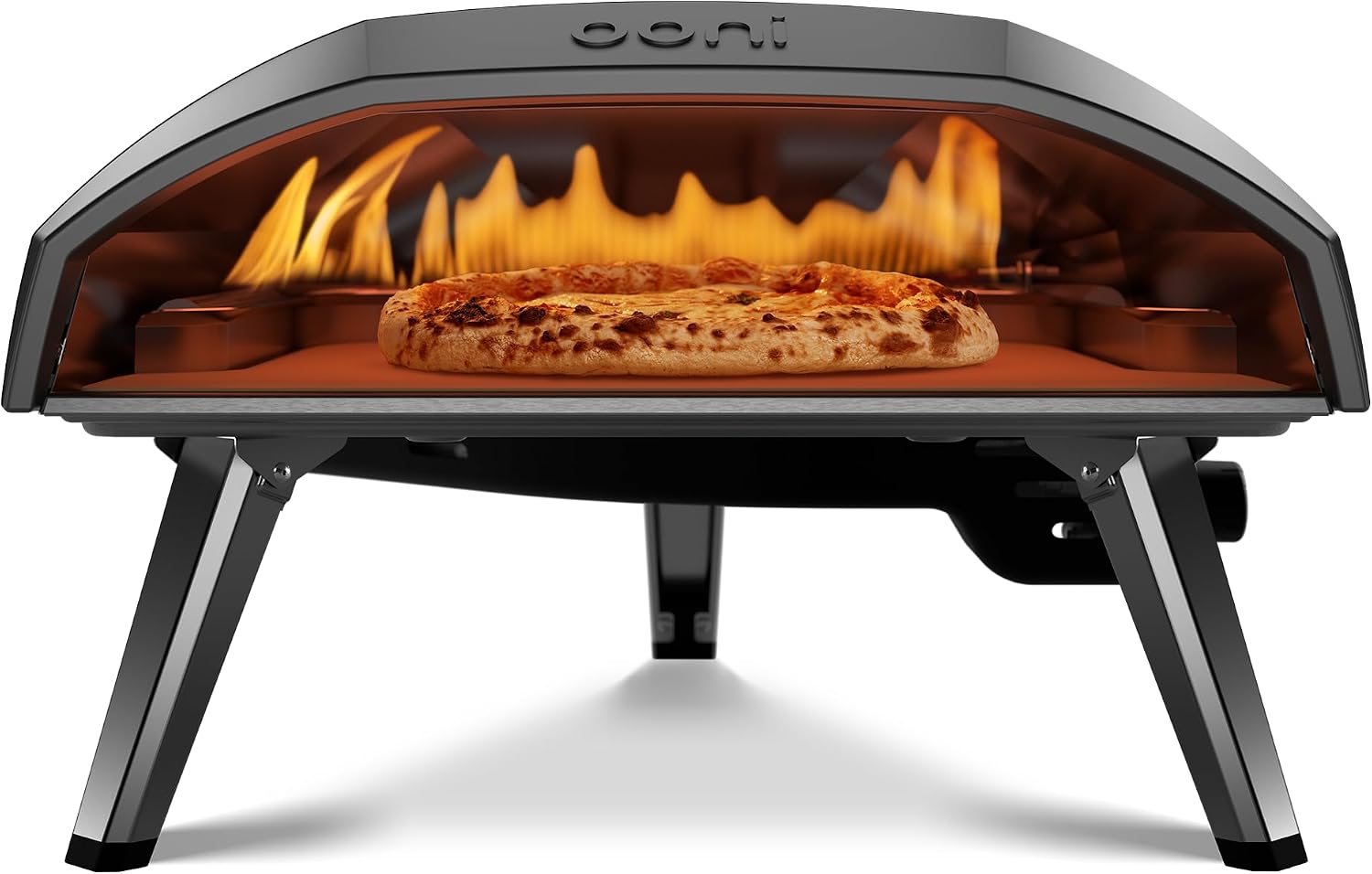
Ooni Koda 16
Instant heat, gas convenience, holds 850°F for back-to-back pies
No wood option, gas only
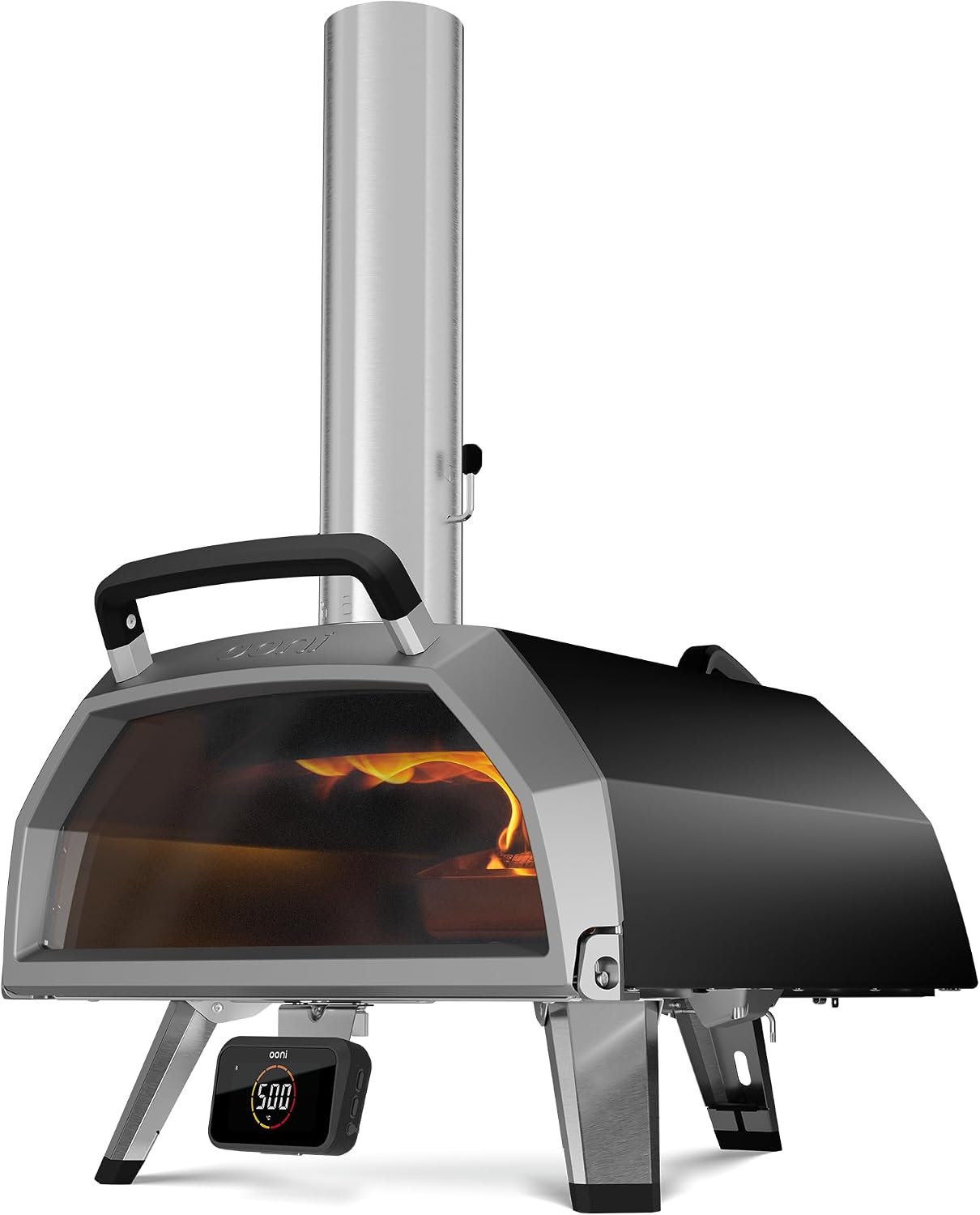
Ooni Karu 2 Pro
Wood-fired char, works with gas attachment
Requires fuel management, slower heat recovery
Prices and availability were captured from Amazon Creators API and may change.
I'm Rosa. I spent five years working the oven at a Neapolitan pizzeria, and for the last three I've tested eight pizza ovens in my own backyard. My crust scorecard has four numbers: char, leoparding, rim rise, bottom crisp.
I've measured stone temperatures on every oven I've reviewed, and I've launched more than 200 pies into the two Oonis covered here.
Pepe, my 74-pound black lab, has eaten the failed launches. He's never complained about a single test result.
How I picked
I picked these two Oonis because they represent the two biggest decisions you'll make when buying a portable pizza oven: gas versus wood, and price versus flexibility. I tested the Koda 16 and the Karu 16 over two months, using the same dough recipe for every pie: 65% hydration, 48-hour cold ferment.
That's my standard. I measured stone temperature at the center and the edge, timed heat recovery between pies, and scored every crust that came out.
I also read through the buyer complaints on both models, because the one-star reviews tell you what breaks.
Our pick: Ooni Koda 16
 Visit on Amazon →Visit on Amazon →
The Koda 16 is the oven I reach for on a Tuesday night when I want pizza and I don't want to think about it. It runs on propane, which means it goes from the box to 850°F on the stone in about 20 minutes.
Visit on Amazon →Visit on Amazon →
The Koda 16 is the oven I reach for on a Tuesday night when I want pizza and I don't want to think about it. It runs on propane, which means it goes from the box to 850°F on the stone in about 20 minutes.
That's the number that matters. I measured it with my infrared thermometer, not the built-in gauge. The heat is even across the stone, with a slightly hotter zone at the back that gives you the char you need without burning the bottom.
The gas burner is the whole story here. No wood to split, no fire to tend, no smoke to manage. You turn a dial and you have a Neapolitan-capable oven. One buyer on Amazon put it this way: "This thing gets hot and stays hot.
I cooked eight pizzas in a row for a party and never lost temperature." That matches my experience. The stone recovered fast enough that I never waited more than a minute between pies.
The 16-inch opening means you can launch a 14-inch pie without folding it, and the stone is thick enough to hold heat through a full dinner service. The Koda 16 costs $499, and it's the oven I'd buy again if mine disappeared tomorrow.
Flaws but not dealbreakers: The Koda 16 is gas only. If you want wood smoke flavor, this isn't the oven. The regulator can also be finicky if you use a full-size propane tank without a converter, so budget for that adapter. Neither issue stops me from using it weekly.
Who this is for: Anyone who wants real Neapolitan pizza on a weeknight without building a fire. If you value your time and your patience, this is the oven.
Runner-up: Ooni Karu 16
The Karu 16 is the oven I pull out when I have a Saturday afternoon and I want the ritual. It burns wood, which means you get the smoke and the char that gas can't replicate. The first time I used it, the crust came out with a leoparding pattern that looked like it came out of the old man's oven at the pizzeria. That's the appeal. But it comes with a cost, and that cost is attention.
The Karu 16 takes longer to get hot, and it takes more effort to stay hot. I measured 900°F on the stone after about 30 minutes of feeding the fire, but keeping it there meant adding wood every 10 to 15 minutes. Between pies, the stone dropped to around 700°F, and I had to wait for it to climb back up. That's fine for a leisurely cook. It's not fine for a party.
The Karu 16 costs $599, which is $100 more than the Koda 16. You can buy a gas attachment for another $199, which brings the total to $798. At that price, you're paying for the flexibility of both fuels, but the gas attachment doesn't perform as well as the dedicated Koda burner.
One reviewer noted "the gas attachment is convenient but the flame doesn't distribute as evenly as the Koda." I found the same thing.
Flaws but not dealbreakers: The Karu 16 requires fuel management. If you walk away from the fire for too long, you'll lose your heat. The learning curve is real. But the wood-fired crust is worth it if you're the kind of person who enjoys the process as much as the result.
Who this is for: A tinkerer who wants the wood-fired experience and doesn't mind tending a fire. If you're hosting a slow afternoon cook, this is your oven.
The competition
I've tested other ovens in this price range, and they fall short in specific ways. The Ooni Fyra 12 is cheaper at $349, but the 12-inch opening limits you to smaller pies, and the pellet hopper requires constant shaking to keep the fire fed.
The Gozney Roccbox is a solid competitor at $499, but its stone is smaller and it doesn't hit the same peak temperatures as the Koda 16.
The Karu 12 has the same wood-fired charm as the Karu 16 but with a smaller stone and a harder time holding heat.
The $60 countertop box I tested last year couldn't get above 450°F, which is useless for Neapolitan pizza.
None of them beat the Koda 16 for daily use.
The gas attachment question
If you're leaning toward the Karu 16, you need to decide whether the gas attachment is worth the extra $199. I tested it, and it works, but it's not as good as the Koda's dedicated burner. The flame is less even, and the heat recovery is slower.
One buyer noted the gas attachment "works fine but doesn't get as hot as wood." That's accurate. If you want gas, buy the Koda.
If you want wood, buy the Karu and skip the attachment.
The bottom line
The Ooni Koda 16 is the oven I recommend to everyone who asks. It's $499, it hits 850°F in 20 minutes, and it holds that temperature through a full dinner service. The Ooni Karu 16 is for a specific person: someone who wants the wood-fired ritual and doesn't mind the extra work. Both ovens make excellent pizza. One of them makes it easier.
If you're still deciding, ask yourself one question: Do you want to cook pizza or tend a fire? The answer tells you which oven to buy. for the Koda 16, or for the Karu 16 if you're ready for the wood.