I worked the oven at a Neapolitan pizzeria in New Jersey for five years, which means I spent most of that time staring at a stone and waiting for a number to climb. That habit never left me. When someone asks which pizza oven to buy, I don't ask about brand loyalty or the finish on the shell. I ask what night of the week they plan to cook, because that single answer eliminates half the market before we talk about anything else.
This pizza oven comparison puts four very different machines on the same page: two that plug into a wall outlet and two that burn fuel outdoors. They sit at four different points on the price ladder, and the gap between them is not just money. It's heat, footprint, fuel, and how much attention you're willing to give dinner. My goal here isn't to crown one oven for everyone. It's to show you where the money goes and which compromise you're accepting when you pick one.
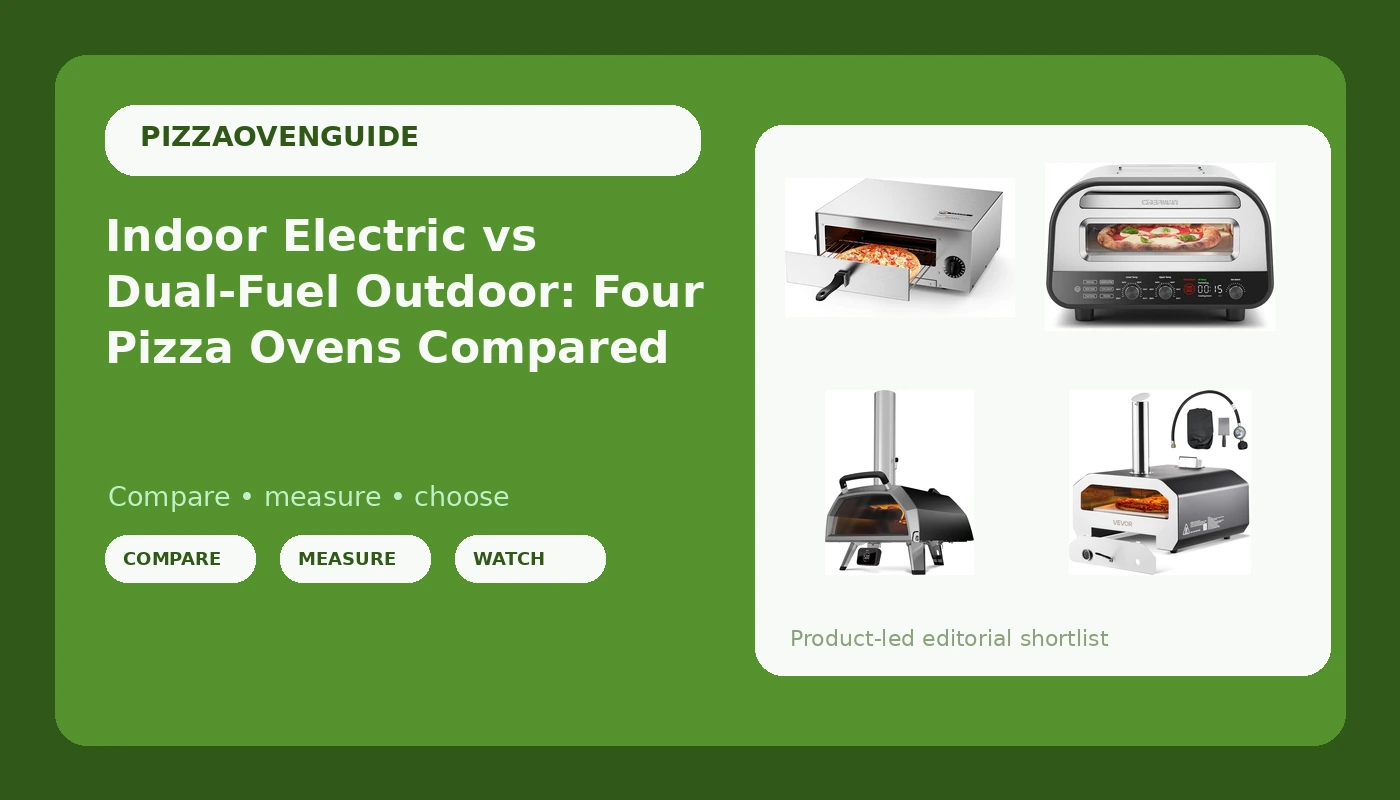
The short answer: the CHEFMAN indoor oven is the right buy for most kitchens, because it reaches 800°F on a countertop with no fuel, no fire, and no weather window. If you have a patio and want the real thing, the Ooni Karu 2 Pro is the one that rewards the effort. The VEVOR is the value play in dual fuel, and the Costway is the entry ticket.
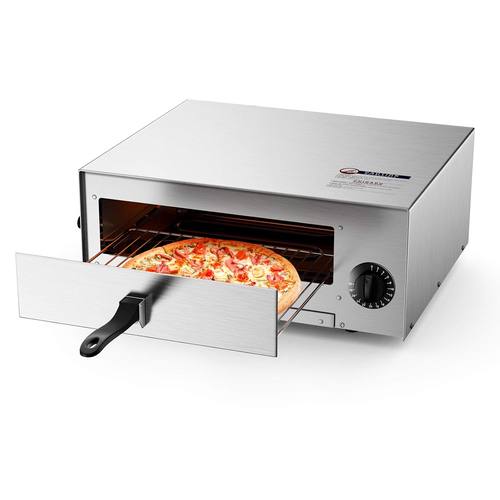
Costway Electric Oven, Stainless Steel Baker with Auto Shut-Off
Cheapest route to pizza indoors: stainless shell, removable tray, auto shut-off, no fuel and no patio required
It is a small countertop electric oven, not a high-heat stone oven, so the ceiling on char and rim rise is low
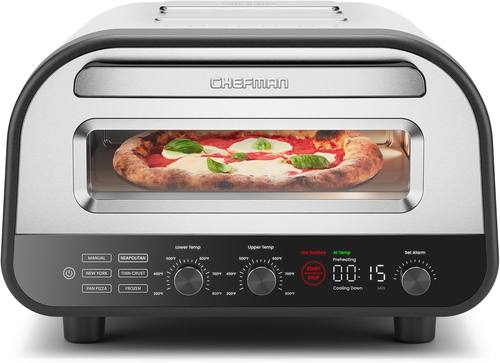
CHEFMAN Indoor Pizza Oven, 12 Inch, 800°F, Stainless Steel
Heats to 800°F indoors, ships with a pizza stone and peel, five touchscreen presets, stainless build
12-inch capacity means more launches and less room for a crowd; it needs a counter near an outlet and room for the heat
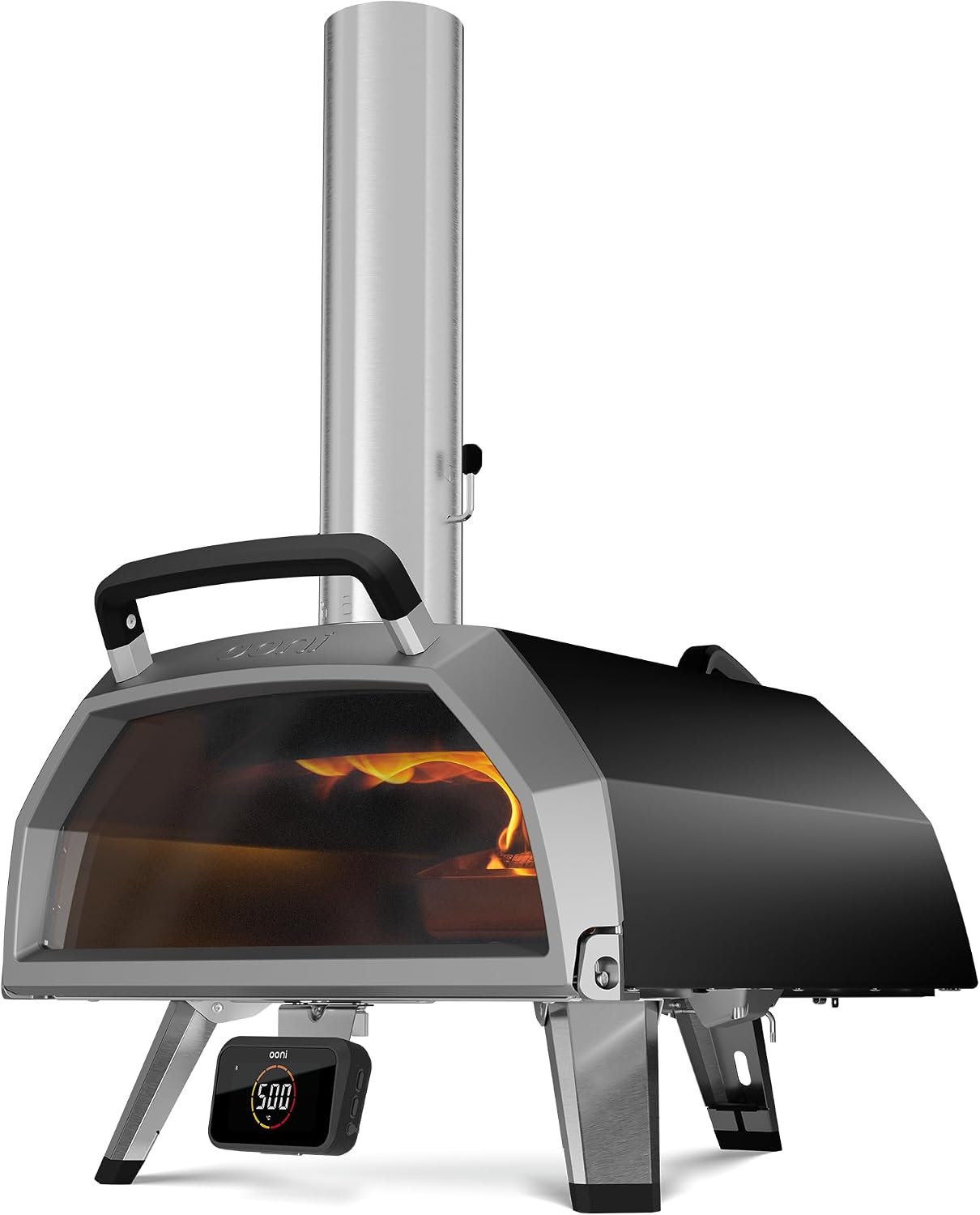
Ooni Karu 2 Pro Multi-Fuel Pizza Oven, 16 Inch
16-inch deck, wood and gas in one body, stone and integrated thermometer included, the most refined build here
The premium tier price, and wood mode asks for your full attention from light to last pie
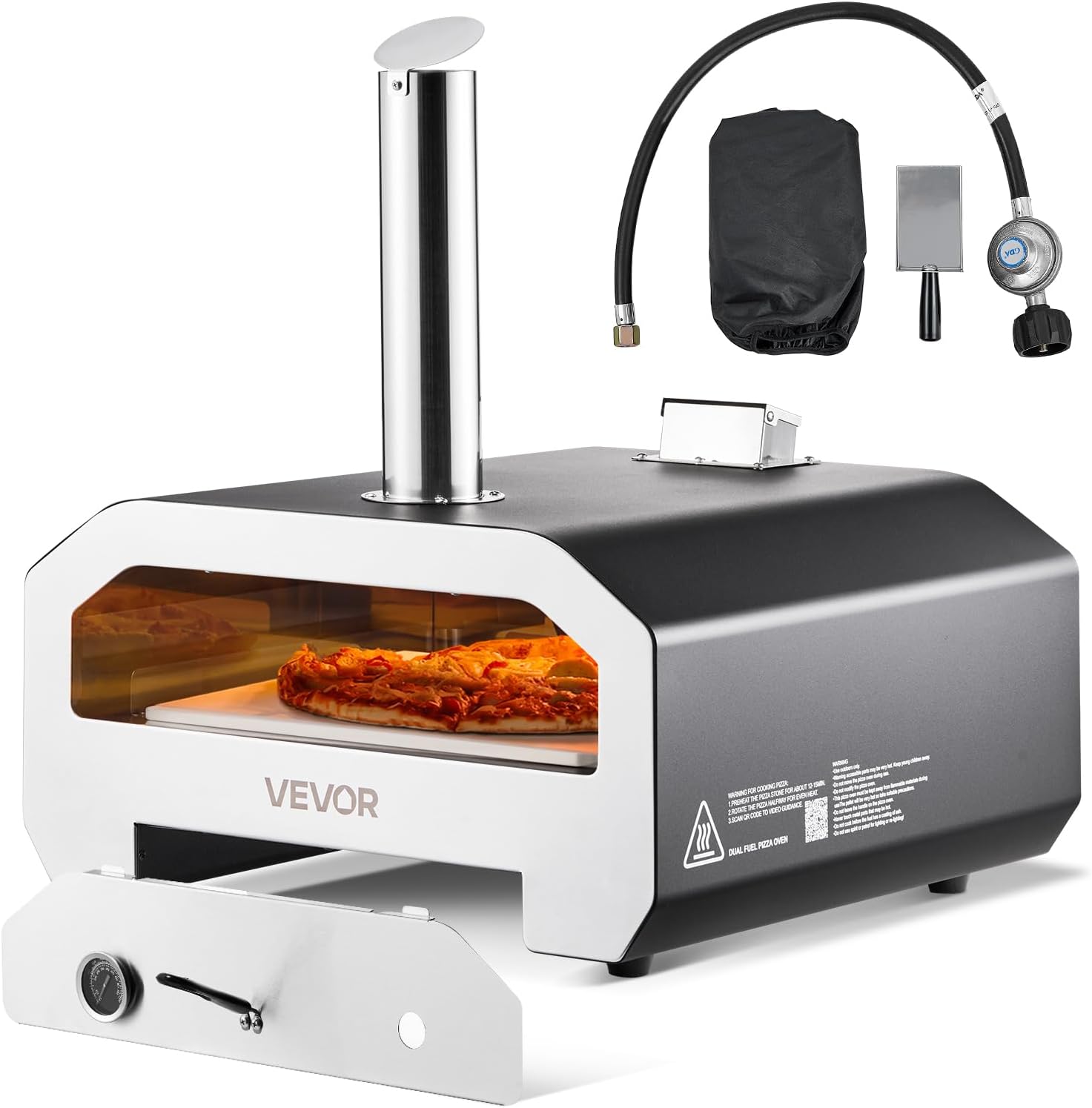
VEVOR Dual Fuel Pizza Oven Outdoor, 16 Inch, Propane and Wood
16 inches and dual fuel for well under the premium tier, thermometer included, portable enough for camping
Value-tier fit and finish, so expect less polish than the Ooni and buy from a seller with a clean return path
Prices and availability were captured from Amazon Creators API and may change.
What actually separates these four ovens
Strip away the marketing and every oven in this comparison is judged on four things.
The first is stone temp, not air temp. A stone that reads hot on the surface is what gives you a bottom crust with color instead of a pale, leathery base. Every oven here relies on a stone, and every one of them needs a real preheat. If you rush that step, you get a chewy middle and a burnt rim, which is the most common failure I see in home kitchens.
The second is the temperature ceiling. The CHEFMAN advertises 800°F, and that number matters more than any other spec on its page. A typical home oven tops out somewhere around 500°F to 550°F, which is why a pie baked in your kitchen oven takes eight to twelve minutes and comes out bready. Once an oven can hold a stone well above that range, a 12-inch pie cooks in a couple of minutes and the crust behaves differently. Char and leoparding live in that gap.
The third is fuel and where you're allowed to burn it. Two of these ovens run on a wall outlet. Two run on propane, wood, or pellets, outdoors. That isn't a detail, it's the whole decision. An electric oven is a weeknight appliance. A dual-fuel oven is a weekend ritual with a hose, a tank, and weather.
The fourth is deck size. Twelve inches versus sixteen inches sounds like a small difference until you're feeding four people. A 16-inch oven puts a bigger pie on the stone, which means fewer launches, less dough management, and a better chance everyone eats while the first pies are still hot.
The two countertop electric ovens
The CHEFMAN Indoor Pizza Oven is the most interesting oven in this group, because it solves the problem that keeps most people from buying a pizza oven at all: you don't need to go outside. It runs on a standard outlet, heats up to 800°F according to the manufacturer, and comes with a pizza stone and a peel in the box, which is more than most ovens at this level include. Five touchscreen presets handle the guessing for anyone who doesn't want to think about it, and the stainless body looks like a countertop appliance rather than a toy.
The honest limitations are size and heat management. A 12-inch deck is a personal-pizza or small-group deck. If you're cooking for six, you're launching four or five pies back to back, and the stone needs time to recover between them. The presets are convenient, but the only temperature reading that matters is the one you take off the stone yourself, which is why an infrared thermometer belongs in the drawer next to the peel.
The Costway Electric Oven sits at the other end of the electric class. It's a stainless countertop baker with a removable tray and auto shut-off, and it does what a small countertop oven does: it makes a decent flatbread, reheats leftovers, and handles a frozen pie without drama. What it won't do is imitate a pizzeria. There's no 800°F ceiling here, no dedicated high-heat stone environment, and no real leoparding on the rim. If your goal is the best possible pizza on a strict budget, your money is better spent on a 48-hour cold ferment and a baking steel in your regular oven than on chasing char with this machine. If your goal is convenience and a low entry point, it's a reasonable first step.
The two dual-fuel outdoor ovens
The Ooni Karu 2 Pro is the oven most people picture when they picture backyard pizza, and Ooni earned that. It's a 16-inch multi-fuel oven that runs on wood or gas, includes a pizza stone and an integrated thermometer, and is built with the kind of fit and finish you notice the first time you slide the door. On gas it's about as close to push-button as outdoor pizza gets. On wood it asks you to tend a small fire and watch the flame, and that's the version of the oven that produces the pies people remember.
The cost is the cost. This is the premium tier of this comparison, and you're paying for a 16-inch deck, dual-fuel flexibility, and a brand that has spent years refining the airflow in these ovens. You're also paying in attention. Wood mode is not a set-and-forget setting. If you want to walk away, use gas.
The VEVOR Dual Fuel Pizza Oven covers the same basic brief for a lot less: 16 inches, wood fire or propane, a thermometer on the body, and a portable shape that travels to a campsite or a tailgate. If you've been waiting for the dual-fuel format to come down in price before trying it, this is that moment.
What you give up is refinement. Value-tier ovens tend to have thinner shells, simpler door hardware, and less consistent airflow than the premium names, and that shows up in how evenly a stone heats and how quickly it recovers. None of that makes it a bad buy. It makes it a buy you should make from a seller with a straightforward return policy, because the first cookout is the real inspection.
Wood, gas, pellets, or a wall outlet
Gas for Tuesday, wood for Saturday. That's the whole argument in six words, and anyone who tells you one fuel is objectively better hasn't cooked on both.
Gas is repeatable. You turn a knob, you get a flame, you get a hot stone, and you get dinner. It's the reason the dual-fuel ovens in this comparison exist as gas machines first and wood machines second. Wood is more work and more reward: you manage the fire, you get a live flame rolling across the dome, and the pie picks up character you can't fake with a dial. Pellets sit in between, feeding a small fire with less babysitting than split logs.
Electric is the one people underestimate. It's the fuel that gets used on a random Wednesday when nobody wants to light anything at 7 p.m. The CHEFMAN exists precisely for that night. So does the Costway, in a much simpler way. If your realistic pizza schedule is two weeknights a month plus the occasional weekend, an electric countertop oven will out-cook an outdoor oven that sits under a cover from October to April.
Size, stone, and the accessories worth owning
Deck size is a commitment, not a preference. A 16-inch oven takes up more patio or counter space, needs a bigger peel, and wants a bigger dough ball. A 12-inch oven is easier to live with in a small kitchen and easier to store, and it forces you to get good at launching because you'll be doing it more often.
Of everything sold alongside these ovens, two accessories earn their place. A peel with a lip, because a flat peel with no backstop drops pies onto the floor of the oven, and an infrared thermometer, because every temperature claim on every box in this comparison should be verified against the stone you're actually cooking on. Beyond those two, most add-ons are solutions to problems you don't have yet.
The first pizza will be bad
Plan for it. Every new oven humbles you once, whether it's a countertop electric box or a 16-inch dual-fuel machine. The first pie tells you how your dough behaves at that heat, how fast the stone recovers, and where your launch technique falls apart. The second pie tells you what you actually bought.
That's also why I'd rather see you spend on the oven that fits your real schedule than the one with the biggest spec sheet. A 12-inch oven that genuinely hits its advertised ceiling beats a 16-inch oven you never light because it's raining. Match the machine to the night, then spend your energy on the dough, because the oven gets the credit and the dough does the work.
Who should buy which
Buy the CHEFMAN if you cook indoors, want a real heat ceiling above what your kitchen oven offers, and value the included stone and peel. It's the most sensible oven here for the most households.
Buy the Costway if you want a low-cost countertop baker for simple pies and everyday oven duty, and you're not expecting pizzeria results.
Buy the Ooni Karu 2 Pro if you have outdoor space, you want 16 inches of deck, and you're willing to tend a fire on the nights that deserve it.
Buy the VEVOR if you want the dual-fuel 16-inch experience without the premium price, and you're comfortable with a value-tier build.
Whichever you choose, buy the thermometer. Then make ten pies. The oven will stop being a purchase and start being a habit.