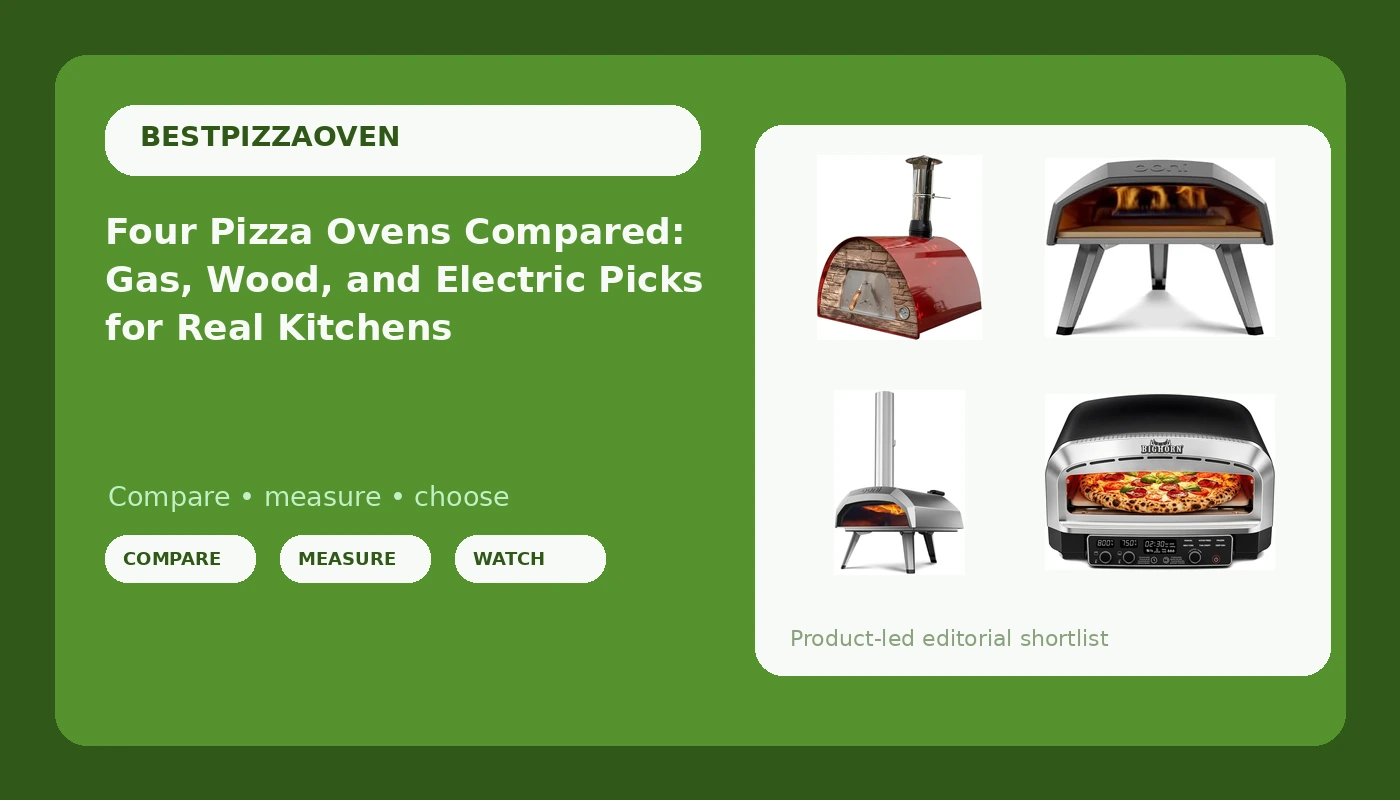
I get the same message about twice a week. Someone has a budget, a small yard or a small kitchen, and a family that expects pizza on Friday. They want to know which oven to buy, and they want an answer that does not end with "it depends." This pizza oven comparison is my attempt to give them one, using the specs that decide dinner instead of the specs that decorate a product page.
I worked the oven at a Neapolitan pizzeria for five years before I started writing about food, and the lesson from that kitchen has not changed since. A pizza oven is a heat machine. The dough, the sauce, and the cheese are just there to not get in its way. Everything below comes back to four questions: how hot does it get, how long does it take to get there, what does it burn, and where are you allowed to put it.
Related: Gas Vs Wood Pizza Ovens: What Actually Changes The Pie
The best first pizza oven for most people is the Ooni Koda 12. Gas removes the two things that kill a weeknight pizza night, which are building a fire and then waiting on it. If your cooking happens indoors, the BIG HORN 14-Inch electric is the one that will actually get used on a Tuesday. If Saturday is a ritual in your house, the Maximus Red earns its place. The Karu 12 is the pick for anyone who wants wood and gas in the same box and can live with learning two heat curves.
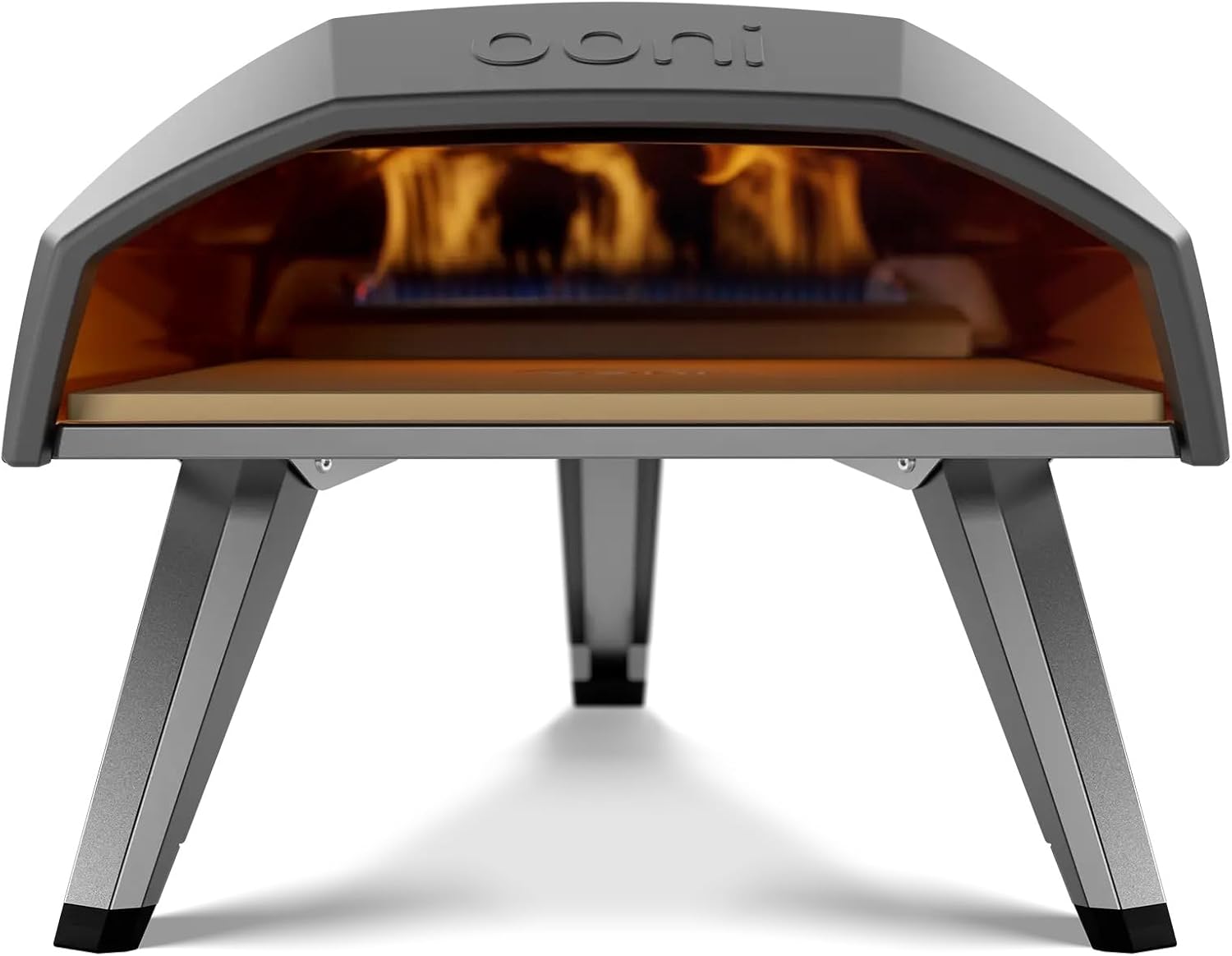
Ooni Koda 12 Gas Pizza Oven
Propane only, which means a dial instead of a fire; ships with a 28 mBar regulator and gas hose; 12-inch footprint fits a balcony
One fuel, no wood option; 12-inch ceiling limits how big you can stretch a dough ball
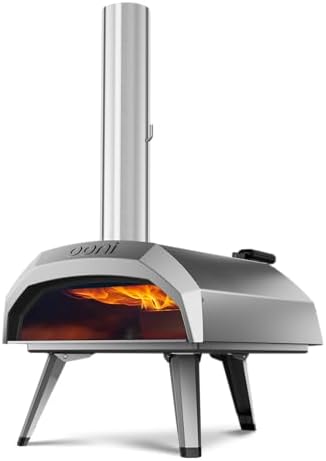
Ooni Karu 12 Multi-fuel Outdoor Portable Pizza Oven
Wood or propane in one unit; box claims 950°F and a 12-inch pizza in 60 seconds; pizza stone included
You have to manage two different heat curves, and a fire is still a fire on a Tuesday
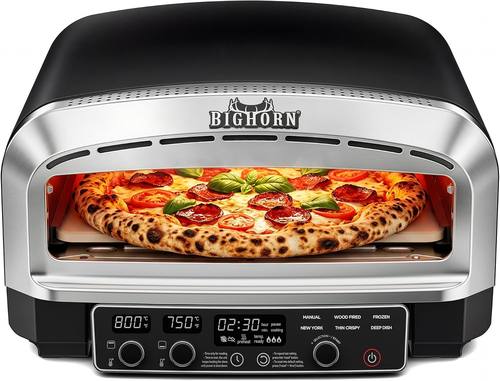
BIG HORN 14-Inch Indoor Pizza Oven
Electric, countertop, no fuel to buy and no fire to tend; 14-inch deck is the largest here; box claims 850°F
Indoor only; the ceiling sits under the 900°F line where the most dramatic leoparding happens

Authentic Pizza Ovens Maximus Red Wood-Fired Portable Outdoor Pizza Oven
Handmade in Portugal, stainless steel chimney, and it arrives with a peel, a thermometer, an extra floor tile, and a baking dish
It is a fire, so it needs fuel, time, and attention; the heaviest and least casual of the four
Prices and availability were captured from Amazon Creators API and may change.
How I judge a pizza oven
Four things decide whether an oven earns patio or counter space in my house.
Ceiling temperature. Not the number printed on the box, the number the stone reads. I check stone temp with an infrared thermometer before the first pie and again between pies, because recovery between bakes is where budget ovens give themselves away. An oven that hits its number once and then sags for twenty minutes is a one-pie-at-a-time oven, and that matters when four people are waiting.
Fuel. Gas is a dial. Wood is a fire. Electric is a plug. Each one changes how many pies you can cook before you stop enjoying yourself, and none of them is objectively better than the others. Anyone who tells you otherwise has not cooked a full dinner service on both.
Footprint. A 12-inch oven and a 14-inch oven sound close. They are not. Deck size decides your dough ball weight, and dough ball weight decides whether you are making personal pies or something you can slice for two.
What is in the box. A peel, a thermometer, and a spare floor tile are not glamorous inclusions, but they are the difference between cooking the night it arrives and cooking the following weekend.
Gas: the Tuesday night answer
The Ooni Koda 12 is the oven I recommend to people who describe themselves as busy. It is propane powered, it ships with a 28 mBar regulator and a gas hose, and it runs on a dial. There is no fire to build, no coals to rearrange, and no smoke to manage. You turn it on, you wait, you launch.
Gas is also the most repeatable heat source you can put under a pizza. A dial that was at the same position last Friday gives you roughly the same stone temp this Friday, which means your results stop being a lottery. That repeatability is worth more than any single temperature claim, because the whole game with pizza is cooking the same pie the same way until the dough is the variable you are actually adjusting.
The cost is flavor and range. Propane does not give you the same aromatic edge a wood fire throws at a pie, and the Koda is a single-fuel oven. If your plan is wood on Saturday and gas on Tuesday, this is not that oven. The 12-inch deck is also the honest limit here. A 250-gram dough ball stretched to about 12 inches is the sweet spot, and if you push past it you will be trimming a crust that hangs over the stone.
Multi-fuel: the one-oven compromise
The Ooni Karu 12 is the answer for the person who wants both nights out of one purchase. It runs on wood or propane, the box claims it reaches 950°F and cooks a 12-inch pizza in 60 seconds, and it includes a pizza stone. That 950°F figure is the highest number in this group, and 60 seconds is a real Neapolitan-style bake window rather than a marketing round number.
What you pay for that flexibility is a learning curve with two branches. Wood mode is a live fire, which means you are watching the flame, rotating the pie, and learning where the hot spot sits. Gas mode is a dial, which means the oven behaves like a different appliance. Both are learnable. Neither is automatic the first time.
My honest read: multi-fuel ovens get bought for the wood and used on the gas. That is not a flaw, it is just how weeknights go. If you buy the Karu, plan on gas as your default and wood as your project, and you will get exactly what you paid for. If you buy it planning to build a fire every time, you are buying a ritual, and rituals are wonderful right up until it rains.
Electric: the indoor answer that gets used
The BIG HORN 14-Inch Indoor Pizza Oven is the outlier in this group, and it is the one I would hand to someone in an apartment. It is electric, it sits on a countertop, it claims 850°F, and its 14-inch deck is the largest of the four. No propane tank on the balcony, no fire, no landlord conversation about open flame.
The 14-inch deck is the underrated part. Going from 12 to 14 inches does not sound like much until you are feeding three people from one oven. A 14-inch pie takes a dough ball closer to 300 grams, gives you a bigger rim, and slices into more usable pieces. If your pizza night is dinner rather than a tasting, that extra deck width does real work.
The trade is the ceiling. An 850°F claim sits under the 900°F line, and 900°F and up is where the fastest bakes and the most dramatic leoparding live. That does not make an 850°F oven a bad oven. It makes it a slightly more forgiving one, with a bake measured in a couple of minutes rather than one. For weeknight cooking indoors, that is a trade most people should take without hesitating.
Wood-fired: the Saturday ritual
The Authentic Pizza Ovens Maximus Red is the one that behaves like restaurant equipment. It is handmade in Portugal, it has a stainless steel chimney, and it arrives with a peel, a thermometer, an extra floor tile, and a baking dish. That accessory list tells you what kind of buyer it is aimed at, because nobody bundles a peel and a spare floor tile with an oven they expect you to use casually.
Wood-fired ovens are thermal mass machines. The floor tile and the dome absorb heat from the fire and then give it back to the pizza, which is why a wood oven can hold a bake temperature through several pies in a row in a way that lighter ovens struggle to match. That mass is also why the ritual exists. You build a fire, you let the oven come up to temperature, and you cook in a window that lasts as long as the fire does.
The trade is everything surrounding the cooking. You need dry wood, you need somewhere to store it, you need a surface that can take the weight, and you need to start thinking about dinner an hour before you want to eat it. The Maximus is the oven in this group most likely to be someone's favorite purchase and least likely to be used on a random Wednesday. If that sentence sounds like a criticism, you are not the buyer. If it sounds like a description of your ideal Saturday, you already know.
Where you cook decides more than the brand
I have watched people agonize over fuel type while ignoring the constraint that actually governs their life, which is location.
A balcony with a no-open-flame rule eliminates two of these four ovens before you compare anything. A kitchen with no window and a smoke detector ten feet from the counter makes the wood oven a non-starter and makes the electric unit the only sane pick. A backyard with a permanent stone table and a woodpile is a different decision entirely, and the same person asking "which oven is best" will get three different correct answers from three different addresses.
The other constraint is how many pies you cook per session. One or two pies for two people is a completely different requirement than eight pies for a party. Lighter ovens recover more slowly between bakes, so an oven that is perfect for a quiet Friday can turn into a bottleneck when you have guests and a queue. If you regularly cook for a crowd, buy for recovery, not for peak.
What the spec sheets say
Two of these four ovens put a temperature on the box. The Karu 12 claims 950°F and a 60-second bake for a 12-inch pie. The BIG HORN claims 850°F. The Koda 12 and the Maximus Red do not lead with a number, which tells you something about who each one is marketed to. Gas buyers are sold on convenience. Wood buyers are sold on craft. Neither audience is shopping with a thermometer in hand.
That is exactly why you should own an infrared thermometer. It is the cheapest piece of pizza equipment that changes your cooking, and it settles arguments that a product page cannot. Point it at the stone, not the flame, and not the air above the stone. If the stone reads what you expect, the oven is doing its job. If it does not, you adjust the fuel, not the recipe.
The rest of the spec sheet is logistics. The Koda 12 ships with a regulator and hose, so factor in a propane tank. The Karu 12 includes a stone, which saves you a purchase. The BIG HORN needs a counter and an outlet. The Maximus arrives with the tools you need to run a fire. None of those details are exciting, and all of them decide whether the first pizza happens this weekend or next month.
Should you buy a smaller oven first?
If you are new to this, buy the 12-inch oven, not the biggest one you can afford. A smaller deck forces better dough handling. You learn to stretch to a target size instead of hoping, and you learn that a 250-gram ball is a real recipe rather than a suggestion. Moving up later is easy. Moving down is admitting something.
Spend the difference on dough and a peel. A 48-hour cold ferment in your refrigerator will improve your pizza more than any upgrade under a few hundred dollars, and a peel with a lip will save you from launching a pie onto the floor in front of guests. Those two things, plus an infrared thermometer, cover almost everything the accessory aisle wants to sell you.
And accept the first pie. The first pizza out of any new oven is bad, usually because the stone is not at temperature yet and you were impatient. The second pie tells you what you actually bought. Plan your first session around that, cook two, and judge nothing until the second one comes out.
What I'm watching next
Indoor electric ovens are going to outsell gas in the next year or two. The convenience gap is too wide, and the ceiling temperature gap keeps narrowing. The 850°F class will get hotter, the sub-$300 electric category will start claiming Neapolitan numbers honestly, and the premium gas brands will feel it in their entry-level models.
The multi-fuel design is the hedge that makes the most sense right now, because it refuses to bet on which night you are having. And watch the wood-fired tier carefully. The brands that honor their warranties and keep parts available will still be here in five years. The ones selling lifetime promises through a middleman will not, and a wood oven with no replacement floor tile is a very heavy planter.
The short version, if you skipped to the bottom: gas for Tuesday, wood for Saturday, electric for the kitchen, and buy the oven that matches the night you actually cook on. If that is most nights, the Koda 12 is the one to bring home. If you want the option of both, the Karu 12 covers it. If you never want to leave the house, the BIG HORN. If you want the ritual, the Maximus Red.
- Ooni Koda 12 Gas Pizza Oven: Visit on Amazon →
- Ooni Karu 12 Multi-fuel Outdoor Portable Pizza Oven: Visit on Amazon →
- BIG HORN 14-Inch Indoor Pizza Oven: Visit on Amazon →
- Authentic Pizza Ovens Maximus Red Wood-Fired Portable Outdoor Pizza Oven: Visit on Amazon →