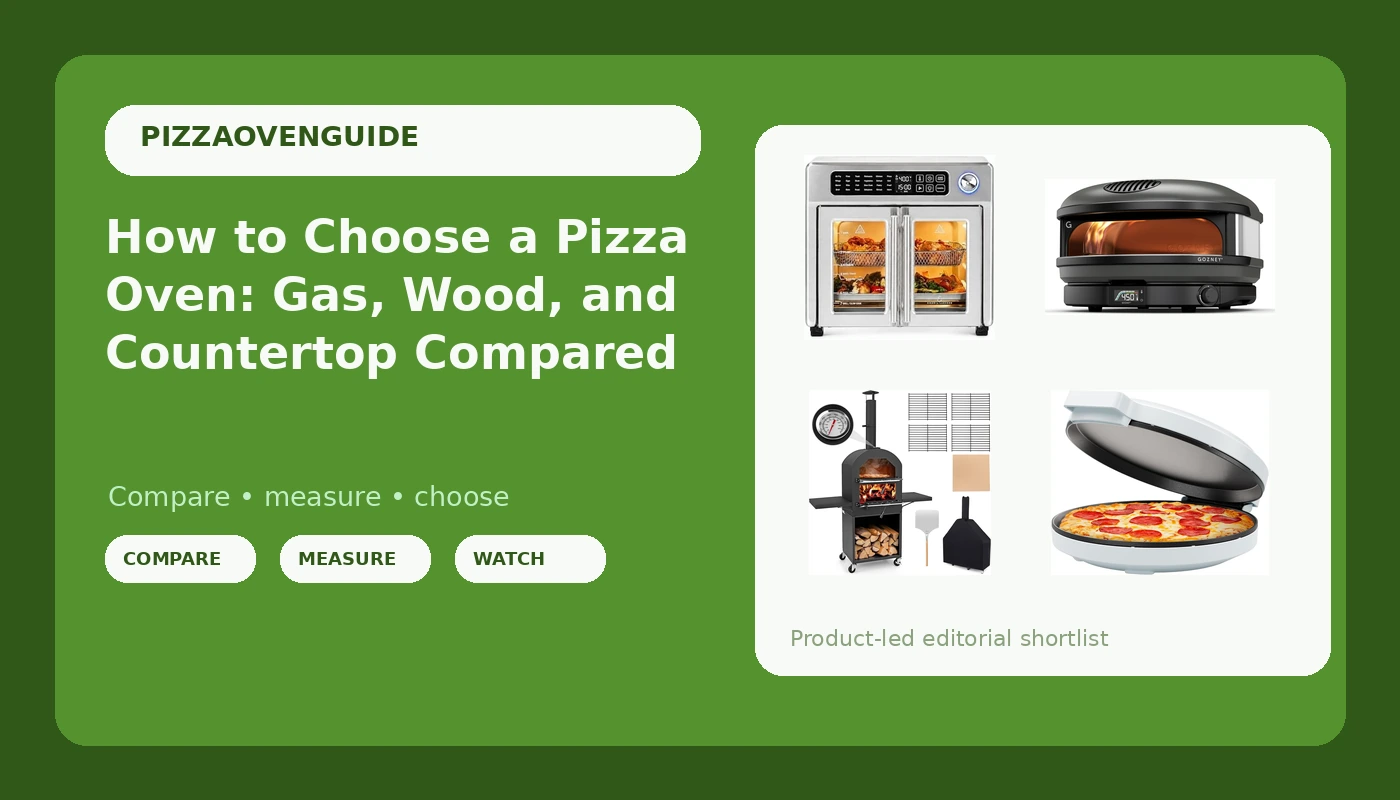
Related: Best Pizza Ovens for Small Backyards
I have cooked pizza on propane, on wood, and on a countertop electric in the same week, and the honest answer is that an outdoor pizza oven is a heat machine before it is anything else. Dough, sauce, and cheese will not save an oven that tops out at 650F. So when a neighbor in Hoboken asks me which one to bring home, I do not start with brands. I ask three questions. Which night of the week is this for? Where does it live? And how many pies are you making back to back?
The first pizza you make in a new oven will be bad. Plan for it. The second one tells you what you bought. That is not pessimism, it is how a new heat source behaves. You learn where the hot spot sits, how long the floor holds temperature after a launch, and whether it recovers in time for pie number three.
I worked the oven at a Neapolitan pizzeria for five years before I moved into writing, and I have tested eight ovens over three years since, from a cheap countertop box to a restaurant-grade dome. Every oven gets the same scorecard: char, leoparding, rim rise, bottom crisp. Same two dough recipes every session, so the results compare. Everything below comes out of that routine.
The oven I would buy with my own money: Gozney Arc XL
Gozney builds like restaurant equipment. That is not a slogan, it is the first thing you notice when you put a hand on the lid of one. The Arc XL is the propane model in that family, and the spec sheet says it heats up to 950F, which is the number that matters most in this whole article. A 12-inch oven that reaches 900F will beat a 16-inch oven that struggles past 700F, every single time.
I have cooked on the Gozney Dome, and it is the best oven I have tested. The Arc XL carries that same thinking into a propane format: a burner you light and forget, a stone floor sized for the pies people actually make at home, and a body that holds heat between bakes. Propane also means no splitting wood at six in the evening and no ash to deal with the next morning.
What I will not do is quote a stone temperature I have not read with my own infrared thermometer. Ovens that print 900F on the box and top out at 650F are the reason I own two thermometers.
The trade-off is obvious. This is the most expensive way into backyard pizza short of building a brick dome in the yard, and it deserves a permanent spot rather than a shelf in the garage.
The Saturday oven: Giantex wood fired pizza oven on wheels
Wood is the flavor, and wood is also the work. The Giantex is a wood-fired oven on wheels, which tells you two things up front: you will be feeding it split hardwood, and you can roll it out of the way when the party ends.
Any wood oven in this class asks for a fire built early, kindling that actually catches, and a heat soak long enough that the stone is hot all the way through instead of just on the surface. Budget the time. The reward is a floor that holds its heat and a smoke note no gas burner can fake. Wood tastes better, gas is easier, and anyone who tells you one is objectively better has not cooked on both.
The wheels matter more than they sound. A wood oven is heavy, and one that rolls is one you can park against the fence, wheel onto the patio for a crowd, and roll back when the weather turns. It is also the oven that turns dinner into an event. Nobody walks past a live fire and keeps walking.
The weeknight answer: Chefman Everything Maker & Pizza Oven
Indoor electric ovens changed the game for weeknights. Nobody wants to light a fire at 7pm on a Tuesday, and nobody wants to wait 45 minutes for a stone to soak. The Chefman Everything Maker is a 1440W countertop electric with 12 inch nonstick cooking plates, indicator lights, and vertical storage, and it also turns out quesadillas and omelettes. That combination is the entire point.
Be honest about what it is. Plates are not a stone, and nonstick does not give you leoparding, the spotted char a hot floor leaves on a rim. What it does give you is a hot surface, a short preheat, and a thin pizza on a school night in the time it takes to argue about toppings. It stores upright, which matters in a kitchen where counter space is measured in inches.
The one box that does more than pizza: Emeril Lagasse 26QT French Door
If you want one appliance to cover pizza, sheet pan dinners, reheated leftovers, and toast, this is the category to shop in. The Emeril Lagasse 26QT is a French door multi-function air fryer toaster oven, and the French door design is the part that matters. You load it from the front instead of wrestling a basket, and you can see what is happening without dumping the heat.
I have said before that toaster-oven style air fryers burn things and feel cramped, and I stand by that for most of them. A 26 quart box with doors is a different proposition from a small pull-out drawer unit. It will not hit Neapolitan temperatures, so plan on a stone or a steel inside it and a longer bake, and expect a good home pizza rather than a 90 second one.
This is the pick for a household where pizza is one of six jobs the appliance has to do.
How I judge a pizza oven
Eight pies minimum in any oven before I say a word about it. Same two dough recipes, one at 62 percent hydration and one at 70, both cold fermented. Same sauce, same cheese, same launch technique. The scorecard is char, leoparding, rim rise, bottom crisp, and I keep the photos, because memory lies after the fourth pie.
Two tools do the actual judging: an infrared thermometer for the stone and a peel with a lip. Half the accessories sold for these ovens are solutions to problems you do not have yet. A peel and a thermometer cover most of it.
Disclosure: none of the four ovens here were loaned to me. If a unit ever is, it gets stated in the copy, and the scorecard does not change for free gear.
Analysis: what actually decides it
Heat ceiling comes first. The gap between 700F and 900F is not a nicer version of the same pizza, it is a different style. High heat puffs a rim and leaves spots of char before the interior dries out. Below that ceiling you are making good flatbread and calling it pizza.
Recovery is second, and it is the spec nobody prints. An oven that loses its floor temperature after every launch will give you one great pie and three pale ones. That is where thermal mass earns its money, and it is why a heavy dome and a light countertop box are not the same purchase even when both claim a high number.
Fuel logistics come third. Gas for Tuesday, wood for Saturday. Electric makes sense indoors, and that is not a compromise, it is a schedule. The right answer depends on the night, not the brand.
Footprint comes fourth. An oven that lives in the garage and needs two people to move it will get used twice a year. An oven on wheels or on the counter gets used.
And last, the dough. The oven gets the credit but the dough does the work. A 48-hour cold ferment will improve your pizza more than most upgrades you can buy, and it costs nothing but planning.
The pizza oven reference table
This is the table I keep when people ask me to compare these four directly. Fuel, who each one is for, and what it asks of you in return.
| Oven | Fuel | Best for | What it asks of you |
|---|---|---|---|
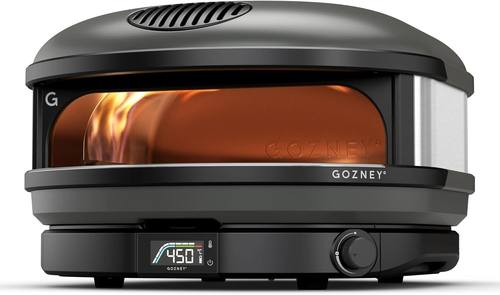 Visit on Amazon → Gozney Arc XL Propane Outdoor Pizza Oven |
Propane | Backyard pizza night, several pies in a row | A propane tank and a permanent spot |
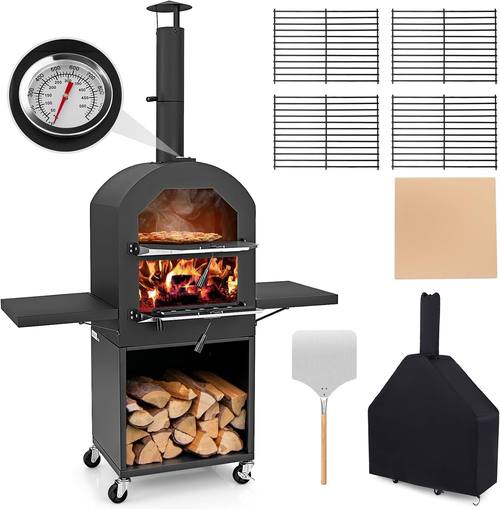 Visit on Amazon → Giantex Outdoor Pizza Oven Wood Fired |
Wood | The Saturday ritual, smoke, a movable setup | Kindling, split hardwood, patience |
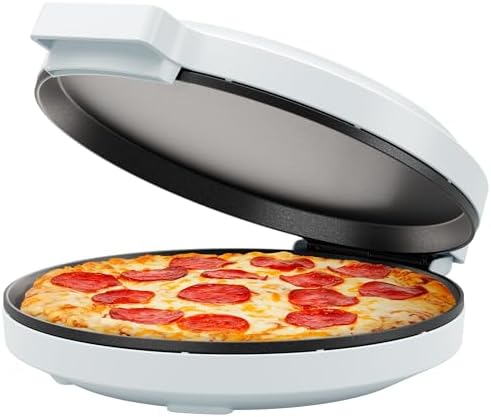 Visit on Amazon → Chefman Everything Maker & Pizza Oven |
Electric | Weeknights, small counters, one or two people | Counter space and realistic expectations |
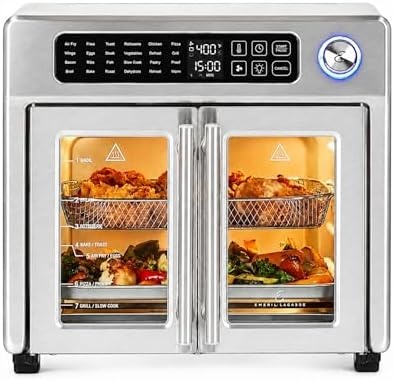 Visit on Amazon → Emeril Lagasse 26QT French Door Multi-Function Oven |
Electric | A household that wants pizza plus everything else | An outlet and a clear counter |
Propane and gas ovens
Gas is the convenience pick and I will not pretend otherwise. You turn a knob, you get a hot floor, and you are baking in fifteen minutes instead of an hour. The trade is flavor and drama: no smoke, no fire to watch. For a family that wants pizza on a random Wednesday in the yard, that trade is worth it.
Countertop electric ovens
Electric is where most people should start, because it removes every excuse. No fuel, no weather, no fire. The ceiling is lower and the char is lighter, but a hot countertop surface plus a dough you have made ten times will beat a cold outdoor oven that never got lit.
Should you buy the Gozney Arc XL?
Yes, if you will actually use it. It is the propane oven in the family that includes the Dome, which is the best oven I have tested, and the spec sheet says it heats up to 950F. That is the ceiling you want, and the build is the kind that survives years of Saturday nights.
If you make pizza twice a year, no. Buy a steel for your kitchen oven and put the rest toward a dough scale. An oven this capable deserves a cook who shows up.
Should you buy the Giantex wood fired oven on wheels?
Yes, if Saturday is your pizza night and you want smoke without a permanent build. It burns wood, it rolls, and it turns a backyard into a reason for people to stay another hour.
Understand what you are signing up for: kindling, split hardwood, a long heat soak, and ash. If you want to press a button and walk away, this is the wrong oven and the Gozney is the right one.
Should you buy the Chefman Everything Maker?
Yes, if your ceiling is a weeknight and your counter is small. The 12 inch nonstick plates, indicator lights, and vertical storage are the whole pitch, and the quesadilla and omelette functions mean it earns its footprint beyond pizza night.
It will not give you leoparding. It will give you a thin pizza on a Tuesday, and that is the pizza most people actually eat.
Should you buy the Emeril Lagasse 26QT?
Yes, if you want one countertop box that handles pizza and everything else. It is a 26QT French door air fryer toaster oven, so it does sheet pan dinners and leftovers as well as a home style pie, and the doors make it easier to live with than a drawer unit.
It will not hit Neapolitan temperatures, and it does not pretend to. Pair it with a stone, give it a longer bake, and it will feed a household that never wanted a fire pit in the first place.