Most people shopping for an outdoor pizza oven setup are trying to solve two problems at once. They want a 90-second bake with leoparding across the rim, and they want it on a Tuesday night without building a fire. Those two wants pull in opposite directions, and the product page rarely admits it. What actually decides whether you are happy six months from now is not the brand badge. It is how the oven makes heat, how quickly it recovers between pies, and whether the fuel you chose is one you will still be willing to deal with in November.
Related: How to Read Pizza Oven Temperature Specs →
Quick answer
Pick fuel first, then size, then accessories. A dual fuel oven with an electric rotation system covers the widest range of nights because it can run on propane or wood pellets in the same box. A portable gas oven is the shortest path to a hot bake with the least tending. A dedicated wood-fired oven is for people who want the fire itself to be part of the evening. A fitted cover is the cheapest way to protect whichever of those you bring home. Fuel preference, not brand, is the decision that shapes everything else.
Four useful options
| Model | Best fit | What stands out |
|---|---|---|
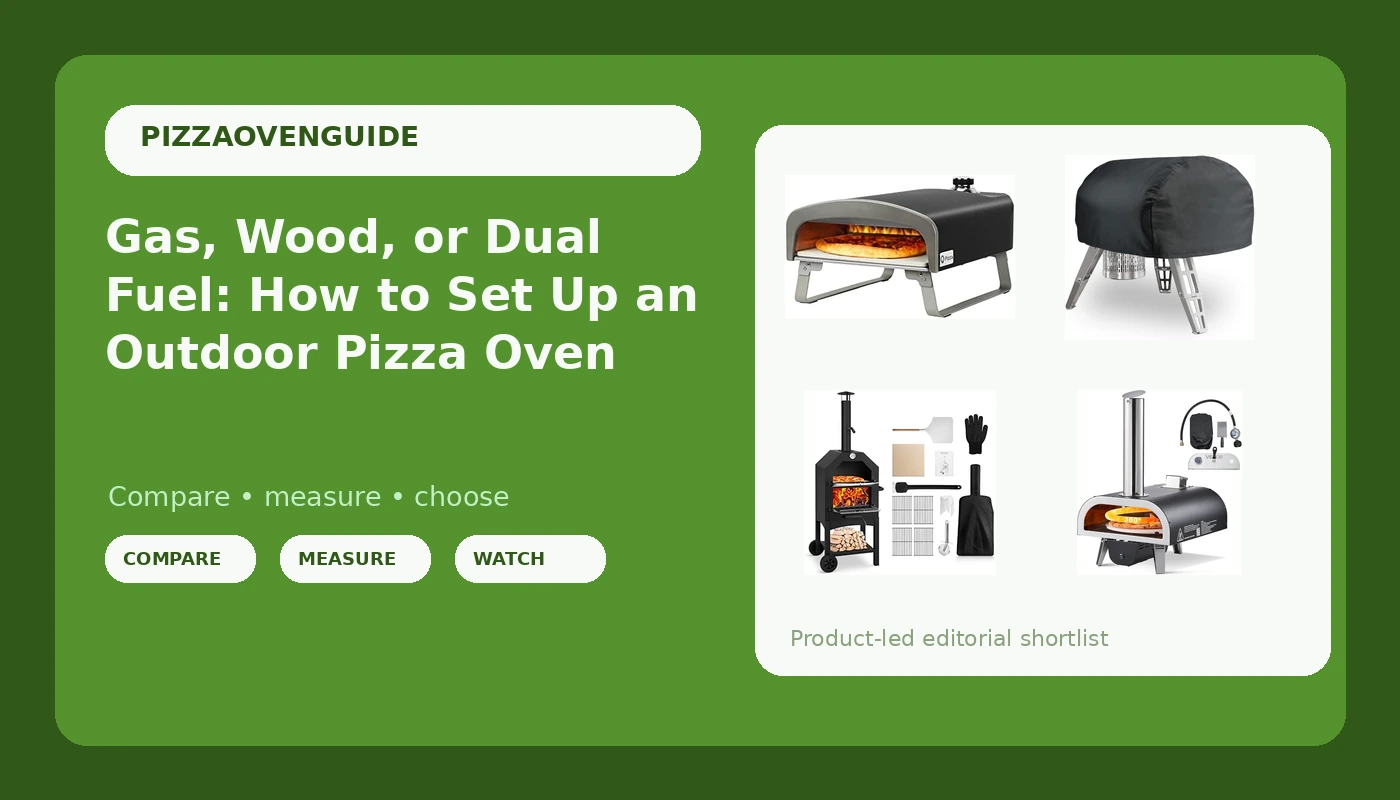
| VEVOR Dual Fuel Outdoor Pizza Oven, 12-inch Auto-Rotating | Cooks who want propane and wood pellets in one oven | Dual fuel design with an electric rotation system and a built-in thermometer |
| Outdoor Pizza Oven, Portable Gas Pizza Oven, PS100 | Small patios and anyone who wants gas-only simplicity | Portable gas format with no pellets or ash to manage |
| ZJYWSCH Pizza Oven Cover for Gozney Roccbox | Roccbox owners who leave the oven outdoors | Fitted, waterproof, heavy duty cover made for that specific oven |
| Outdoor Wood-Fired Pizza Oven, Patio | Backyard cooks who want a live fire | Dedicated wood-fired outdoor oven built for patio cooking |
The all-rounder: VEVOR Dual Fuel Outdoor Pizza Oven
Here is the trade-off worth naming out loud. Dual fuel means owning two fuel systems and two sets of habits: a propane tank to keep filled and pellets to keep dry. The payoff is that one oven covers a weeknight gas bake and a weekend pellet session, and the rotation system removes the quarter-turns you would otherwise do by hand, which is the moment heat escapes and the rim sets unevenly. If you know you will only ever cook on gas, you are paying for a capability you will not use. If you want pellets at least sometimes, buying one box instead of two is the cleaner move.
The simple route: Outdoor Pizza Oven, Portable Gas Pizza Oven, PS100
The case for a portable gas oven is not that it does something the others cannot. It is that it removes friction. No pellets, no ash, no fire to feed, no decision about what to light. You set it on a stable, heat-safe surface, connect the fuel, give the stone time to come up, and bake. The cost of that simplicity is range: a gas-only oven is a one-fuel machine, and if you later want to cook over wood or pellets, you will be shopping again. For a small patio, a rental where open flames are restricted, or someone who wants pizza on a weeknight without a ritual, that trade is usually worth it.
The protection piece: ZJYWSCH Pizza Oven Cover for Gozney Roccbox
Outdoor ovens live outdoors, which means rain, pollen, leaf litter, and temperature swings all work on the same surfaces you just paid for. A fitted cover beats a loose tarp because it does not flap in wind or pool water at the base, and a cover cut for a specific oven sits the way it was meant to. If you own a Roccbox, this is a direct match. If you own something else, measure before buying, because a cover that collects water around the base does not do the job a fitted one does.
The fire-tender's choice: Outdoor Wood-Fired Pizza Oven
Wood is the fuel that built this category, and it is also the one that asks the most from you: dry fuel, a fire built and burned down to coals, and a stone you manage by eye and by infrared thermometer rather than by dial. What you get in return is a bake that is inseparable from the evening, plus the ability to run a long session for a group instead of a quick two-pie sprint. What you do not get is convenience. Anyone who describes a wood oven as effortless has either never cleaned one or is selling something.
Prices and availability may change. Product images, names, and retailer links are matched to verified listings. No current price, rating, stock status, or measured result is stated here without current evidence.
What temperature claims actually mean
Every box in this category advertises a number. The number that matters is stone temperature at the moment the pie lands, not the peak air temperature an oven can reach with the door shut and nothing inside. Those two figures can sit far apart, and that gap is where disappointing bakes live.
An infrared thermometer aimed at the middle of the stone is the only honest way to know where you are. Air temperature reads hot long before the stone is ready, which is why the first pie of the night is so often the worst one: the oven says it is ready and the floor says otherwise. Let the stone soak, then check it again before you launch.
Temperature range matters more than oven size. A 12-inch oven that holds a genuine Neapolitan-level stone temperature will outbake a larger oven that stalls well below it, because the bake is a function of heat transfer, not floor area. If you can only have one, take the hotter, smaller oven and bake two pies instead of one big one.
Fuel choice, rotation, and heat recovery
Fuel decides your evening more than any other specification.
Gas is the convenience answer. It lights, it holds a steady flame, and it lets you cook on a Tuesday without planning ahead. It is also the fuel that gives you the least to do, which some cooks love and others find flat.
Wood and pellets are the ritual answer. They require fuel management, and pellet systems in particular ask you to keep the hopper filled and the fuel dry. In exchange you get a live fire and the ability to run a longer session without refilling a tank.
Rotation is the quiet feature. A pie in a very hot oven needs turning, often more than once, and doing it by hand means opening the door and dumping heat each time. An electric rotation system handles that for you, which matters most on the third and fourth pie, when nobody is watching closely anymore.
Heat recovery is the spec nobody prints. The real test of any oven is what happens between bakes: how long the stone takes to come back after a pie pulls heat out of it. A fast first pie means little if the second one takes twice as long. If you are cooking for a group, plan for recovery and leave a few minutes between launches.
- Pick the fuel you will still be using in February, not the one that sounds best in July. Gas if convenience wins, wood or pellets if the fire is the point, dual fuel if you genuinely want both.
- Measure the space and the surface. Ovens need clearance from walls, railings, and anything that can scorch, plus a stable, heat-safe place to sit.
- Decide the largest pie you actually make. A 12-inch oven feeds one or two people per bake, so a crowd means baking in rounds either way.
- Budget for supporting gear, not just the oven: a peel, an infrared thermometer, fuel storage, and a cover.
- Plan for a learning curve. The first bake in any new oven tells you almost nothing. The third one tells you whether you bought the right machine.
Practical guidance before you order
- Buy an infrared thermometer before you buy any other accessory. It is the only way to know your stone temperature.
- Choose a peel with a lip. The lip keeps the pie from sliding off the back edge and is the difference between a confident launch and a floor covered in cheese.
- Store fuel properly. Pellets and split wood both take on moisture, and damp fuel burns smoky and uneven.
- Cover the oven when it is cool and dry. Trapping heat or moisture underneath is how a good cover turns into a problem.
- Cook the same dough recipe for your first several bakes so you are changing one variable, not four.
Which option should you choose?
Choose the VEVOR Dual Fuel Outdoor Pizza Oven when you want one machine that runs on propane for weeknights and wood pellets when you have time to tend a fire, and you would rather not buy two ovens. Choose the Outdoor Pizza Oven, Portable Gas Pizza Oven, PS100 when simplicity and portability matter most and you are content cooking on gas alone. Choose the ZJYWSCH Pizza Oven Cover for Gozney Roccbox when you own a Roccbox and want a fitted, waterproof, heavy duty cover instead of a loose tarp. Choose the Outdoor Wood-Fired Pizza Oven when the fire is the reason you are doing this and you have the outdoor space to run it safely.
A caveat worth keeping: the listings above describe what each product is built to do, not how it will perform in your yard. Temperature behavior, fuel consumption, and durability vary with setup, fuel quality, weather, and how the oven is used. Treat any published temperature figure as a starting point, and verify your own stone temperature with an infrared thermometer before you judge an oven.
The bottom line
An outdoor pizza oven setup comes down to three decisions: what you burn, how hot the floor actually gets, and how much tending you are willing to do on a given night. Gas buys convenience. Wood and pellets buy the ritual. Dual fuel buys optionality, and a cover buys time. Buy for the night you cook most often, not the night you cook best. Then make ten pies in it before deciding you chose wrong, because the oven only does half the work. The dough does the rest.