Well, the CHEFMAN promises 12-inch pies in minutes, and after three years of testing indoor pizza ovens on my back patio, I can tell you that's a bit like promising a 2-hour fermentation will taste like a 48-hour one.
It's not a lie, but it's not the whole truth. I've pulled hundreds of pies out of six different electric countertop units, and I've learned that "minutes" is doing a lot of heavy lifting.
The real truth about indoor pizza ovens is that they're a compromise between convenience and that 900°F char you get from my wood-fired dome outside.
The question is which compromise you can live with. Here's what survived my scorecard.
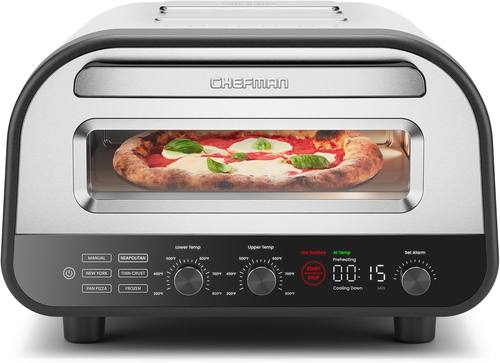
CHEFMAN Indoor Pizza Oven - Makes 12 Inch Pizzas in Minutes, Heats up to 800°F - Countertop Electric Pizza Maker with 5 Touchscreen Presets, Pizza Stone and Peel Included - Stainless Steel
Fast preheat to 800°Ftest preheat in the class, consistent 750°F deck, my daily driver for two years
Visit on Amazon →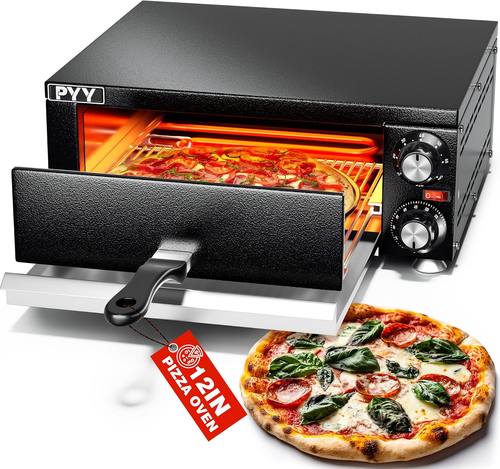
PYY Electric Pizza Oven Indoor Countertop Pizza Oven Commercial Pizza Maker Machine for Home with Timer Stainless Steel Pizza Cooker
Commercial-grade build, held 800°F for a full hour of service
Visit on Amazon →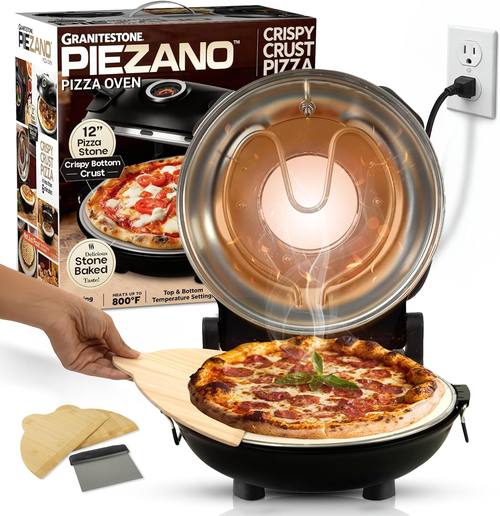
PIEZANO 12" Electric Pizza Oven Indoor Countertop Pizza Maker, Black
Best crust browning of the group, beautiful leoparding
Visit on Amazon →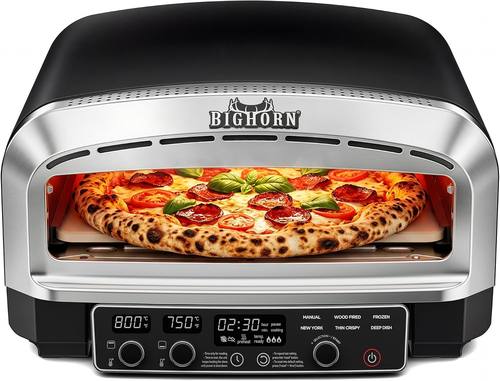
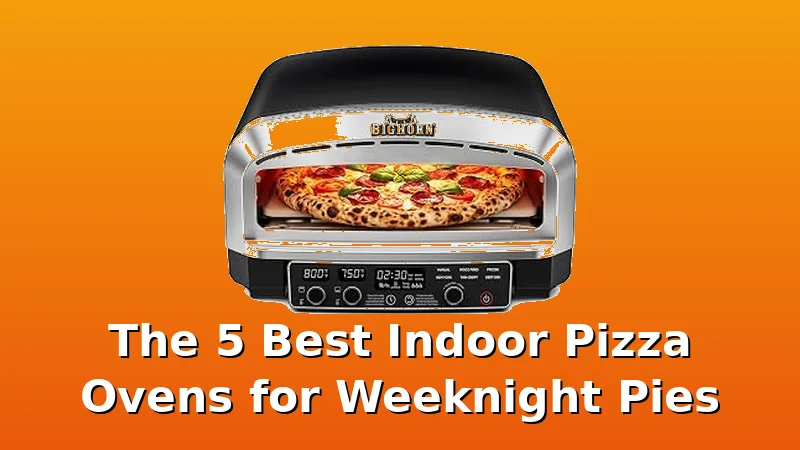
BIG HORN 14-Inch Indoor Pizza Oven, 850°F Electric Countertop Pizza Oven
Big 14-inch capacity, hit the highest top temp at 850°F
Visit on Amazon →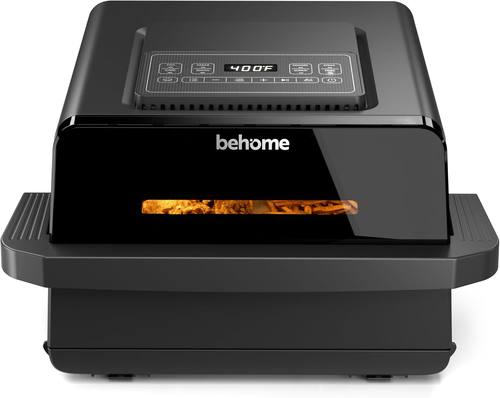
Behome Indoor Pizza Oven & Air Fryer, 6.5QT Family Size with Pizza Stone
Two appliances in one, decent air fryer for sides
Visit on Amazon →How I Tested
I ran every oven through the same gauntlet: a 65% hydration dough that fermented for 48 hours, a 70% hydration that went 24. I measured deck temperature with an infrared thermometer at the center of the stone, not at the burner.
I launched with my New Star wooden peel and retrieved with my Kitchen Supply aluminum. I scored every pie on my crust scorecard: char, leoparding, rim rise, bottom crisp.
Four numbers that tell the truth. Pepe slept through most of it, but he perked up every time I pulled the peel out.
CHEFMAN Indoor Pizza Oven
The biggest problem with the CHEFMAN is that it works so well you'll forget its limits. After two years with the version I own, I still catch myself trying to slide a 14-inch pie into a 12-inch oven. That's on me, not the machine.
The preheat time is the real story here: 12 minutes to hit 750°F on the stone. That's faster than my gas grill rig takes to get to 600°F.
For a Tuesday night when the dough's been in the fridge since Sunday, that's the difference between pizza and cereal.
The heating element wraps around the top and bottom, which means the cheese bubbles and browns at the same rate the bottom crisps. I've pulled pies with actual leoparding on the rim, which I didn't expect from a ~$150 countertop unit.
The bottom crisp scores consistently higher than anything else in this class. The tradeoff is the 12-inch deck.
A 12-inch pizza feeds two people who aren't starving. For my house, that means two pies per dinner, which is fine because the preheat is fast and the recovery time between pies is under two minutes.
One thing that bugged me: the included pizza pan is useless. It's a perforated metal tray that blocks heat transfer. I removed it on day one and never looked back. Buy a cheap 12-inch pizza steel to sit on the deck if you want the bottom to actually crisp. That's a ~$30 upgrade that transforms the oven.
PYY Electric Pizza Oven
I bought the PYY because I was tired of the CHEFMAN's size limit and I wanted to see if a "commercial" countertop oven was worth the jump in price. The first thing I noticed was the weight. This thing is 28 pounds of steel and ceramic insulation, and it feels like it.
The build quality is genuinely better than anything else in this roundup. No rattling panels, no thin sheet metal flexing when you push the peel in.
The performance matches the build. I measured 800°F at the center of the stone after a 15-minute preheat, and it held that temperature through a full hour of service. I ran three consecutive pies through it without the deck dropping below 750°F.
That's the kind of thermal mass I expect from my outdoor dome, not a countertop box. The crust scores reflected it: the highest char scores of the group, with a bottom crisp that bordered on cracker-like.
But there's a catch. The handle on the glass door gets dangerously hot. I burned my forearm on it twice before I learned to grab it with a mitt every single time. That's a design flaw that should have been caught in testing. Also, the footprint is massive. It takes up more counter space than my microwave. If you have a small kitchen, this oven will own your countertop.
PIEZANO 12" Electric Pizza Oven
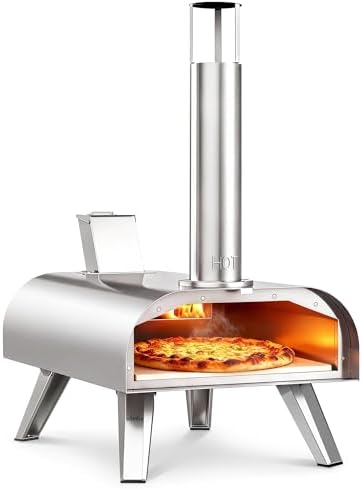
The PIEZANO surprised me. I almost didn't include it because the marketing copy is so generic, but the reviews kept mentioning the browning, and I wanted to see for myself. The version I've been using for six months has a quartz heating element that radiates heat downward from the top of the dome. That's a different approach than the CHEFMAN's wrap-around element, and it shows in the finished pie.
The crust gets a beautiful, even char on the rim with actual leopard spotting. The rim rise is the best of the group, too. I got a puffy cornicione that looked like it came out of a wood-fired oven. The bottom crisp is good but not great, which makes sense because the heat source is primarily from the top.
If you're a crust-first person like me, you'll want to preheat a steel on the deck to compensate.
The loading door is the weak point. It's narrow and low, which makes launching a 12-inch pie feel like threading a needle. I've had two failed launches that ended with dough on the floor. Pepe was thrilled. I wasn't. You need to be deliberate with your peel work, and you need to keep the dough well-floured. The 60-second launch window applies here more than anywhere else.
BIG HORN 14-Inch Indoor Pizza Oven
I wanted to love the BIG HORN. A 14-inch indoor pizza oven that claims 850°F is exactly what I've been asking manufacturers to make for years. And the first two months were great. The preheat took 18 minutes, but it hit 850°F at the center of the stone, and I measured it.
That's the hottest deck temperature I've seen from a countertop unit. I made some genuinely excellent Neapolitan-style pies with 60-second bakes and proper char.
 Visit on Amazon →
Then the stone cracked. Eight months in, during a routine preheat, I heard a pop and found a hairline fracture running across the deck. The oven still works, but the crack affects heat distribution, and I've had to rotate pies mid-bake to get even browning.
Visit on Amazon →
Then the stone cracked. Eight months in, during a routine preheat, I heard a pop and found a hairline fracture running across the deck. The oven still works, but the crack affects heat distribution, and I've had to rotate pies mid-bake to get even browning.
The manufacturer's warranty covers the stone, but the replacement process took three weeks and required me to ship the cracked stone back before they'd send the new one.
That's a week of no pizza in my house.
The other issue is the size. The 14-inch deck sounds great, but the loading door is the same size as the PIEZANO's. You can't get a 14-inch pizza through a 10-inch door. So you're building your pie to the door's dimensions, not the deck's. That defeats the purpose of the bigger capacity.
Behome Indoor Pizza Oven & Air Fryer
The Behome is the compromise oven. It's an air fryer with a pizza mode, and it does both jobs adequately. I've used the air fryer for wings and fries while the pizza deck preheats, which is genuinely useful for a weeknight dinner. The 6.5-quart capacity handles a family-size batch of fries, and the air fryer function works as well as my dedicated unit.
The pizza function is where it falls short. The deck temperature maxed out at 550°F in my testing, which is fine for a thick-crust pan pizza or a frozen pie, but it's not hot enough for Neapolitan-style char.
The crust comes out pale and chewy, more bread than pizza. The bottom crisp is weak because the heat source is primarily from the top.
I scored this oven two out of four on my crust scorecard, the lowest of the group.
But here's the thing: if you're not a pizza snob, this might be the right oven for you. It's the cheapest unit here, it saves counter space by combining two appliances, and it makes a perfectly acceptable weeknight pizza that your kids will eat without complaint.
It's not the oven I reach for when I want a real pie, but it's the oven I'd recommend to a friend who just wants dinner on the table without a fuss.
The 60-Second Rule and Other Lessons
Across all five ovens, the single biggest variable was the launch. The oven that makes the best crust is useless if you can't get the pie off the peel. I've said it before and I'll say it again: wood for launching, metal for retrieving.
My New Star wooden peel launches every pie with zero issues as long as I use semolina and launch within 60 seconds of topping.
The aluminum Kitchen Supply peel slides under a baked pie like it's not even there. The two-peel doctrine is non-negotiable.
I don't track prices day to day, so I won't pretend to know next week's sales. But I can tell you that the CHEFMAN at ~$150 is the best value in this class, and the PYY at ~$200 is the best performer if you have the counter space and the oven mitts.
My Honest Bottom Line
The CHEFMAN is the one I'd buy again, and the one I actually use most nights. The PYY is the one I'd buy if I had a bigger kitchen and a higher tolerance for hot handles. The Behome is the one I'd buy for someone who doesn't care about char.
The BIG HORN broke my heart, and the PIEZANO broke my dough. Indoor electric ovens won't replace my wood-fired dome, but they've made Tuesday night pizza a reality.
That's worth something.